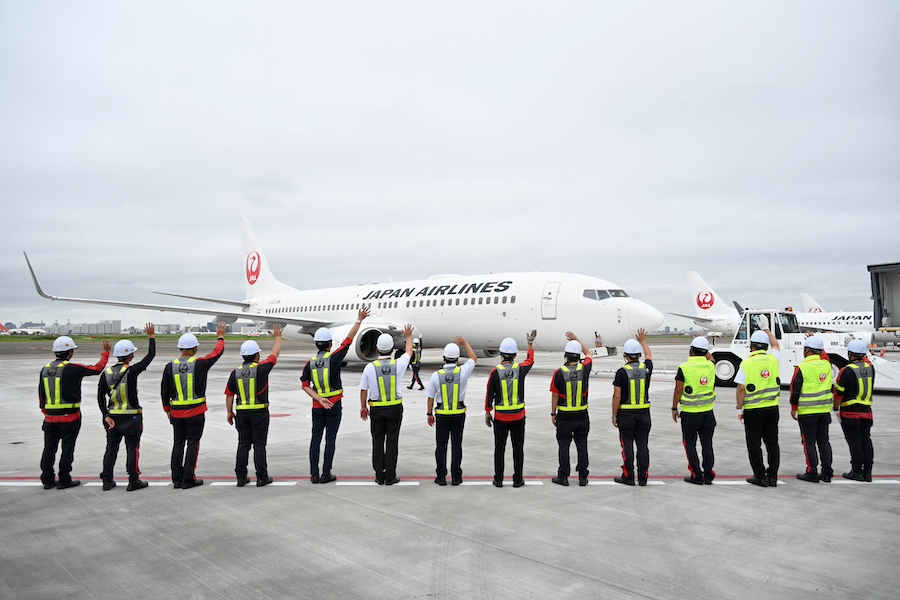
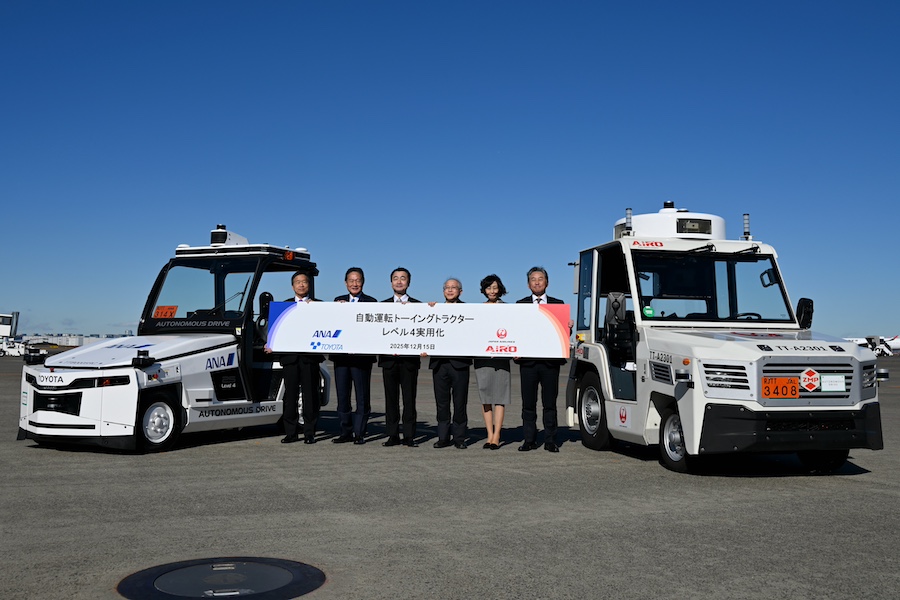
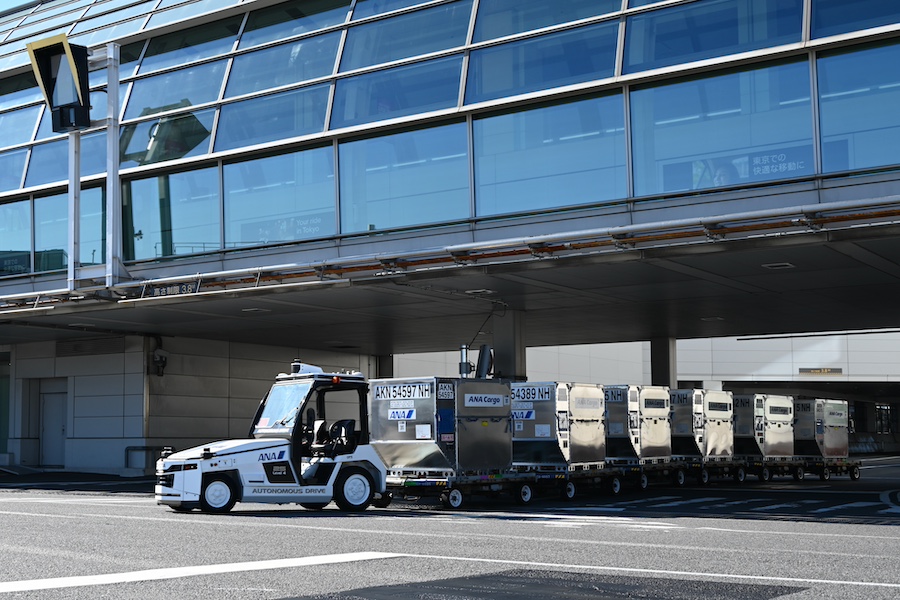
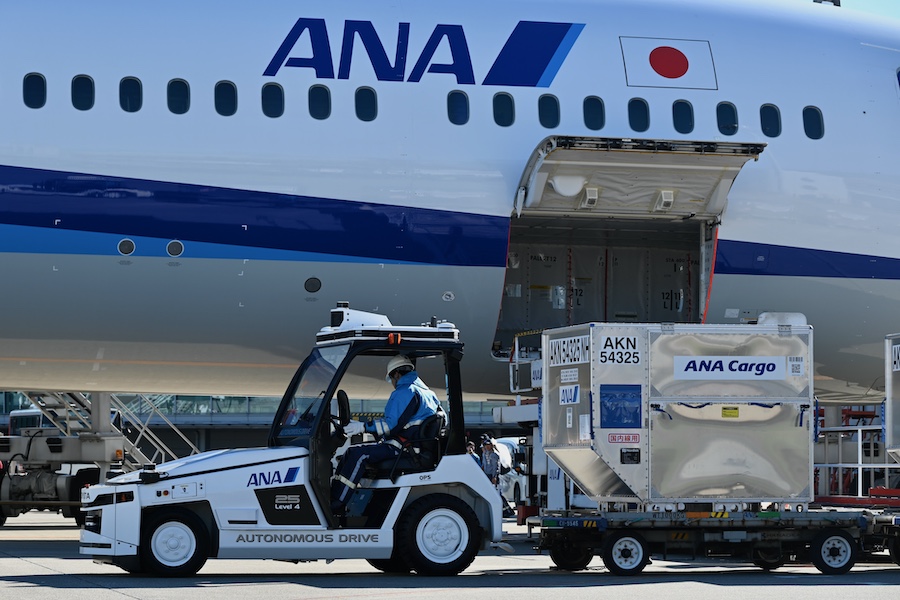
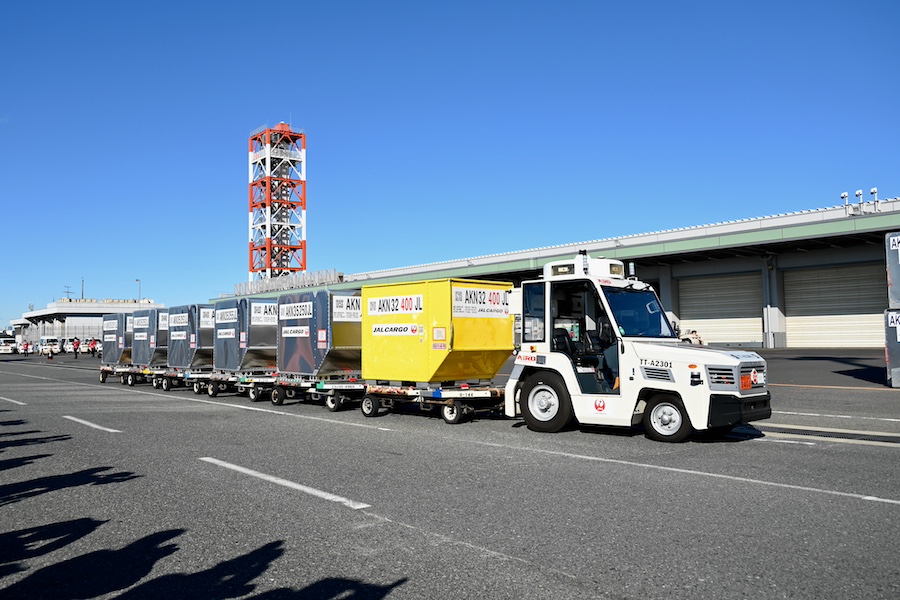
On December 15, All Nippon Airways (ANA), Japan Airlines (JAL), and others began fully autonomous driving of towing tractors (TT vehicles) that tow cargo containers within the airport at Tokyo’s Haneda Airport, and unveiled the operation to the media.
With the goal of realizing unmanned cargo transportation within airports, ANA has been working with Toyota Industries Corporation, while JAL has partnered with AiRO, a joint venture between the venture company ROBO-HI, which is engaged in the robot infrastructure business, and Marubeni. Since fiscal year 2021, they have been gradually conducting trial operations at Haneda Airport. ANA has been conducting trials at “Autonomous Driving Level 4,” which enables fully autonomous driving, since fiscal 2024, and JAL since this fiscal year. Now, both airlines have commenced full-scale practical operation.
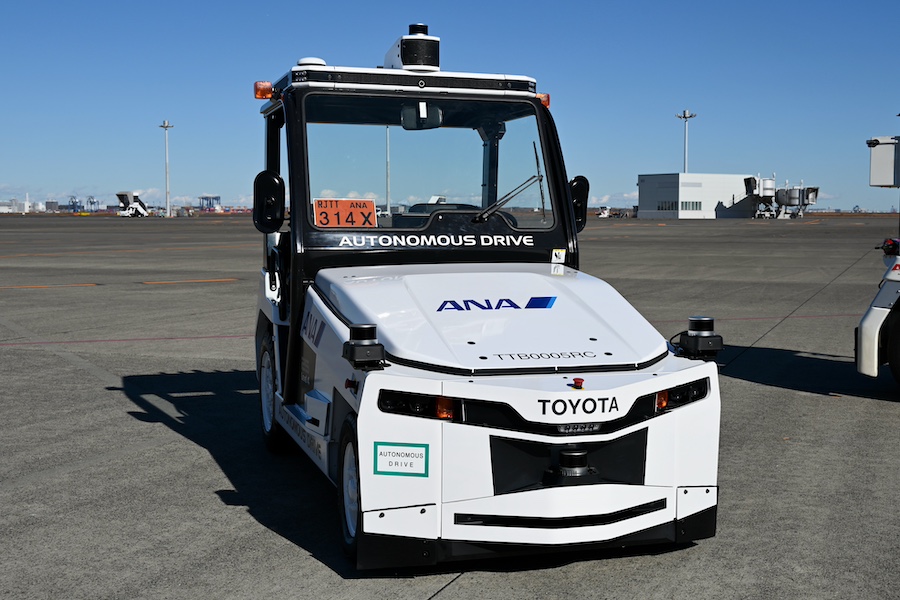
ANA has introduced three units of the EV “3ATE25” manufactured by Toyota Industries Corporation. They transport cargo containers for domestic scheduled flights over a one-way distance of about 1.5 kilometers (required time of 7 to 8 minutes) between the domestic cargo warehouse and parking spots 60, 61, and 65 at Terminal 2. The maximum speed is 15 kilometers per hour (25 kilometers per hour in manual mode), the maximum towing weight is 13 tons (27 tons in manual mode), and they can be fully charged in as little as 2 to 3 hours. To cope with various environmental and conditional changes within the airport, four technologies are combined—Road Surface Pattern Matching (RSPM), high-precision Global Navigation Satellite System (GNSS), 3D LiDAR, and magnetic guidance—to enhance both the accuracy and redundancy of self-position estimation and obstacle detection.
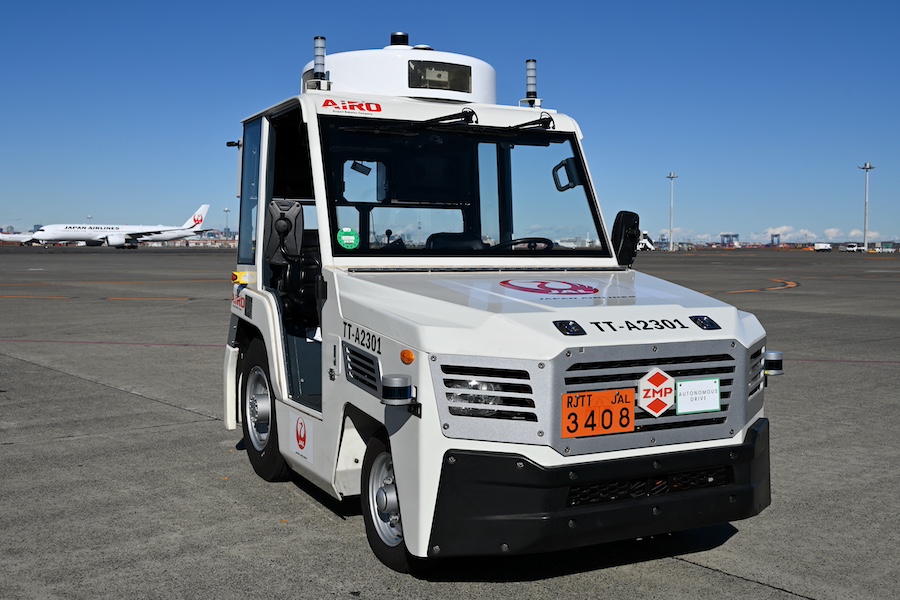
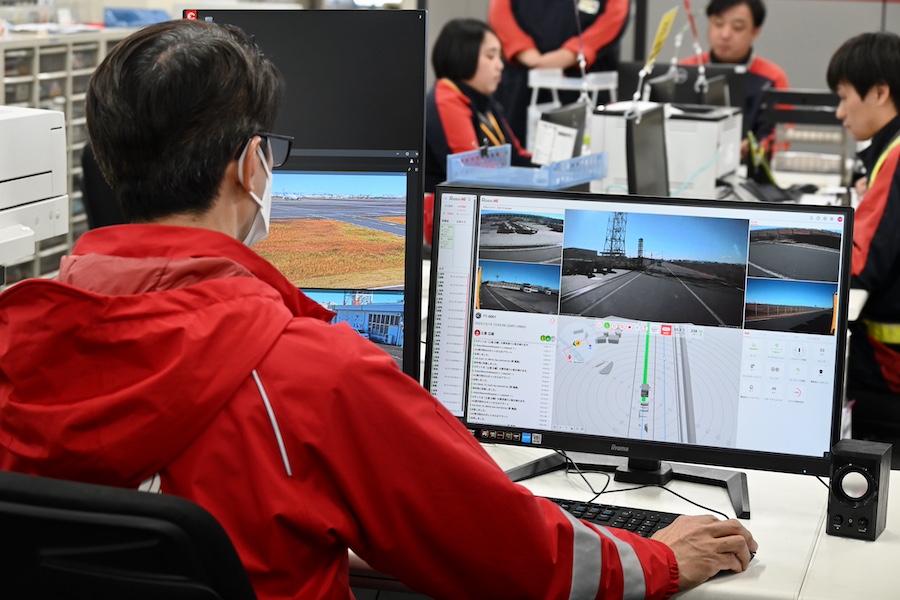
Meanwhile, JAL has introduced one unit of the “RoboCar Tractor 25T,” model V, manufactured by ROBO-HI. It transports cargo containers over a one-way distance of about 1 kilometer (required time of 5 minutes 30 seconds) between the East Cargo Area and West Cargo Area at Haneda Airport. The vehicle is based on a model manufactured by Weihai Guangtai Airport Equipment, a Chinese airport vehicle manufacturer, and has been developed by ROBO-HI. Its maximum speed is 15 kilometers per hour (20 kilometers per hour in manual mode), and its maximum towing weight is 30 tons. The cruising range on a full charge is 245 kilometers (when not towing), and it can be fully charged in as little as 3 hours. Using only sensors mounted on the vehicle—such as GNSS, 3D LiDAR, cameras, and an Inertial Measurement Unit (IMU)—the vehicle can determine its own position and drive autonomously. By linking with ROBO-HI’s robot platform “ROBO-HI OS” and using the airport’s camera systems for traffic control, one remote operator can manage up to 10 vehicles.
In addition, JAL has introduced two TractEasy autonomous TT vehicles at Narita International Airport and, starting December 15, has begun transporting checked baggage between the main building and the satellite of Terminal 2.
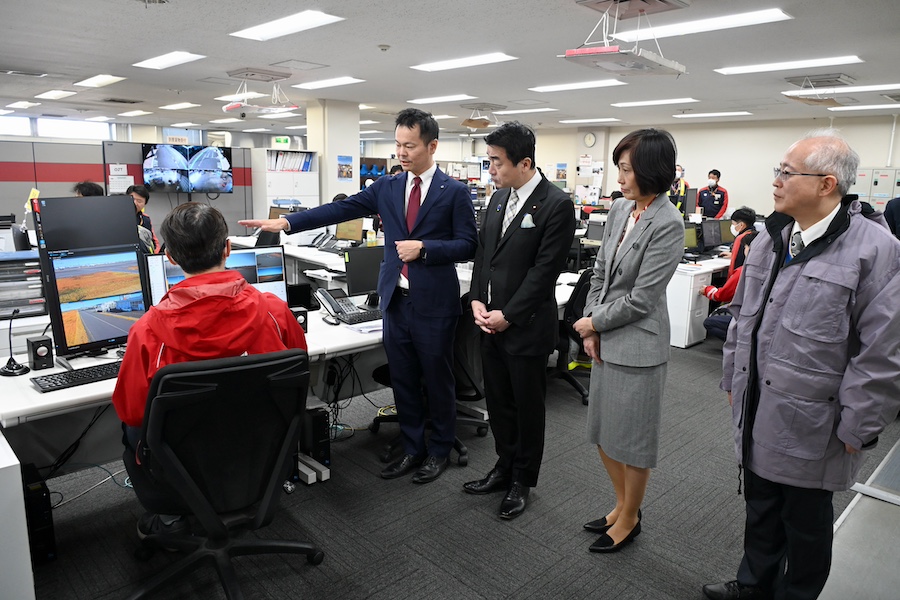
▲JCAB Director-General Koichi Miyazawa (right) of the Japan Civil Aviation Bureau being briefed by a JAL representative
Koichi Miyazawa, Director-General of the Japan Civil Aviation Bureau (JCAB) of the Ministry of Land, Infrastructure, Transport and Tourism, commented, “At major airports such as Haneda Airport, a great deal of manpower is required for transport operations, so the impact of automating these tasks is extremely significant,” while also pointing out that expanding deployment will require efforts that transcend the boundaries between companies and between the public and private sectors. Going forward, ANA and JAL will gradually increase the number of autonomous TT vehicles, expand their operating routes and driving areas, and promote deployment at other airports in Japan.
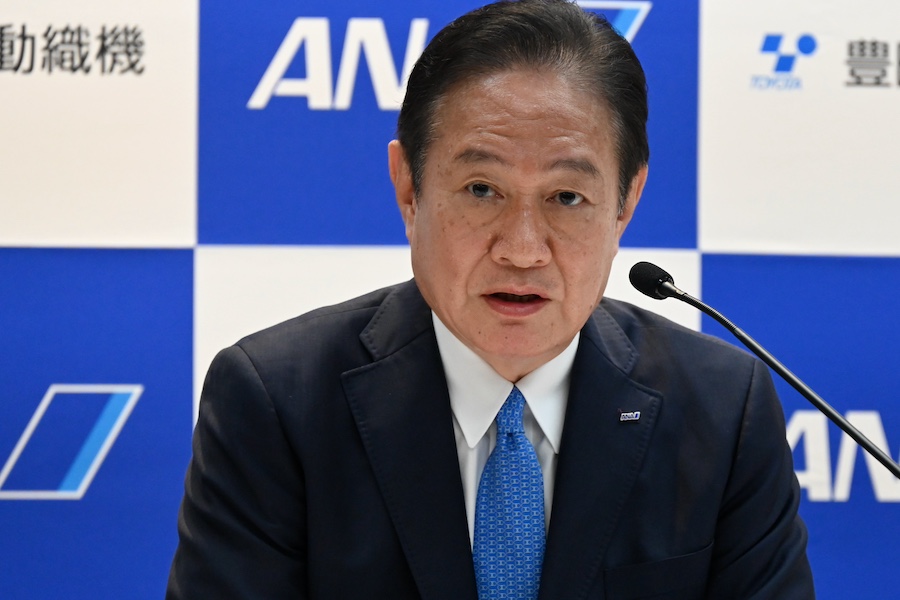
ANA plans to add three more units within this fiscal year, bringing the total to six. President Shinichi Inoue stated that the company aims to introduce about 50 units at Haneda Airport by around 2030 and to roll them out to six major domestic airports in Japan. He also pointed out that “there are issues that must be overcome, such as improving airport infrastructure including charging facilities and reducing vehicle costs,” in order to expand deployment.
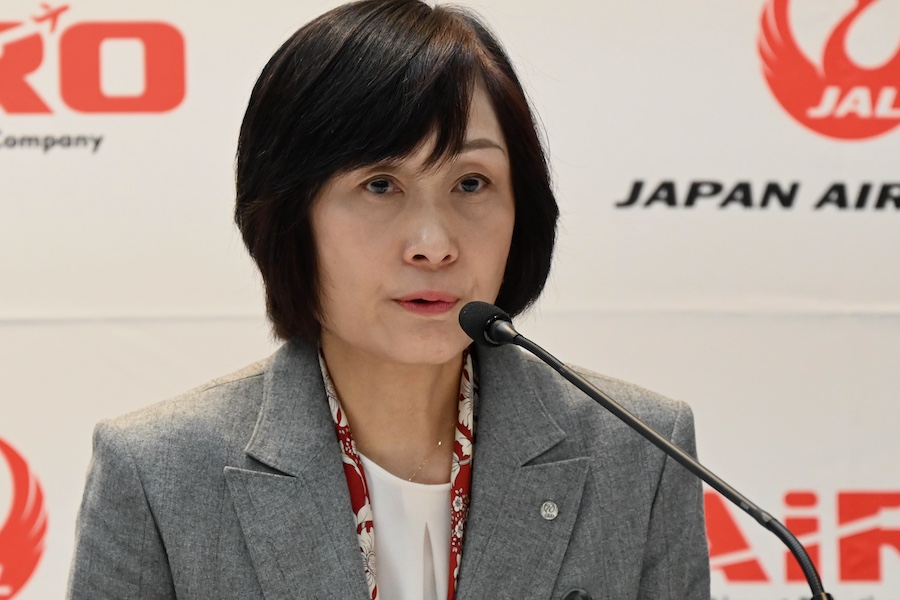
JAL plans to have three units in operation at Haneda Airport around the summer of 2026, and six units at Narita Airport around April of the same year. President Mitsuko Tottori commented, “Both airports are environments with extremely high traffic volume, and if unmanned technologies can be realized here, horizontal deployment to other airports in Japan can proceed very smoothly.” She said the company aims to have a fleet of about 50 units in five years and then further expand to an additional two or three airports.
Notice
This article was generated using automatic translation by GPT-4 API. The translation may not be accurate.