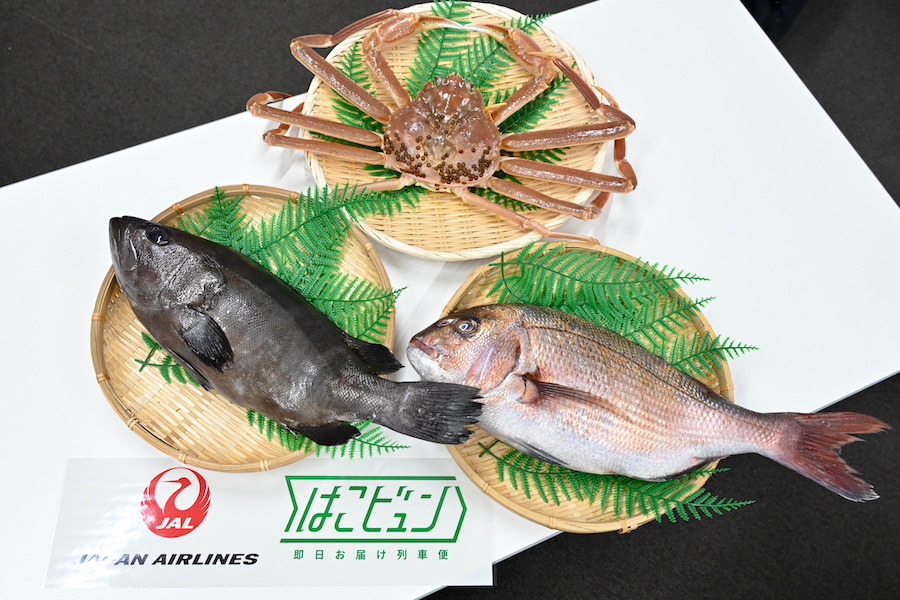
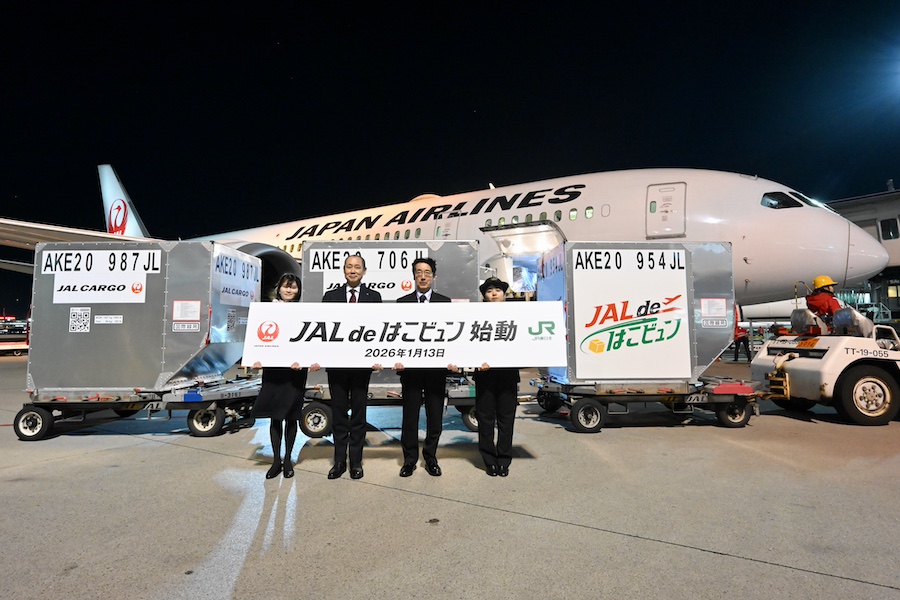
On January 13, East Japan Railway Company (JR East) and Japan Airlines (JAL) launched “JAL de Hakobiyun,” a service that links Shinkansen bullet trains with aircraft to quickly transport cargo from regional areas of Japan to overseas destinations. The service aims to boost exports of regional products from Japan that require freshness, such as seafood and produce, and to revitalize local economies. On the first day, live Echizen crab and other seafood from Fukui Prefecture were shipped from Tsuruga Station to Taiwan.
The scheme combines JR East Group’s railway cargo transport service “Hakobiyun” with JAL’s international air cargo service. Cargo is transported by Shinkansen from stations such as Shin-Hakodate-Hokuto, Akita, and Niigata to Tokyo Station, then exported overseas via either Tokyo Haneda Airport or Narita Airport. Handled items include fresh fish, fruits and vegetables, cut flowers, and machine parts. For now, export destinations are limited to four cities and five airports: Singapore, Kuala Lumpur, Hong Kong, and Taipei, but destinations will be expanded in stages.
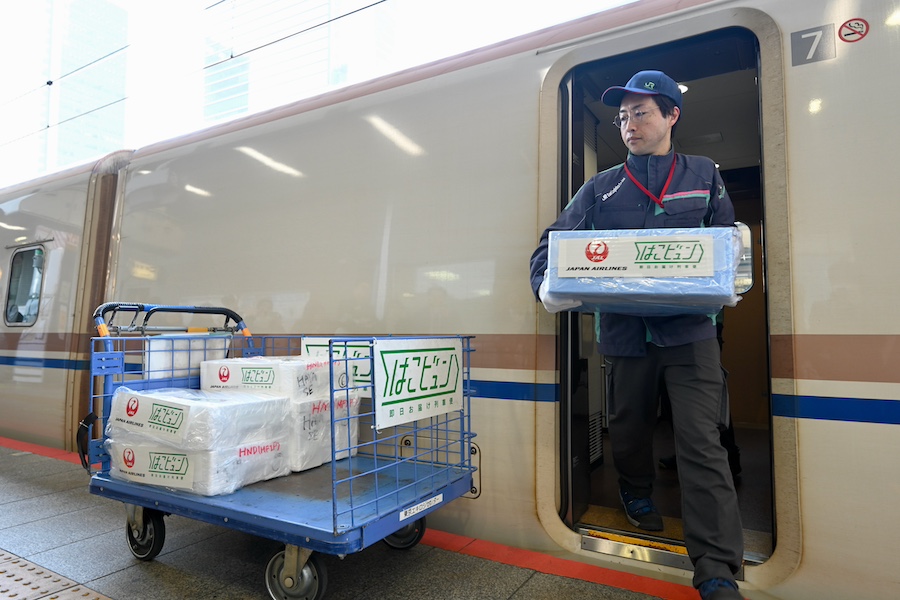
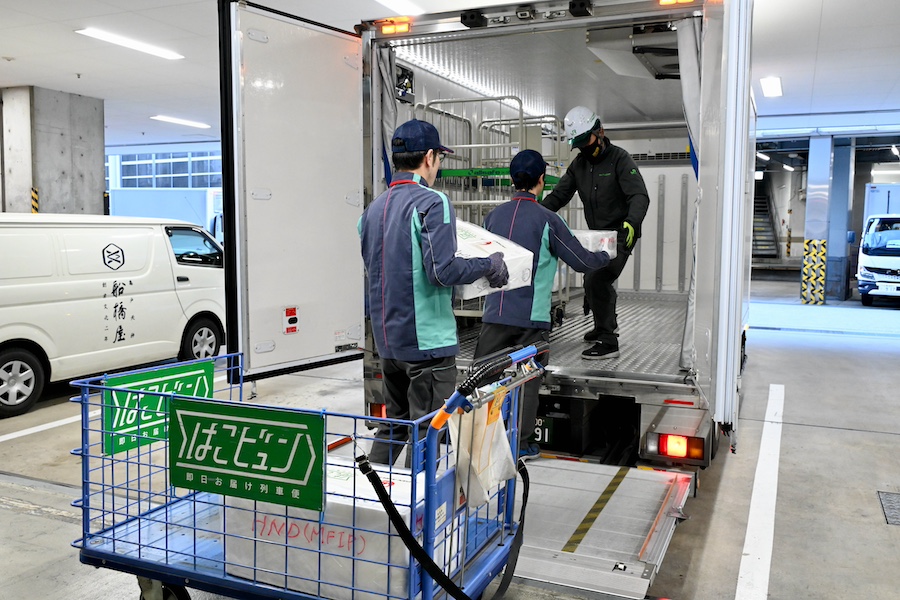
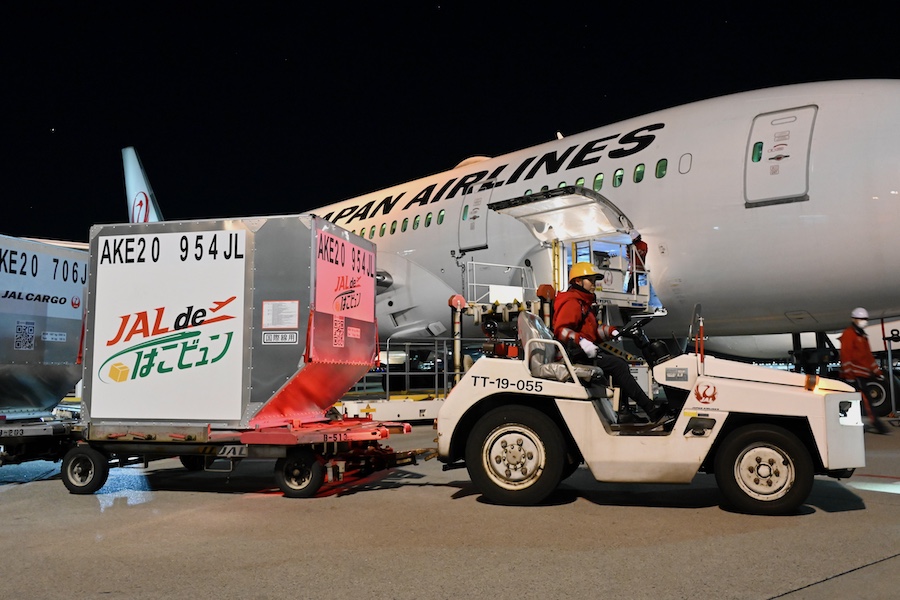
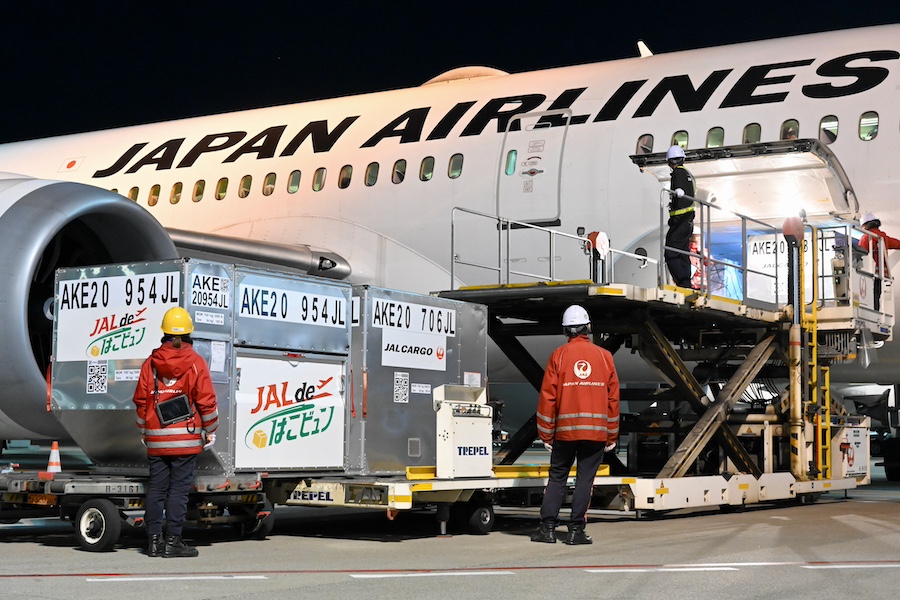
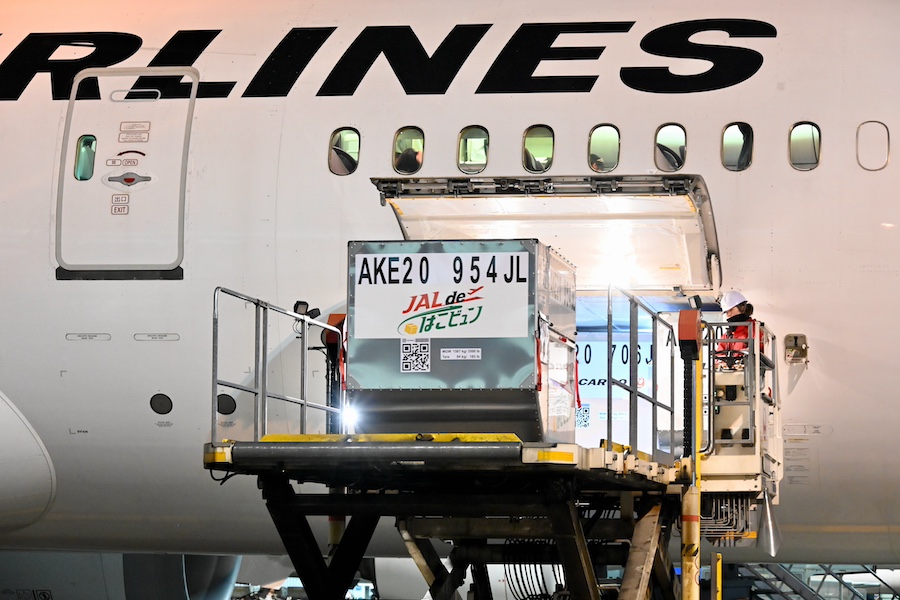
The Hokuriku Shinkansen Kagayaki No. 508, carrying a total of 23 kilograms of seafood including Echizen crab and Tsuruga sea bream, departed Tsuruga Station at 9:21 a.m. and arrived at Tokyo Station at 12:36 p.m. The cargo was then trucked to Haneda Airport, cleared through customs, and loaded onto Flight JL99 to Taipei Songshan Airport (a Boeing 787-8, registration JA823J), which departed at 6:20 p.m. Local arrival in Taipei was scheduled for 9:05 p.m.
By consolidating the contact point for transportation and customs procedures and achieving seamless transport, the companies have significantly reduced total transit time compared to other transport methods. Shipping from Tsuruga Station to Taipei Songshan Airport used to take more than 30 hours using a combination of trucks and aircraft, but by utilizing Shinkansen transport, the time is shortened to about 12 hours and 40 minutes. A JAL representative said, “By making it easy to use the networks of both companies, we want to lower the hurdles for small-lot shippers and businesses that are just starting to try exporting, and thereby help promote exports.”
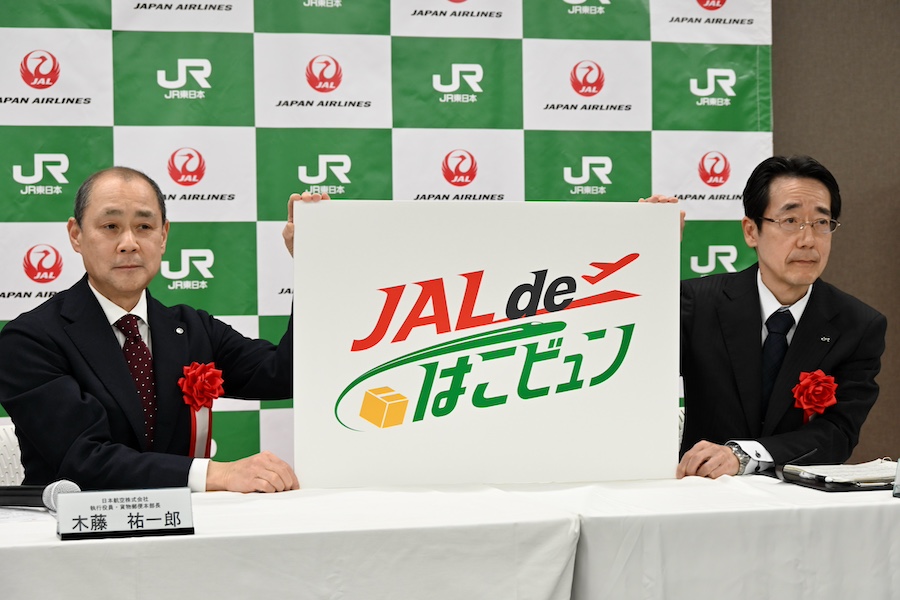
▲ JAL Managing Executive Officer Yuichiro Kito (left) and JR East Managing Executive Officer Koichi Takagi unveil the “JAL de Hakobiyun” logo
Yuichiro Kito, Managing Executive Officer and Head of the Cargo and Mail Division at JAL, explained, “By connecting JR East’s Shinkansen network with the JAL Group’s air transport network, we can deliver Japanese fresh products overseas more quickly while preserving their freshness.” Koichi Takagi, Managing Executive Officer and Deputy Director-General of the Marketing Headquarters at JR East, commented, “By delivering fresh ingredients at a level of freshness that has never been experienced before, we hope to help establish regional brands and stimulate the movement of people.”
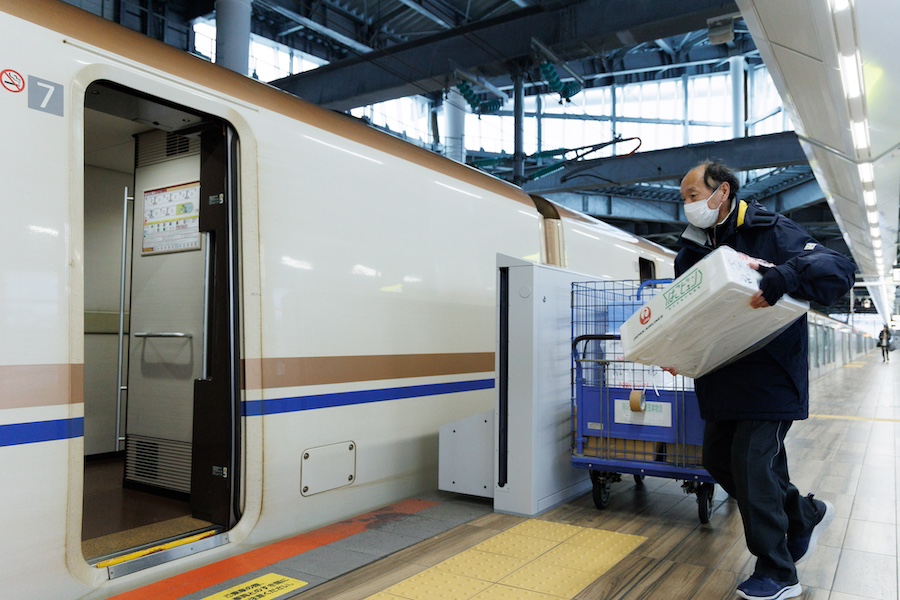
▲ “JAL de Hakobiyun” cargo being loaded onto the Shinkansen at Tsuruga Station (photo provided by JR East)
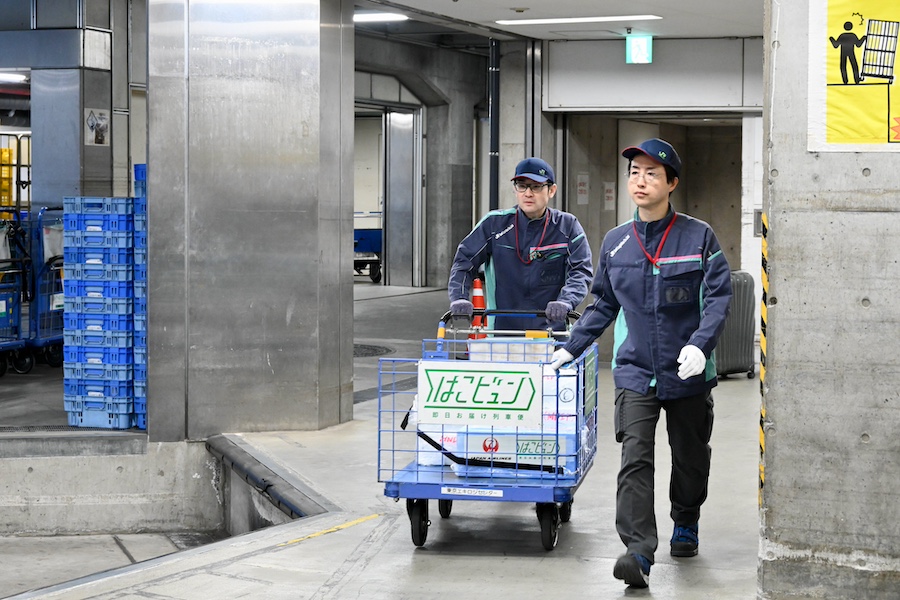
▲ Cargo being unloaded from the Shinkansen at Tokyo Station
▲ Cargo being transferred to a truck at the Tokyo Station cargo handling area
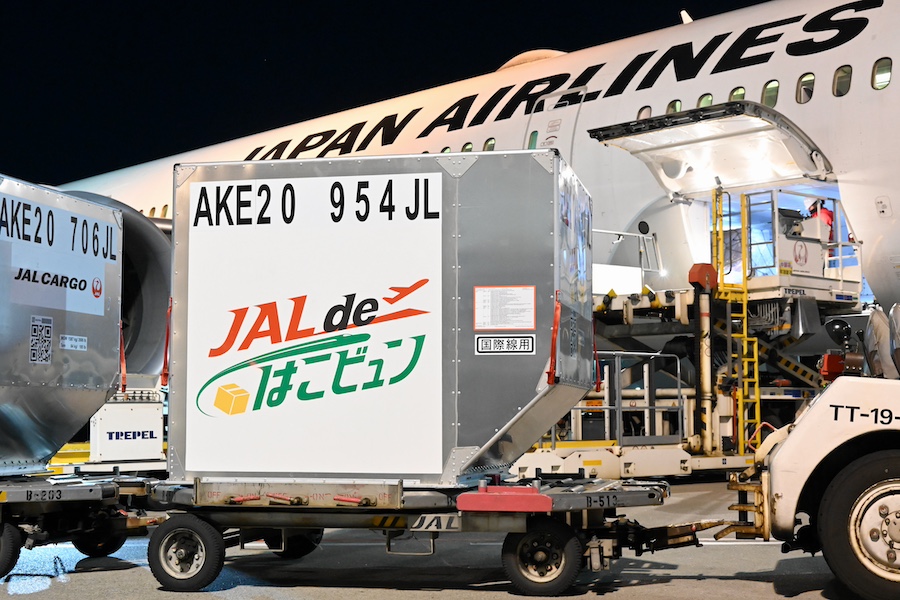
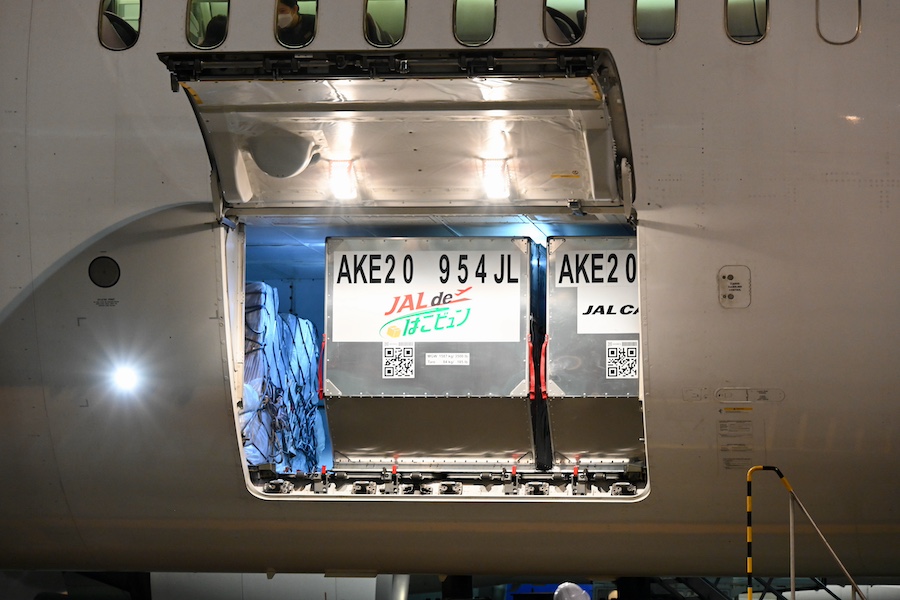
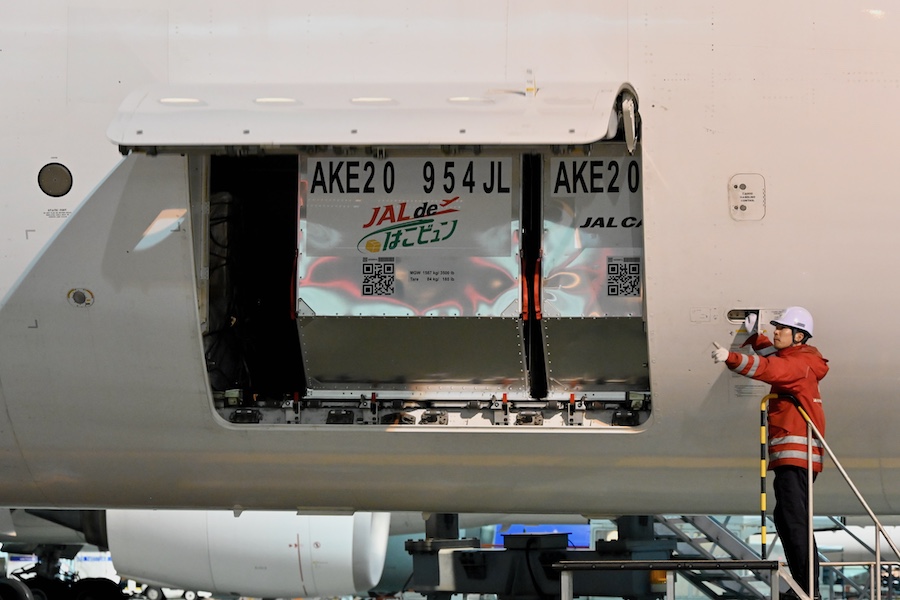
▲ Cargo being loaded onto an aircraft at Haneda Airport
Notice
This article was generated using automatic translation by GPT-4 API. The translation may not be accurate.