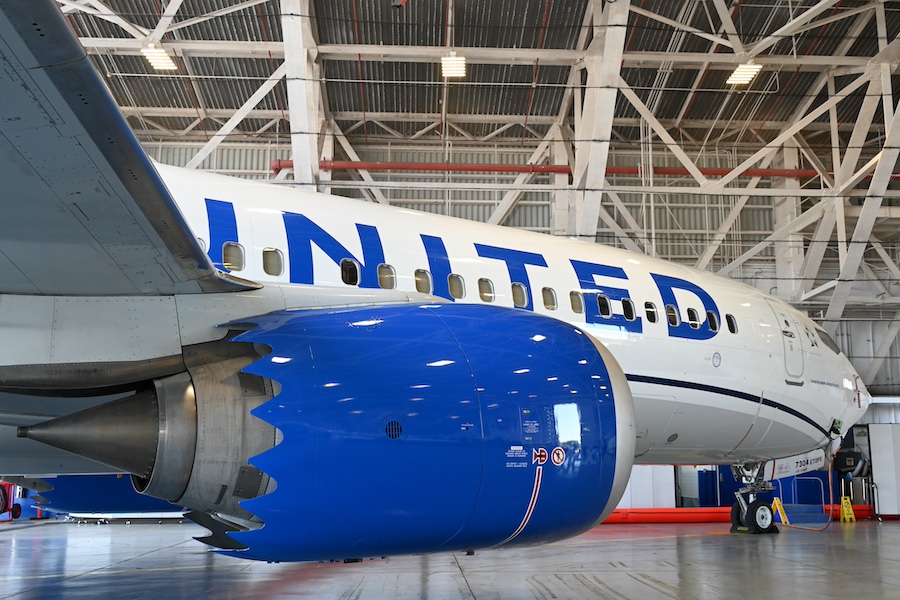
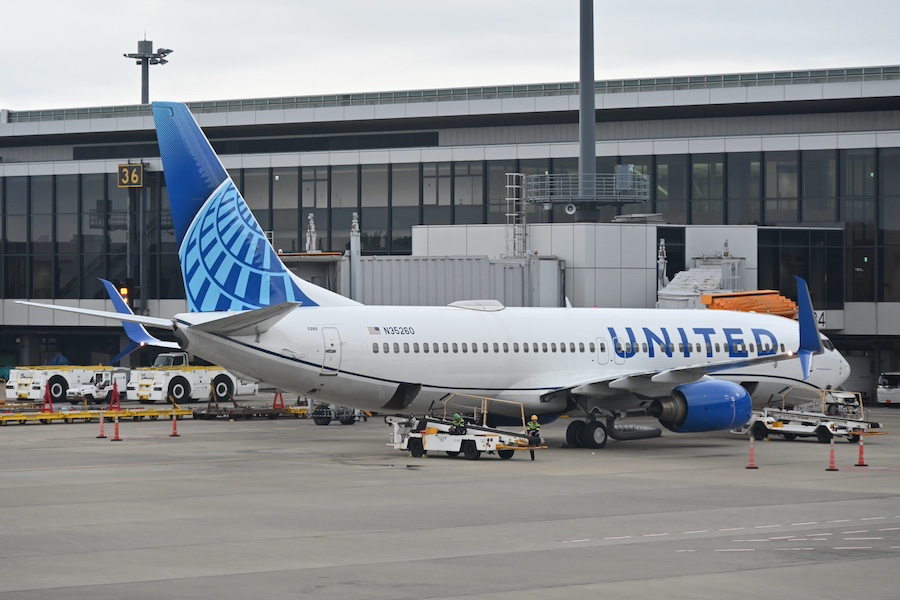
On March 19, United Airlines unveiled its new Guam-based Boeing 737-8 aircraft in a hangar at Guam International Airport. A total of 10 aircraft will be introduced by the end of December, replacing the existing Boeing 737-800 fleet.
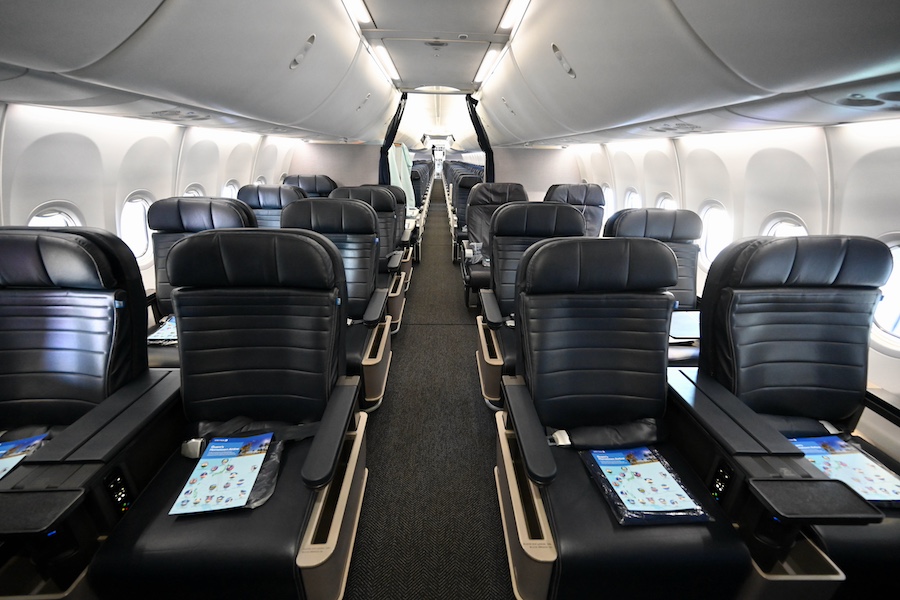
The cabin is configured in two classes, with 14 Business Class seats arranged 2-2 and 150 Economy Class seats arranged 3-3, for a total of 164 seats. Some Economy Class seats are designated as “United Economy Plus,” offering more legroom than standard seats. The previous 737-800 aircraft were configured with 16 Business Class seats and 150 Economy Class seats, for a total of 166, but two Business Class seats were removed to install a crew rest area in part of the cabin.
All seats are equipped with USB power outlets, and the aircraft features larger overhead bins, more seats with extra legroom, Bluetooth connectivity, LED lighting, and in-flight Wi-Fi. The personal monitors are larger than those on the 737-800s, measuring 13 inches in Business Class and 10 inches in Economy Class. The IFE (in-flight entertainment) system offers more than 1,400 content options, mainly movies and TV programs.
At present, two aircraft have been deployed to Guam and are already being operated on a trial basis on select routes. The first official departure from Guam is scheduled to be one of the Tokyo/Narita-bound flights on April 30. The aircraft will also be introduced on the Tokyo/Narita–Ulaanbaatar route from the same day, and on the Tokyo/Narita–Koror route from May 2. Going forward, all Tokyo/Narita–Guam flights are expected to be operated by the 737-8 by late August.
Leveraging the Guam-based fleet, United Airlines operates routes from Tokyo/Narita to Guam, Saipan, Cebu, Ulaanbaatar, Kaohsiung, and Palau, as well as the Tokyo/Haneda–Guam route.
Notice
This article was generated using automatic translation by GPT-4 API. The translation may not be accurate.