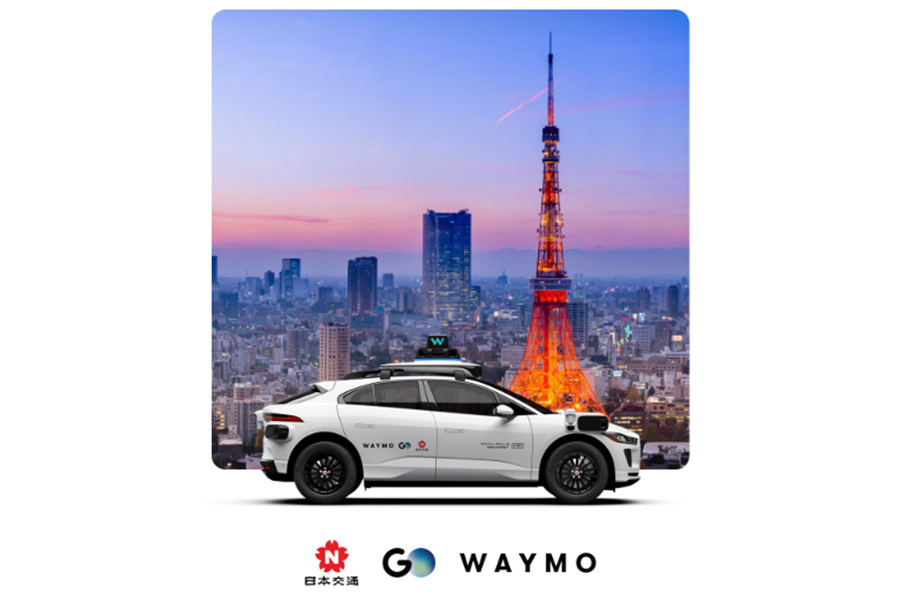
GO, Waymo and Nihon Kotsu have agreed to a strategic partnership aimed at commercializing autonomous taxis in Tokyo. The companies aim to launch Japan’s first commercial taxi service using fully driverless Level 4 autonomous vehicles in Tokyo during 2027.
Since 2025, the three companies have conducted public-road test drives in seven wards of Tokyo, adapting Waymo’s autonomous driving technology to Tokyo’s road environment. They are currently carrying out autonomous driving tests with Nihon Kotsu drivers on board. Building on these results, the companies will move to the next stage of providing fully driverless services to the general public. They aim to gradually deploy a fleet of around 100 vehicles during 2027. The service will be available through both the GO taxi app and the Waymo app.
GO will be responsible for coordinating with local taxi operators and overseeing the overall service design, while Waymo will provide its operational platform, fleet management system and specialist expertise. Nihon Kotsu will handle on-site operations management and depot operations.
The official launch date will be determined after the service’s safety has been validated and all required licenses and approvals stipulated under laws including Japan’s Road Traffic Act and Road Transportation Act have been obtained.
Hiroshi Nakajima, President and Representative Director of GO, commented, “With the GO taxi app alone, users will be able to access both conventional taxis and Waymo’s autonomous taxis.” Tekedra Mawakana, Co-CEO of Waymo, said, “Waymo currently provides more than 500,000 rides every week and has been proven to be more than 15 times safer than human drivers.” Taiji Wakabayashi, President and Representative Director of Nihon Kotsu, described the initiative as “an extremely important challenge to complement the future shortage of drivers while coexisting with conventional taxis, and to pass on safer, higher-quality mobility infrastructure to the next generation.”
Notice
This article was generated using automatic translation by GPT-4 API. The translation may not be accurate.