All Nippon Airways (ANA) held a media briefing on September 29 to explain the redesign of its Super Flyers Card (SFC) program.
This year marks the 40th anniversary of the SFC, which was launched in 1986. Membership has increased every year, and the current number of members is approximately 1.5 times the 2019 level before the COVID-19 pandemic. ANA expects membership to grow further, to around 1.2 times the current level by 2030 and around 1.4 times by 2035.
From April 2028, ANA will designate people whose annual spending on ANA Cards and ANA Pay totals at least 3 million yen as “SFC PLUS” members, granting them access to ANA lounges, accrual of 5,000 miles, and Star Alliance Gold status. People spending less than that amount will be designated “SFC LITE” members, losing ANA lounge access and being downgraded to Star Alliance Silver status, as announced. Following significant criticism after the announcement, ANA revealed in June that it would review the details.
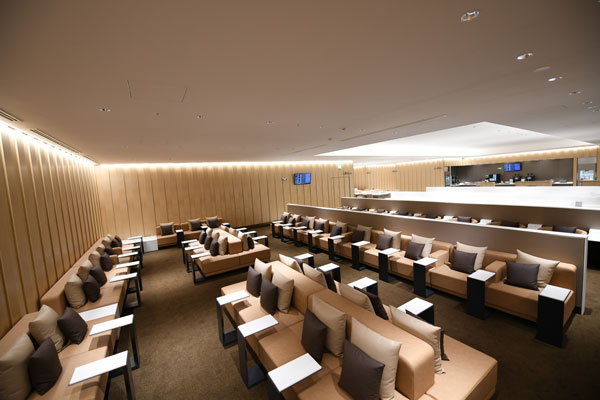
ANA cited two operational challenges. The first is the physical capacity limit of domestic lounges. At major airports in Japan, including Tokyo Haneda Airport, lounges are routinely full or have waiting lines during peak departure periods and holidays such as the year-end and New Year period.
The second issue is the sustainability of member services. While SFC’s various preferential services are supported by everyday card spending, the average annual spending on general cards exceeds 1 million yen. In contrast, around 40% of SFC members spend less than 1 million yen annually, while around 30% spend less than 500,000 yen. ANA said that while membership is expanding, card spending has been declining year by year.
Regarding the 3 million yen annual spending threshold, ANA said it had examined a range of conditions, including lowering the annual spending requirement, combining it with flight activity measured in Premium Points, and the scope of members to whom it would apply. It concluded that the threshold was necessary to both ease congestion and provide lounge access to as many members as possible.
Domestic lounge access for SFC LITE members with annual spending below 3 million yen will be operated in two stages. In the first stage, access will be available when members can be assured of finding seats smoothly after entering, with access managed through a congestion forecasting system. Entry will be denied during crowded periods. In the second stage, ANA will introduce advance reservations to more accurately track the number of visitors and improve the effectiveness of congestion relief measures.
Members will continue to have access to shared lounges at Nagoya/Chubu, Osaka/Kansai, Kumamoto, and Miyazaki airports, as well as the ANA ARRIVAL LOUNGE at Narita Airport. International ANA lounges will also remain available as before. However, because their Star Alliance status will be Silver, they will not be able to use partner lounges operated by other airlines.
For SFC LITE members, the only changes from the current program will be lounge services and Star Alliance status. Airport priority services, including priority check-in, priority boarding, and priority baggage handling, as well as priority domestic seat selection and priority booking services such as award tickets using miles, will remain available as before.
As part of its future initiatives, ANA will expand its domestic lounges at Tokyo Haneda Airport during fiscal 2027 and proceed with system upgrades for the introduction of advance reservations. ANA is also considering new services for SFC PLUS members.
Notice
This article was generated using automatic translation by GPT-4 API. The translation may not be accurate.