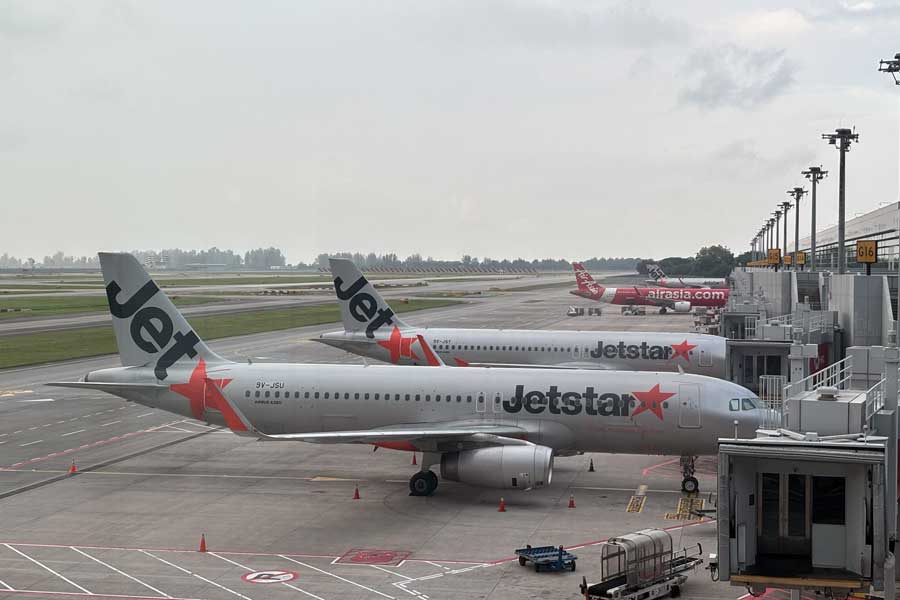
The Singapore International Commercial Court (SICC) has approved Jetstar Asia Airways’ debt restructuring plan, known as a scheme of arrangement.
This will enable approximately 194,000 consumers with claims related to unused air tickets, bookings, and vouchers to receive refunds.
Jetstar Asia Airways ceased operations on July 31, 2025, having decided to wind up the company while solvent. With financial support from its parent company, the Qantas Group, it had already launched a program to fully refund eligible claims by individual customers. However, as take-up remained low after around six months, the company proceeded to establish a formal scheme of arrangement.
The scheme provides for full recovery of all approved claims for both consumer and non-consumer creditors. At its core is the creation of an “administrative convenience class” comprising 194,200 consumer creditors. While these creditors will not be asked to vote on the scheme, they will be deemed to have unanimously approved its terms and will instead receive full refunds.
This approach eliminates the need to temporarily suspend the existing refund program in order to conduct a creditor vote. The company said that voting would require significant time and resources and would be disproportionate to the average size of individual consumer claims.
The scheme received the support of all nine non-consumer creditors that attended the creditors’ meeting. Pacific Airlines, formerly Jetstar Pacific Airlines, had initially filed a notice of objection after its proof of debt was rejected and it was excluded from the scheme. However, it withdrew its objection after reaching a settlement with the applicant on the day before the sanction hearing.
The SICC found that, under Section 210 of Singapore’s Companies Act, the court has considerable discretion in determining how voting requirements may be satisfied, providing the legal basis for establishing the administrative convenience class. It also set out requirements for using such a class without causing unfair prejudice: the applicant must justify the benefits in efficiency and administrative convenience; the court must assess any prejudice to both those within and outside the class; the class must not be used to abuse the cram-down process; and the interests of the non-voting class must not be adversely affected by the scheme.
The court concluded that there was no unfair prejudice, as all scheme creditors are entitled to full refunds and there are clear administrative benefits to avoiding a large-scale voting process.
Notice
This article was generated using automatic translation by GPT-4 API. The translation may not be accurate.