In response to a series of smoke and fire incidents involving mobile batteries on aircraft both in Japan and overseas, Japan Airlines (JAL) is stepping up efforts to raise awareness of how to handle mobile batteries ahead of the busy New Year holiday travel period.
Based on international standards set by the International Civil Aviation Organization (ICAO), Japan’s Ministry of Land, Infrastructure, Transport and Tourism (MLIT) prohibits placing mobile batteries in checked baggage. For carry-on baggage, it also stipulates that passengers may carry up to two batteries with a rated capacity of more than 100 watt-hours and up to 160 watt-hours, while products exceeding 160 watt-hours are not allowed on board. From July 8, regulations have been tightened further, requiring passengers to keep mobile batteries brought into the cabin at hand instead of storing them in overhead bins, and to use them for charging only in places where their condition can be constantly monitored.
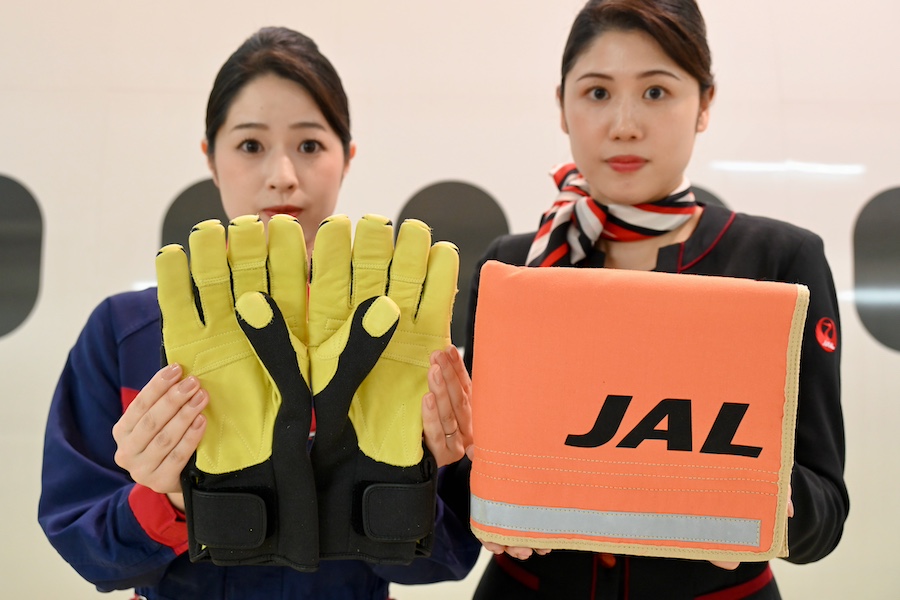
JAL is strengthening communication regarding the handling of dangerous goods, including mobile batteries, through its website, automated check-in machines at airports, and boarding gates, and is also issuing warnings via in-flight announcements. As part of its on-board fire and smoke countermeasures, in addition to conventional smoke hoods and fire extinguishers, JAL has equipped all aircraft since 2017 with heat-resistant gloves and heat-resistant bags to be used in the event of overheating or ignition of mobile batteries.
According to the airline, there have been no cases of mobile batteries catching fire on board so far. However, on domestic flights at Tokyo Haneda Airport, 1,306 cases were recorded between April and October this year in which mobile batteries were found in checked baggage. On some days, more than 10 such cases occurred, and there have also been instances where re-inspection of baggage led to flight delays.
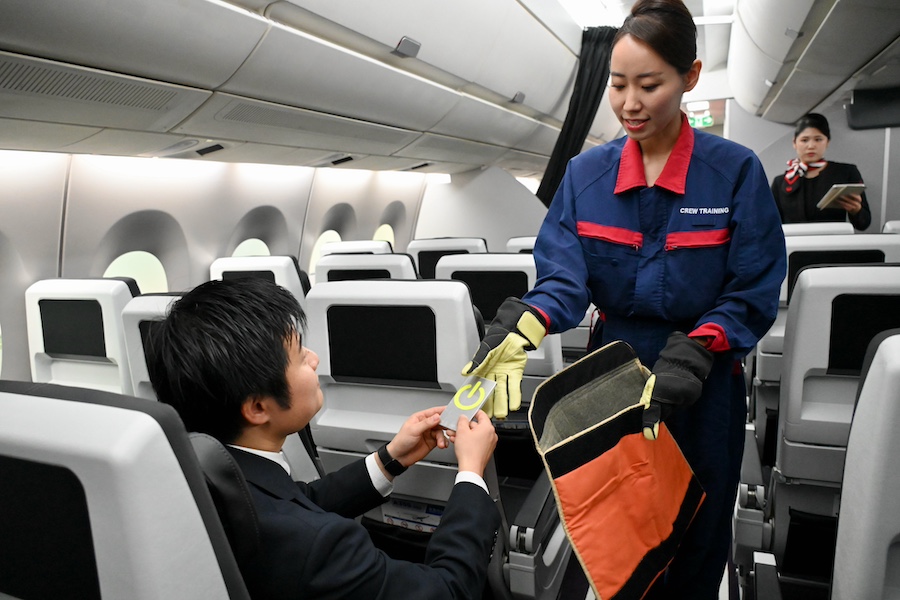
▲ Cabin crew member collecting an abnormally overheating mobile battery and placing it in a heat-resistant bag as a demonstration
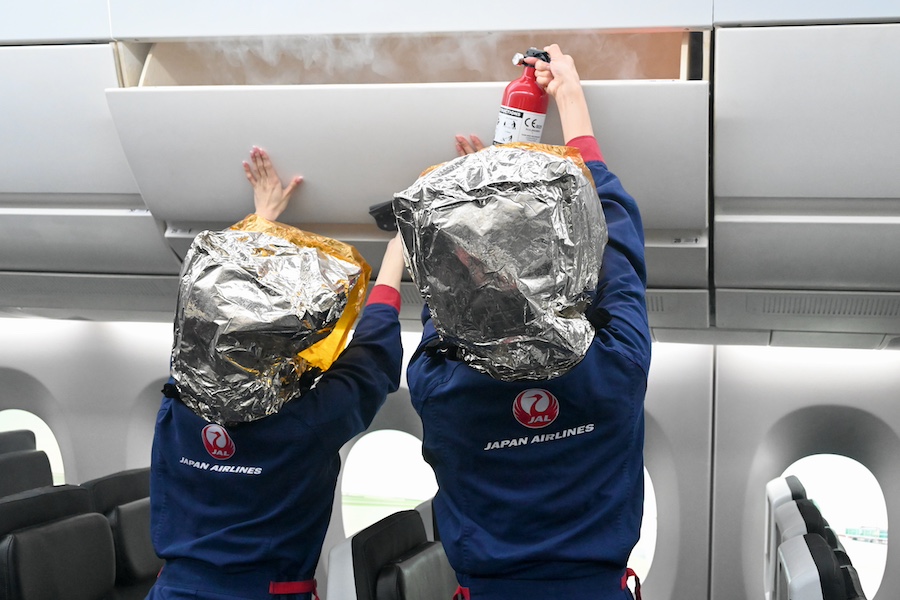
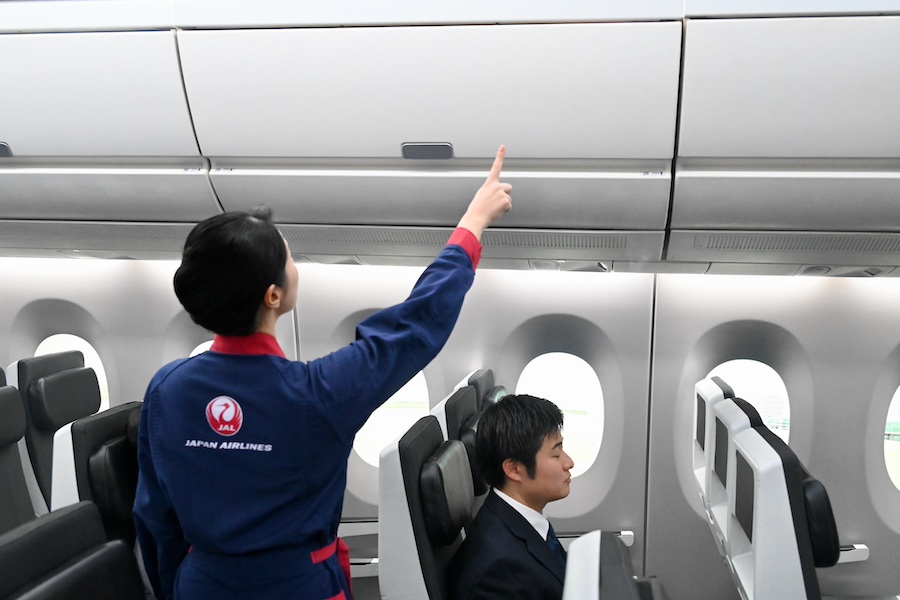
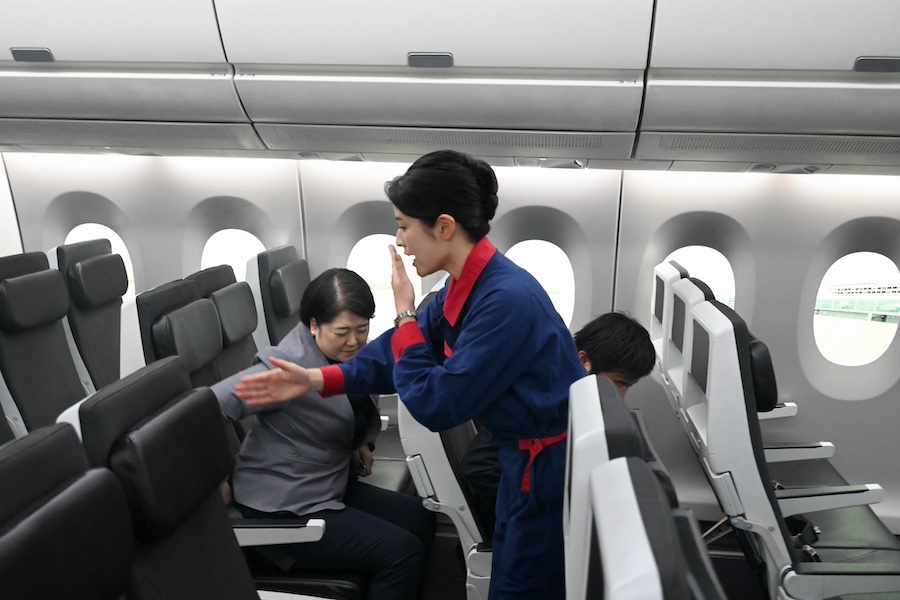
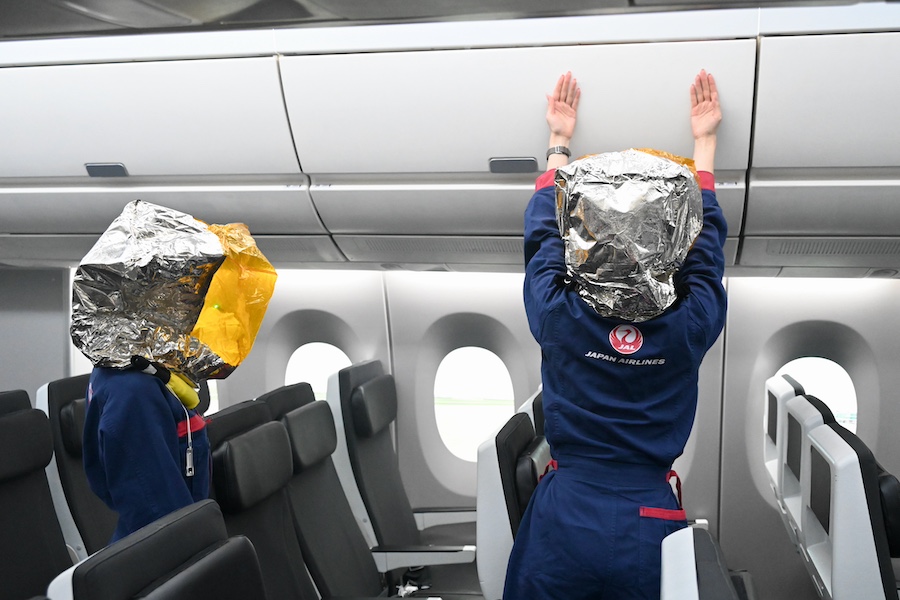
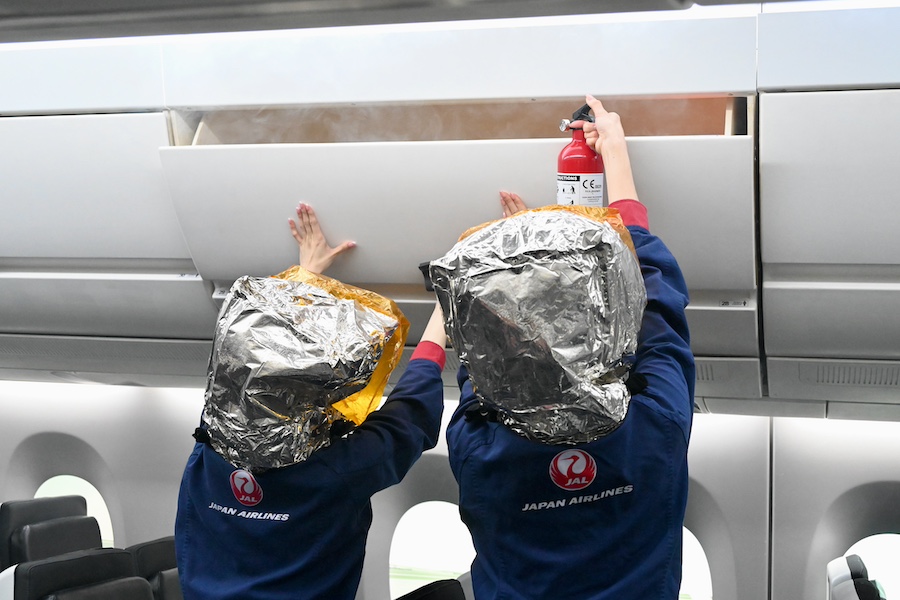
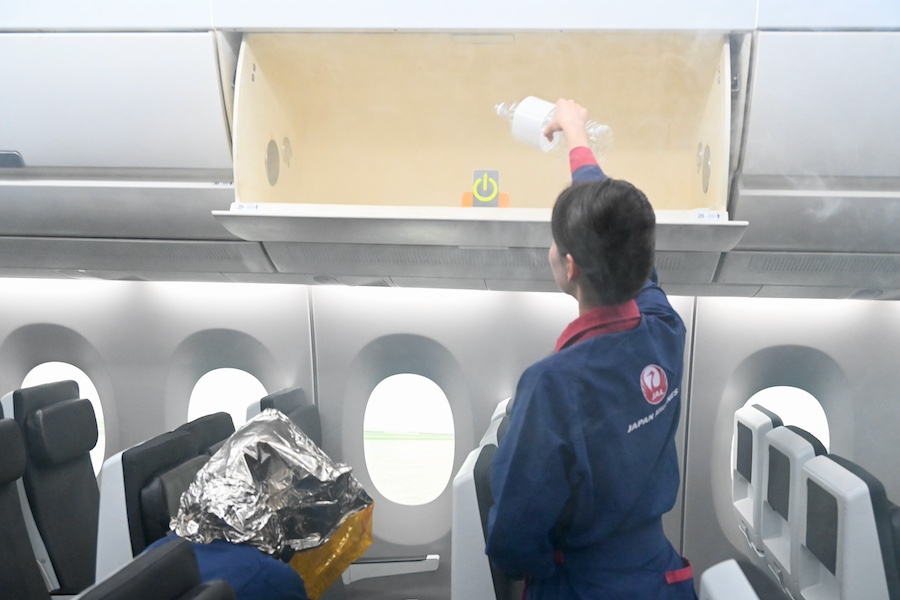
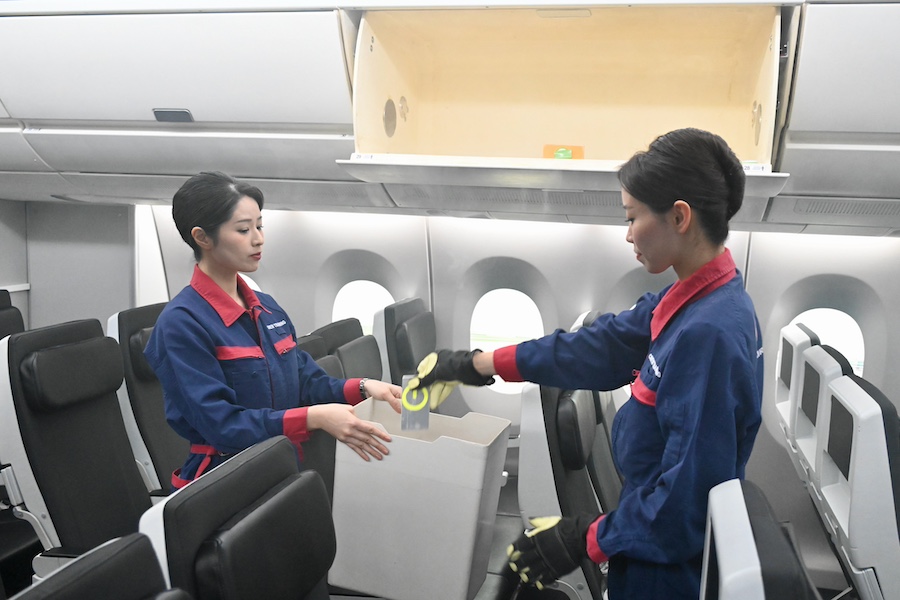
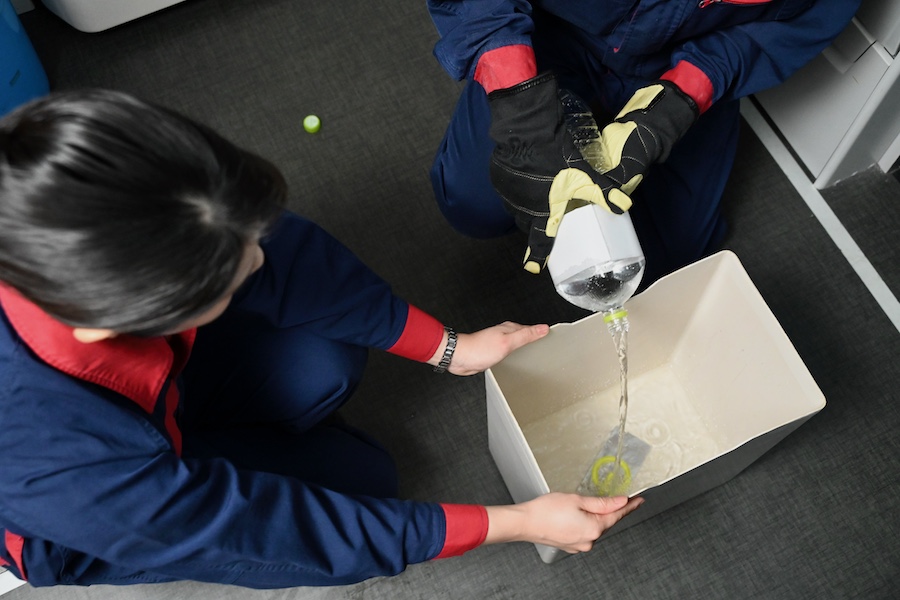
At the training facility located at Tokyo Haneda Airport, on December 2 cabin crew members demonstrated the procedures to follow in the event that a mobile battery overheats or catches fire on board. In a demonstration simulating a situation where a mobile battery placed in an overhead bin catches fire, a cabin crew member wearing a smoke hood extinguished the fire with a fire extinguisher and then cooled it with water. The crew went on to reproduce the series of steps of subsequently submerging the battery in a trash can filled with water.
A JAL representative is urging passengers, saying, “If you notice any abnormal overheating or deformation of a mobile battery on board, or if it has been subjected to impact from being dropped, please inform a crew member immediately.”
▲ Demonstration of a mobile battery catching fire in an overhead bin
▲ Cabin crew guiding passengers
▲ Identifying the source of the fire using the back of the hand
▲ Extinguishing the fire by slightly opening the overhead bin
▲ Cooling the extinguished mobile battery by pouring water over it
▲ After confirming it has cooled, moving it to a trash can
▲ Submerging it in water
Notice
This article was generated using automatic translation by GPT-4 API. The translation may not be accurate.