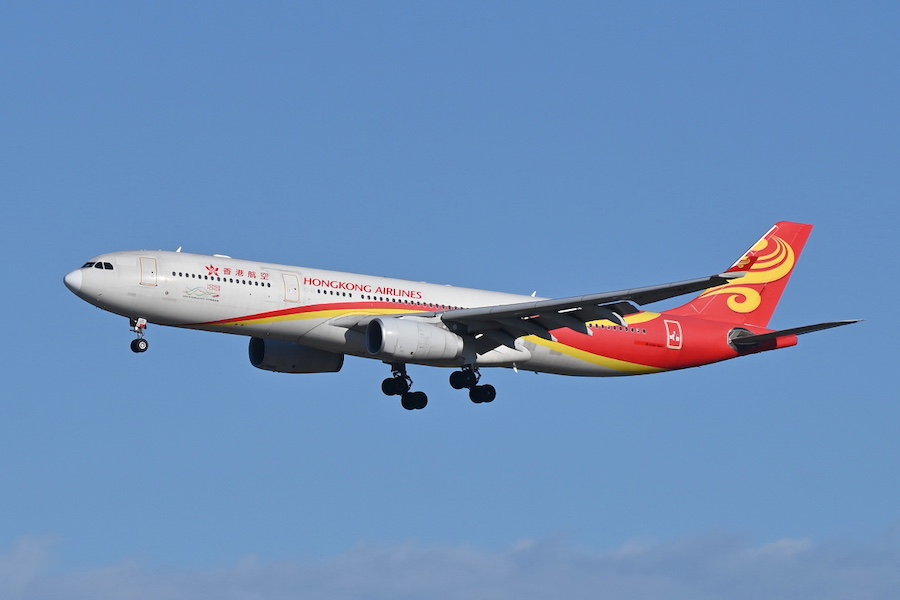
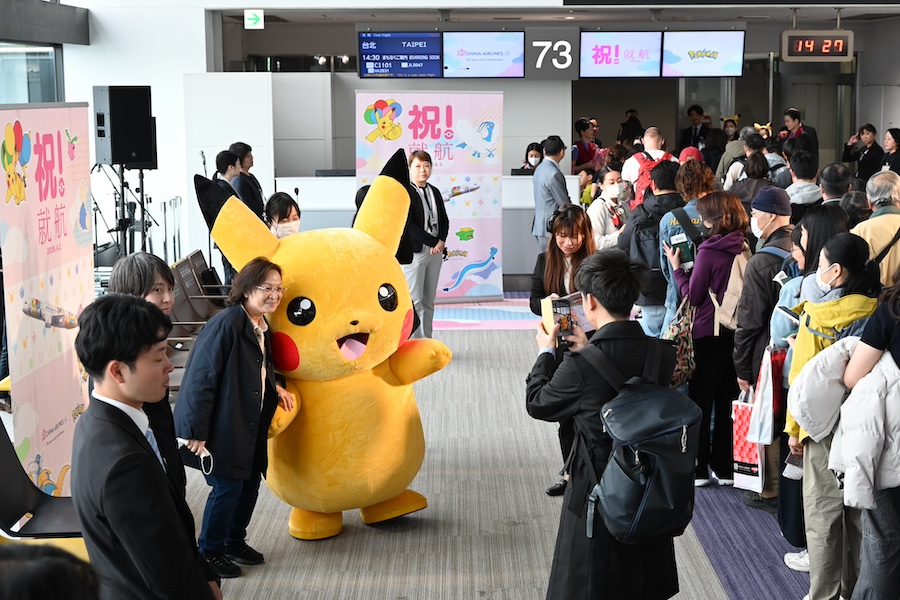
A dream luxury cruise ship that everyone wants to try at least once. For many years in Japan, a lot of people have said, “I’ll save it for my retirement.” That may be because it’s hard to take a long vacation and cruises are perceived as expensive. Over the past few years, however, calls by cruise ships to Japanese ports have increased. Not only cruise ships based in other Asian countries, but also ships homeported in Japan have grown in number, and it feels like more reasonably priced itineraries and routes are now available at travel agencies. More recently, major mail-order retailer Japanet Takata has even been selling cruises via TV shopping, so public awareness is clearly rising.
This time, I decided to go on a cruise after being invited by an acquaintance who works for a related company: “Why don’t you try it once?” Contrary to my expectations, the price turned out to be extremely attractive. The timing also hit perfectly for me: late in the year when work was calming down, the trip was short, and I could visit Taiwan for the first time in a while. I invited a friend, and we ended up booking a 5‑day cruise on the “MSC Bellissima,” departing from and returning to Naha.
This cruise has an irregular itinerary. On the first day, the ship departs Naha Port at night and arrives at Ishigaki in the morning of the second day. That same night it heads to Keelung, a suburb of Taipei, arriving on the morning of the third day. It departs again that night, reaches Naha Port on the afternoon of the fourth day, then stays overnight alongside in Naha, with passengers spending one more night on board and disembarking on the morning of the fifth day. There are also other itineraries, such as cruises that call at Miyakojima instead of staying at Naha, or one‑way cruises from Naha to Tokyo.
According to statistics from the Okinawa Convention & Visitors Bureau, about 480,000 people arrived in Okinawa by sea from overseas in the first half of fiscal 2025, an increase of around 20 percent year on year. Twenty‑seven cruise ships called at ports in Okinawa Prefecture in November and 18 in December, of which 15 and 9 respectively were overseas cruises. For January, 26 out of 37 scheduled calls are overseas cruises.
Because foreign‑flagged cruise ships are obliged to call at least one foreign port, western Japan—close to overseas destinations such as Jeju Island in South Korea or Keelung in Taiwan—is particularly well positioned for short cruises. A taxi driver I met in Naha said that most foreign passengers who arrive by cruise ship go shopping at the Don Quijote discount store on Kokusai‑dori (Naha’s main shopping street). Since cruise passengers do not have to worry about baggage size and weight as much as air travelers, a short cruise that allows them to enjoy shopping over a brief period may be an ideal way to stock up.
Onboard a Short Cruise with “MSC Bellissima”
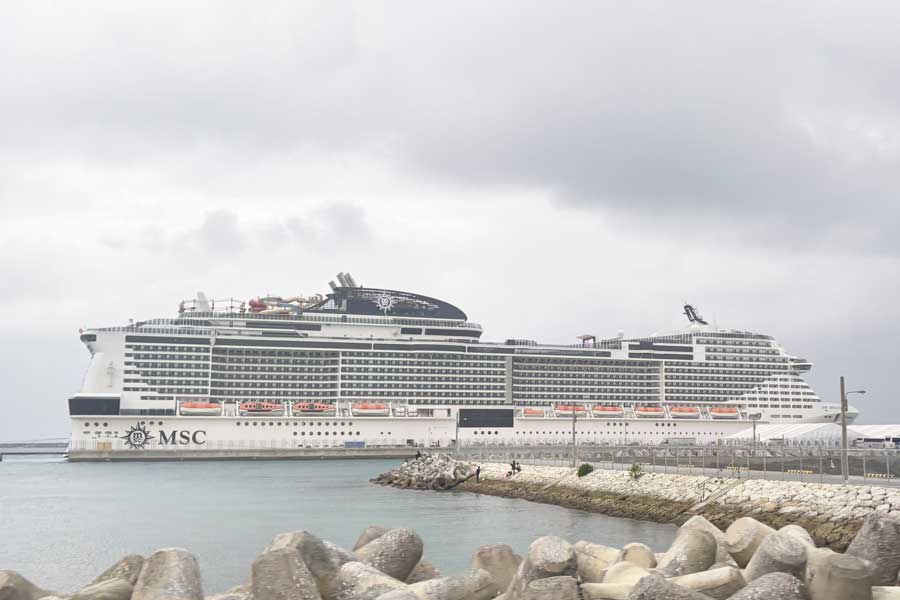
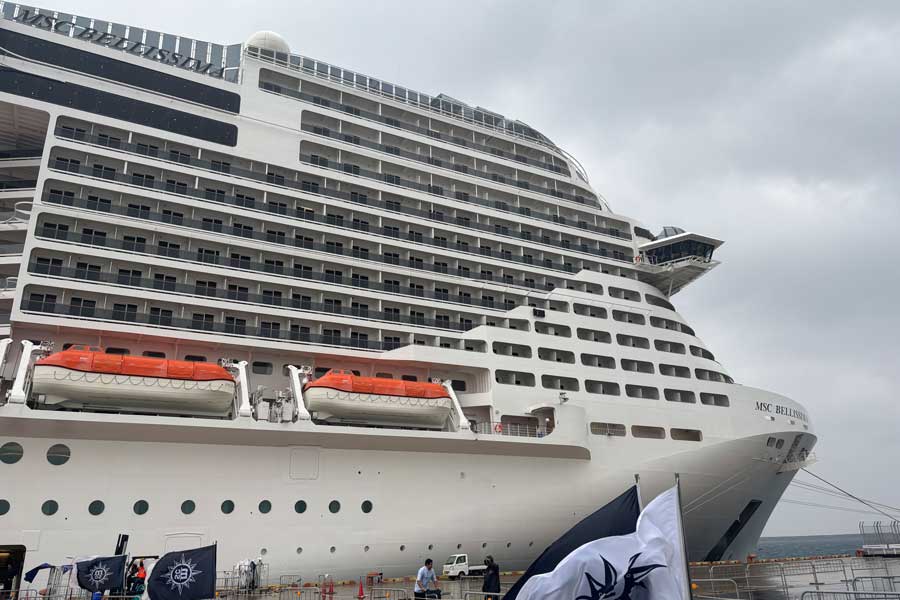
The ship I boarded this time was the “MSC Bellissima,” operated by MSC Cruises, a company founded in Italy and headquartered in Switzerland. Launched in 2019, it is a large cruise ship with a passenger capacity of about 5,600. It is positioned as a casual ship; depending on the route and services offered, passengers can spend most of their time in everyday clothes.
At this time of year, the ship is basically running a loop route between Okinawa and Taiwan, and passengers can embark either in Naha or Keelung. There were many Taiwanese passengers embarking from Keelung, and I also saw a fair number of Korean passengers. The crew is multinational as well, so roughly half the people onboard feel like foreigners from a Japanese perspective. The ship is also chartered by “Japanet Cruise,” so Japanese readers may recognize it from TV commercials and programs.
The tour price varies depending on the travel agency used, but at Cruise Partner, inside cabins started from 59,800 yen. Depending on how full the ship is, prices can be deeply discounted shortly before departure. In addition, there is about 22,500 yen in port charges plus onboard gratuities of 18 US dollars per person per night. Cabin charges, tips, use of the buffet and main restaurants, and use of free facilities such as the pool are all included in this basic fare.
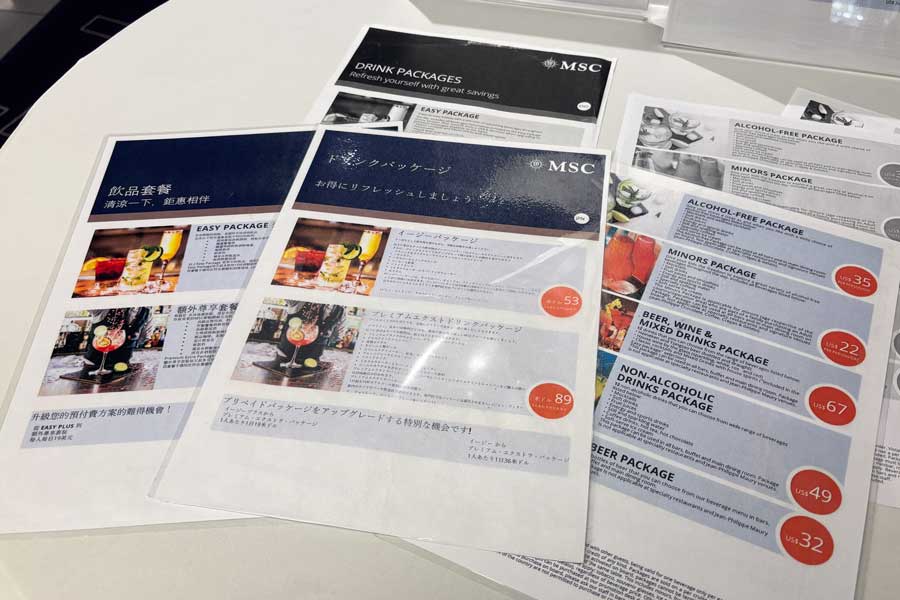
At the buffet, coffee, tea, and water are free, and juice is also available at breakfast. In the complimentary main restaurants, however, only water is free. Alcoholic drinks cost extra. There are “drink packages” that allow up to 15 drinks per day; while they let you enjoy drinks without worrying about the tab, the downside is that you cannot purchase them for just a single day. The “Easy Package,” which covers most drinks, costs 53 US dollars per day, and the “Premium Extra Drink Package,” which includes champagne and other premium beverages, costs 89 US dollars per day, so the prices are not exactly casual. If you go ashore for sightseeing at ports of call, few people are likely to “drink enough” to make back the cost.
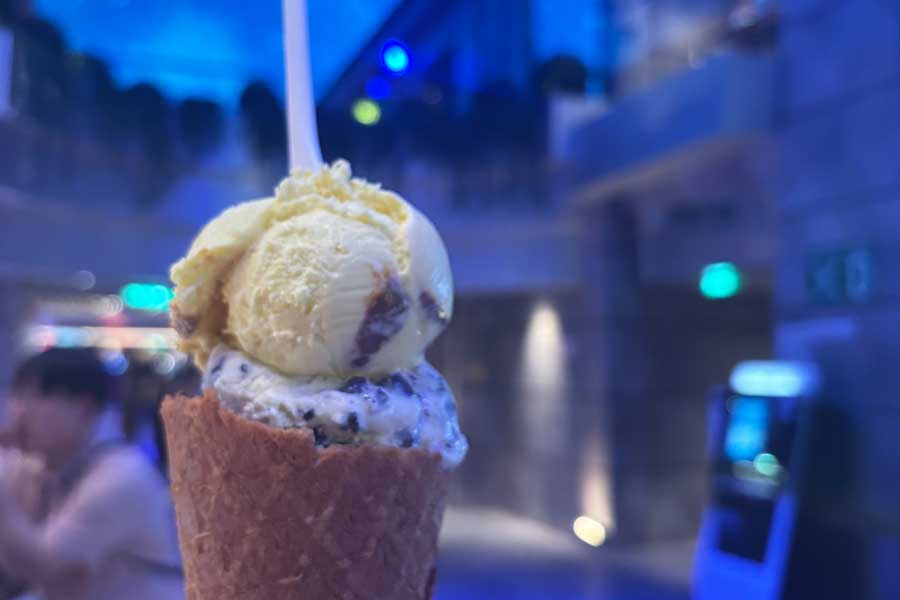
On top of that, Starlink satellite Wi‑Fi, entertainment facilities such as the spa, some events, cafés and gelato, and of course duty‑free shopping all incur additional charges. Prices onboard feel roughly similar to what you would pay at restaurants or cafés overseas. If you think of the satellite Wi‑Fi as similar to paid inflight Wi‑Fi on an airplane, the fees are within a reasonably understandable range, and in that sense the pricing could be called well judged. Since all pricing onboard is in US dollars, it can be painful to keep multiplying everything by 160 yen in your head, so I made my own “rule” to think of 1 US dollar as 100 yen, which made splurging a bit more enjoyable.
If you only eat at the assigned restaurant and the buffet and drink only water in the restaurants, you can lead a rational, bare‑minimum cruise life—but compared to those around you, it will feel like a somewhat meager cruise. If you want to live just as you do on land, you should be prepared for a certain level of extra spending.
This time, because I chose a balcony cabin for single use, the total cost ended up being comparable to a round‑trip air ticket plus accommodation at a four‑star hotel.
Notice
This article was generated using automatic translation by GPT-4 API. The translation may not be accurate.