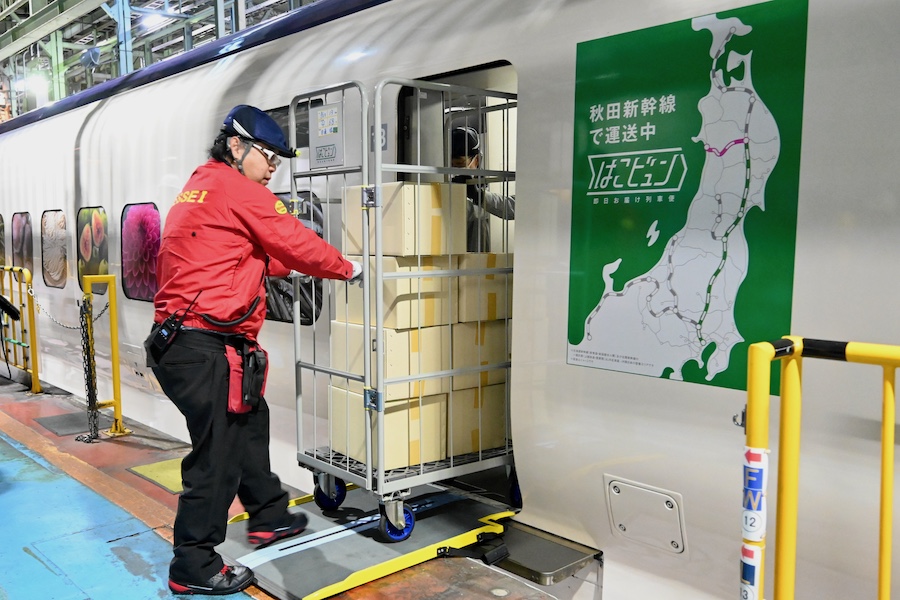
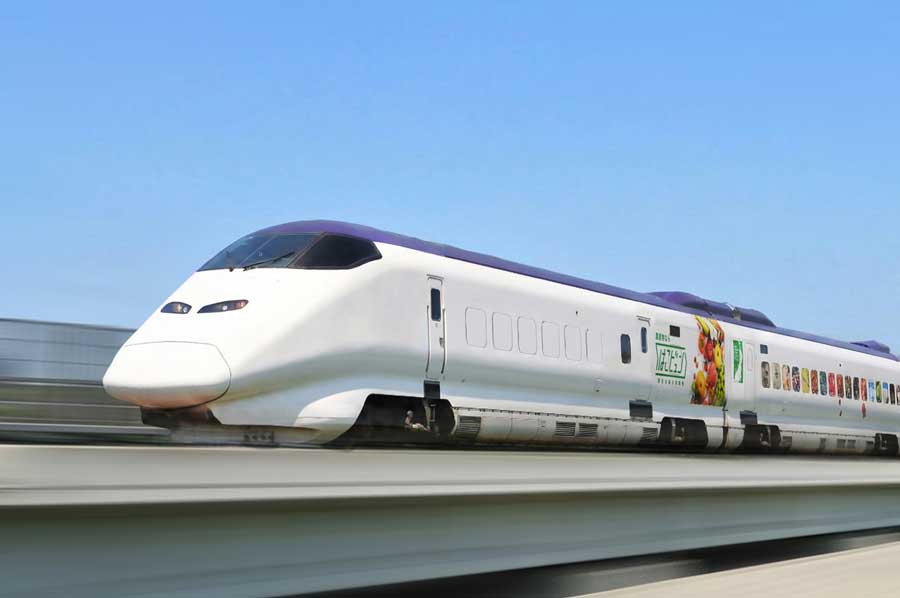
On March 23, East Japan Railway Company (JR East) began regular operations of a dedicated cargo Shinkansen, converted from the E3 series Shinkansen, on the Tohoku Shinkansen line between Morioka and Tokyo stations. From Monday to Friday, it operates coupled to the regular Yamabiko No. 56 service, transporting fresh produce and other goods by taking advantage of the Shinkansen’s punctuality and high speed.
JR East launched initiatives to use Shinkansen trains for cargo transport in 2017, and in 2021 officially branded its rail-based cargo service as “Hakobiyun,” moving into full-scale operations. In 2025, the company also began a bulk transport service using part of the seating area on special Shinkansen services. Responding to growing needs from shippers who want to regularly transport larger volumes of cargo, JR East has now decided to introduce regular operations of dedicated cargo cars.
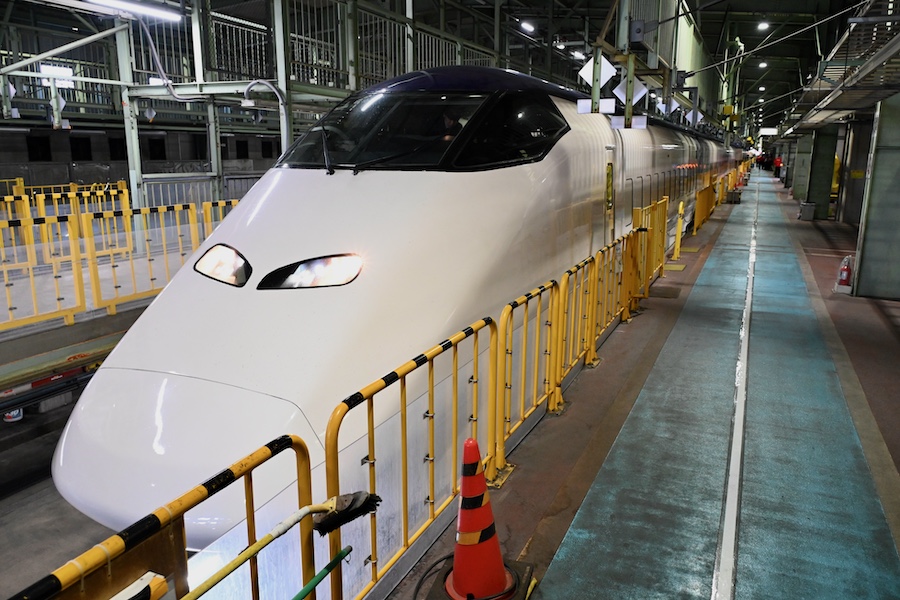
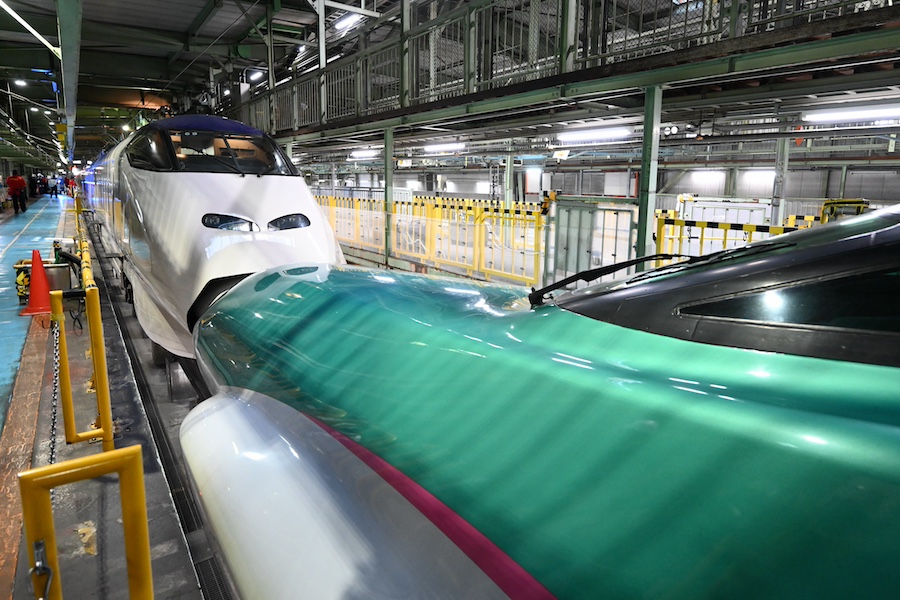
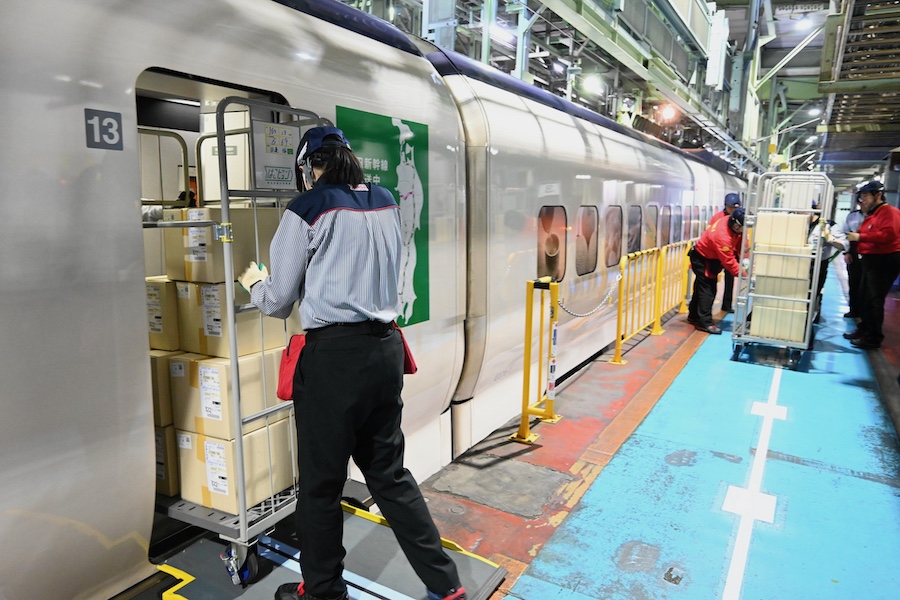
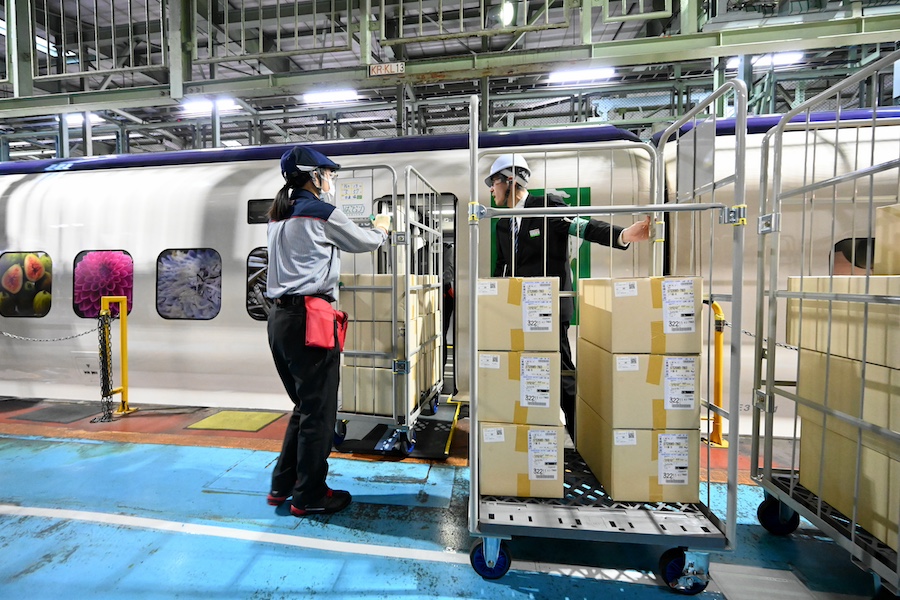
The train converted into a cargo Shinkansen is one E3 series 2000 subseries set (set L69) that had been operating on the Yamagata Shinkansen in Japan. All passenger seats in the interior were removed, the floor was flattened, and steel plates were laid. Anti-slip measures and load-securing belts were installed, and the car was configured so that cargo can be loaded while remaining on roll containers. It can transport up to 1,000 cardboard boxes (17.4 tons). Externally, the entire body has been painted white, and the windows of the intermediate cars feature designs of local specialty products that have already been transported, arranged by area.
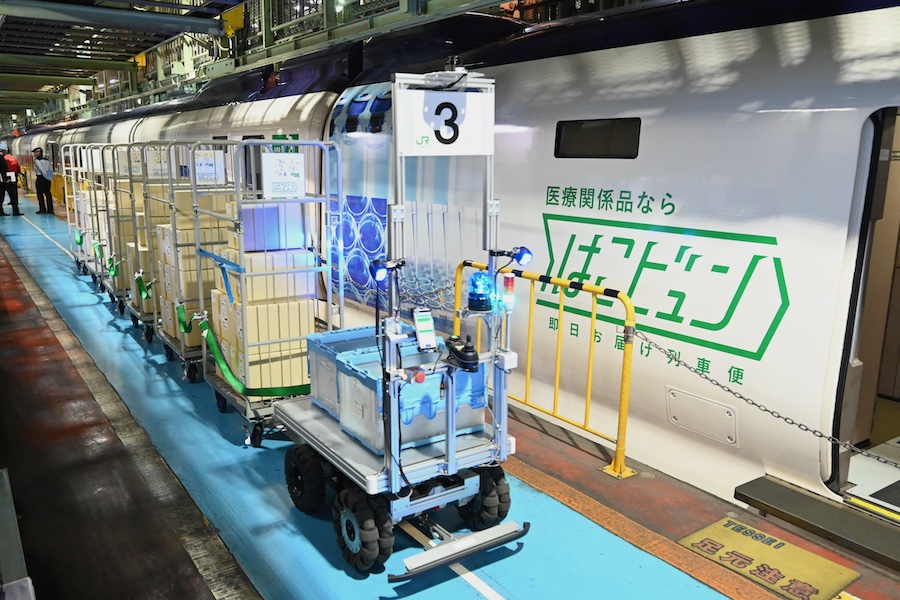
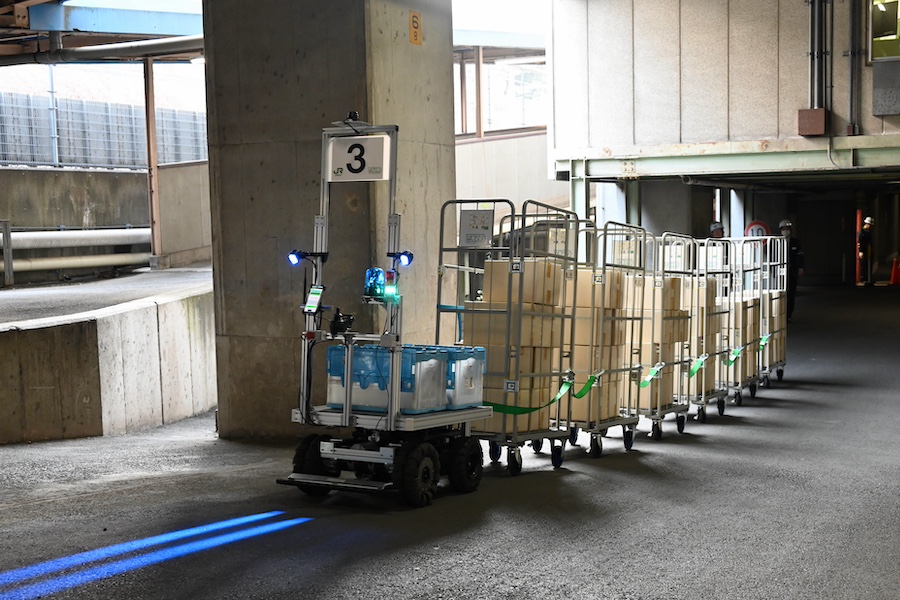
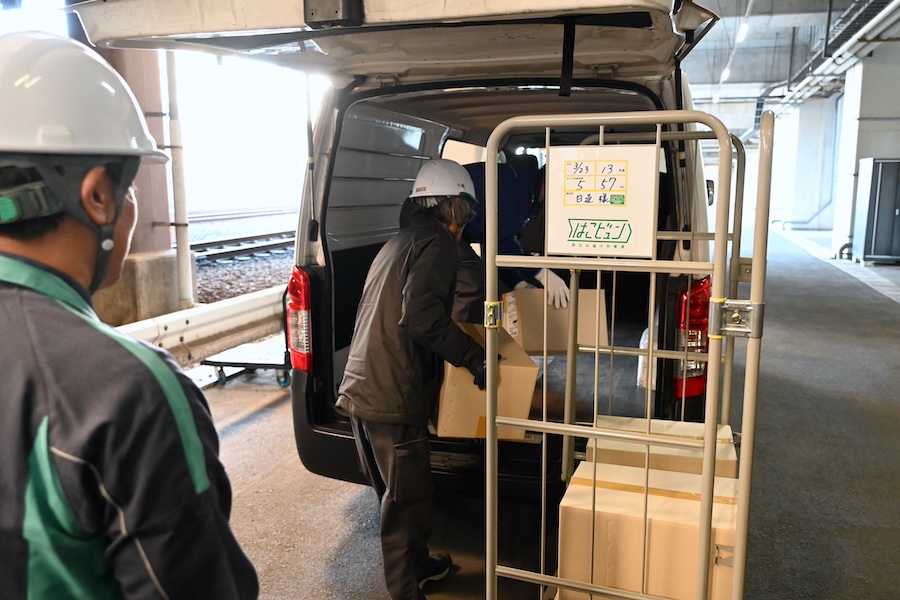
Cargo loading and unloading is carried out at Shinkansen rolling stock centers in both Tokyo and Morioka in Japan. On the first day, 800 boxes of fresh food, ekiben (boxed meals sold at railway stations), and other items were loaded. The train departed Morioka Station at 12:08 p.m., arrived at Tokyo Station at 3:24 p.m., and reached the Tokyo Shinkansen Rolling Stock Center in Kita Ward, Tokyo, at around 3:54 p.m. The cargo was taken out together with the roll containers and transported automatically by Automated Guided Vehicles (AGVs) before being transferred to trucks at the cargo handling area within the rolling stock center.
Yosuke Mitsui, Manager at JR East’s Marketing Headquarters, stated, “The strength of cargo transport by Shinkansen is that there is little vibration and goods can be delivered on time,” adding that the company is also considering expansion to down services from Tokyo toward Morioka and to other lines such as the Joetsu Shinkansen in Japan.
Notice
This article was generated using automatic translation by GPT-4 API. The translation may not be accurate.