On May 30, Tokyo Metro operated a special event train called the “Dream Adventure Train Route Gin-Maru,” which used a “retro trainset” of the Ginza Line to travel to the Marunouchi Line’s Nakano Train Depot.
When Ginza Line trainsets undergo major periodic inspections and other heavy maintenance, they enter the Marunouchi Line via a connecting track located between Tameike-sannō and Akasaka-mitsuke stations, and then proceed into the Nakano Train Depot near Nakano-fujimichō Station. This event train carried passengers along this route, which is normally used only by non-revenue (non-passenger) trains.
The name “Dream Adventure Train” pays homage to the event train “Dream Adventure Train Route 34,” which operated in 1987 to commemorate the 60th anniversary of the then Teito Rapid Transit Authority (commonly known as Eidan Subway), running through between the Ginza Line and the Marunouchi Line. Incidentally, “Route 34” comes from the urban planning designations of the two lines: the Ginza Line as “Line No. 3” and the Marunouchi Line as “Line No. 4.” As an example of regular passenger trains that have used this connecting track in the past, there was the temporary “Hanabi Liner” service that operated in the 1990s in conjunction with the Sumida River Fireworks Festival.
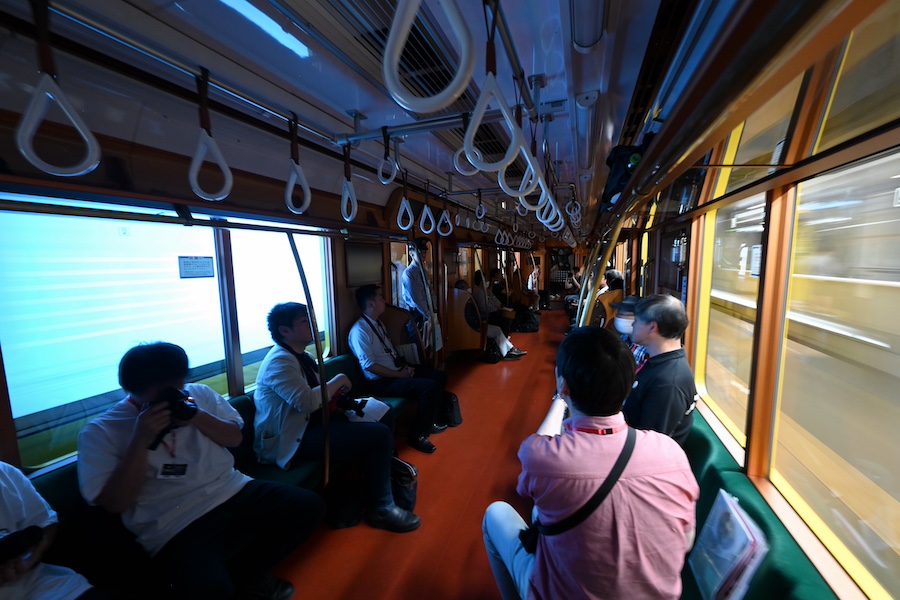
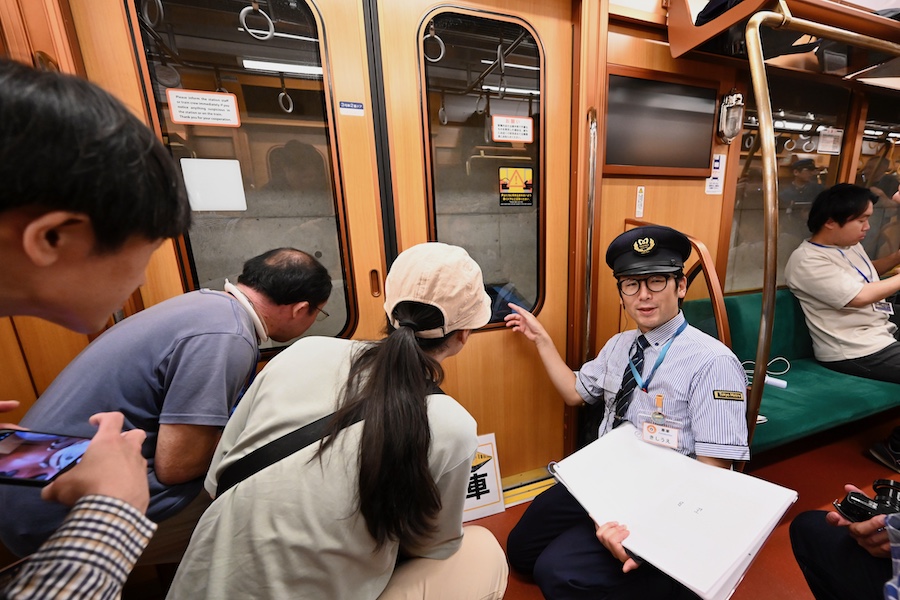
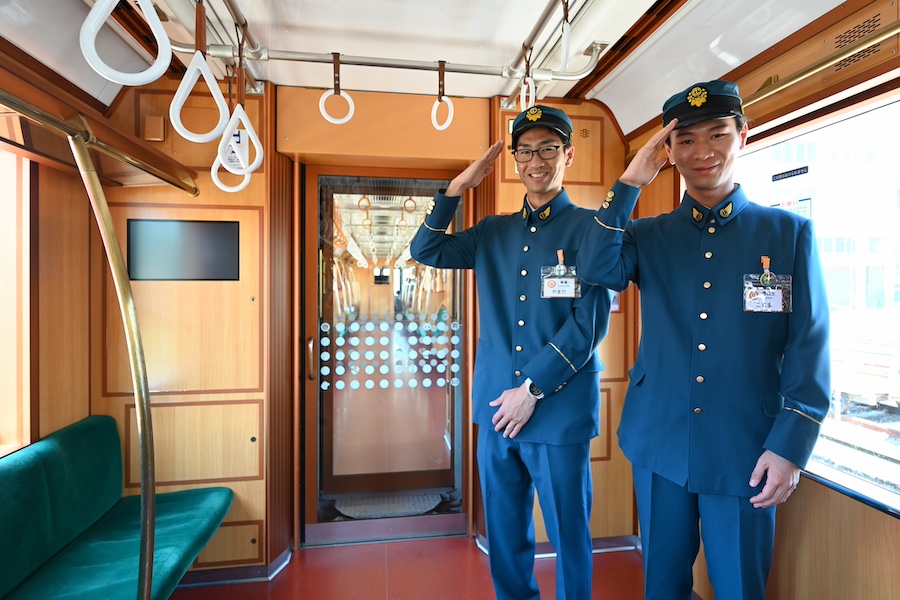
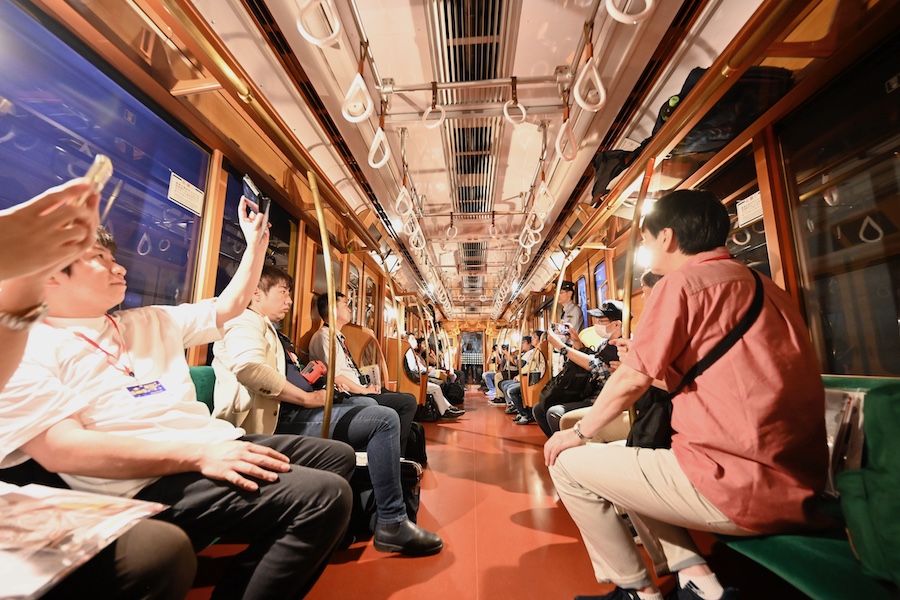
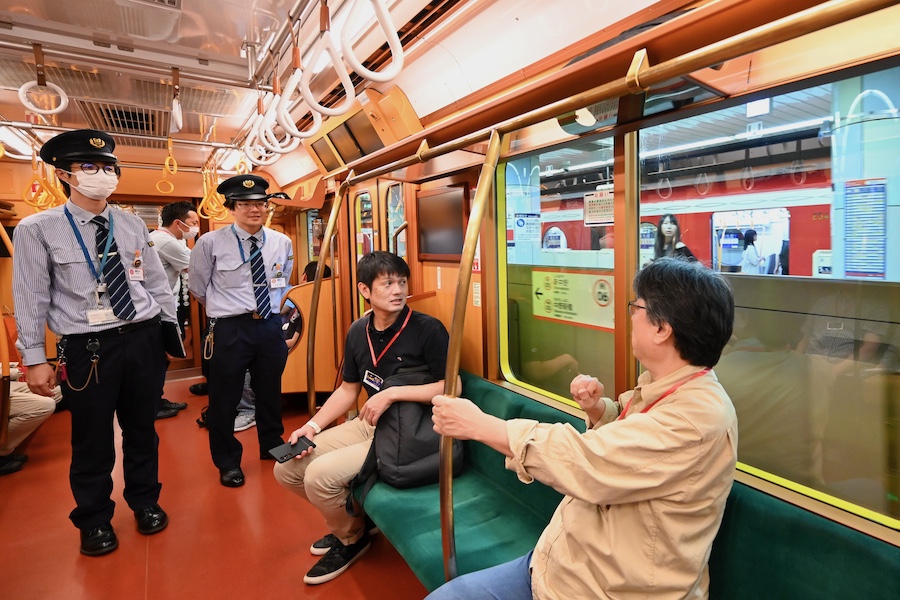
The 102 participants gathered at Ueno Inspection Yard boarded Set No. 40 of the Ginza Line Series 1000 in its special retro specification, which is modeled after the old Series 1000 cars used when the Ginza Line first opened. The deep green seat moquette, wood-grain-style wall panels, brass-colored handrails and stanchions, and hanging straps inspired by the spring-powered, flip-up “Riko-style” design all faithfully recreate the feel of the original Series 1000 down to the smallest detail. Only two out of all forty Series 1000 trainsets have this special specification. Inside the cars, passengers were welcomed by operating staff wearing reproduction uniforms from the era when the subway first opened in Tokyo.
▲The event train departing from the underground train depot at Ueno Inspection Yard
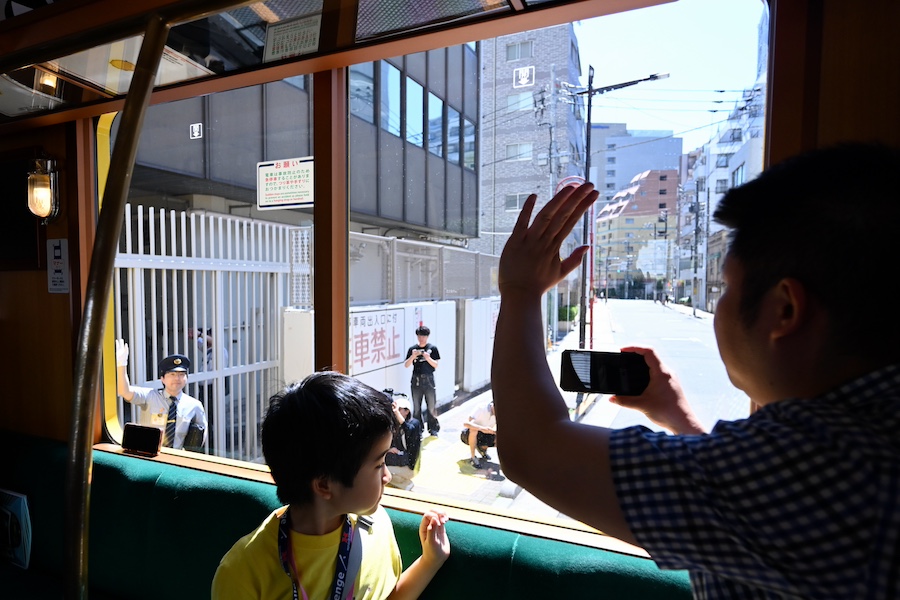
The train slowly departed Ueno Inspection Yard at 9:35 a.m. It passed through Japan’s only level crossing on a subway line—where an entry/exit track crosses a public road—while performing a shunting move, and then entered the underground storage tracks of the yard. According to the onboard announcements, this was the first time that a train had entered this underground depot while carrying passengers.
After leaving the underground train depot, the train briefly surfaced above ground, then descended a steep 55‑permil gradient back underground. It entered Track 2 at Ueno Station, reversed direction, and then set off toward Asakusa.
Asakusa Station is the terminal of the Ginza Line, but the event train continued “beyond” the usual end of the line. In fact, on the terminal side of Asakusa Station there is a reversing track where trains can also be stabled, and in 2024 an additional two trainset-lengths of track were constructed there. This was also the first time that a train carrying passengers entered this reversing track.
After changing direction on the reversing track, the train now headed for Shibuya. Although it ran non-stop without calling at intermediate stations, it proceeded while making brief stops to adjust the gap between it and preceding trains, since it had to fit into the regular timetable.
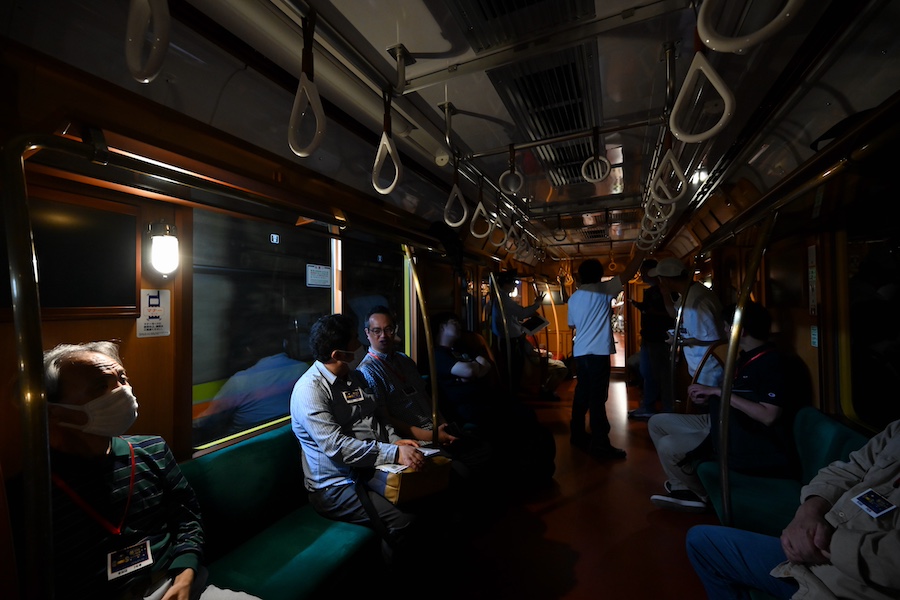
While running, there were moments when the interior lights briefly went out and the wall-mounted auxiliary lights switched on as the train passed through section insulators where the power supply changes. This recreated a scene that was seen up until 1993, when the replacement of the old Series 2000 cars with Series 01 cars was completed on the Ginza Line.
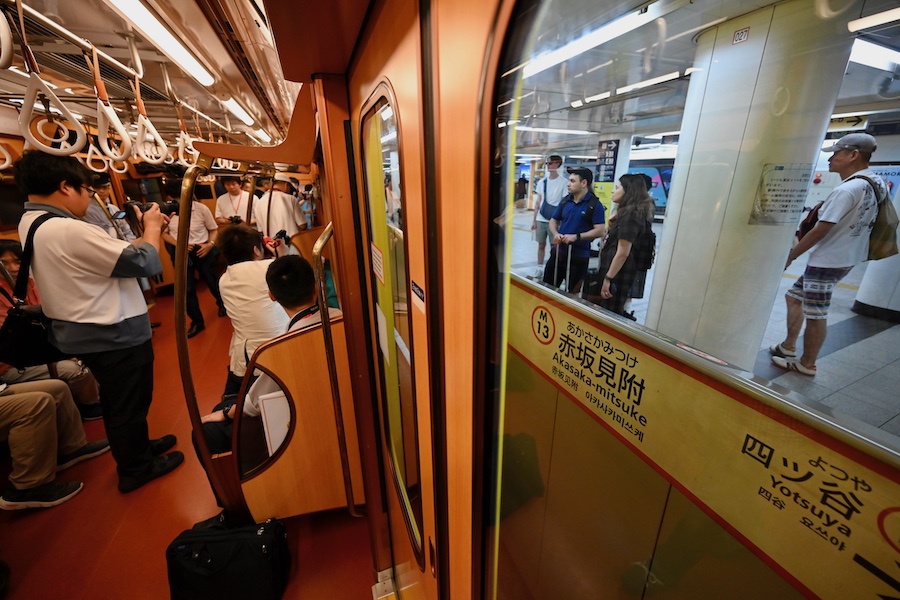
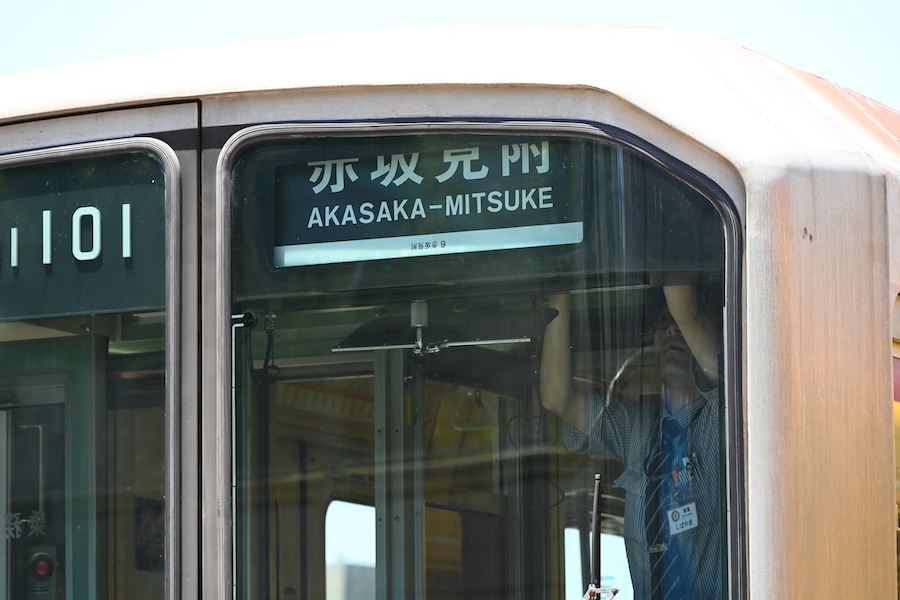
The train arrived at Tameike-sannō Station at around 11:04 a.m. From here it diverged onto the connecting track and then appeared on the Marunouchi Line platforms at Akasaka-mitsuke Station. Regular passengers waiting on the platform looked curiously at the Ginza Line trainset pulling into the Marunouchi Line platform.
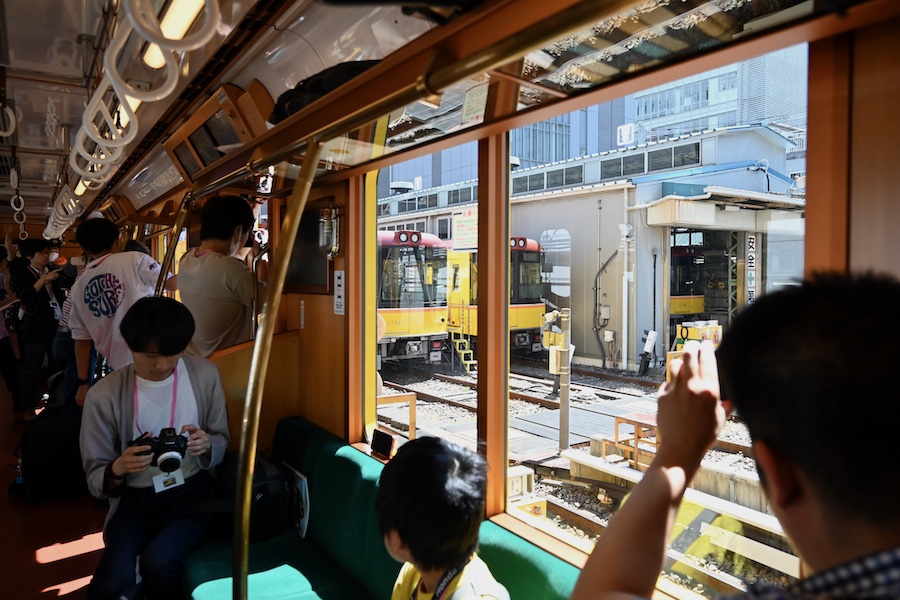
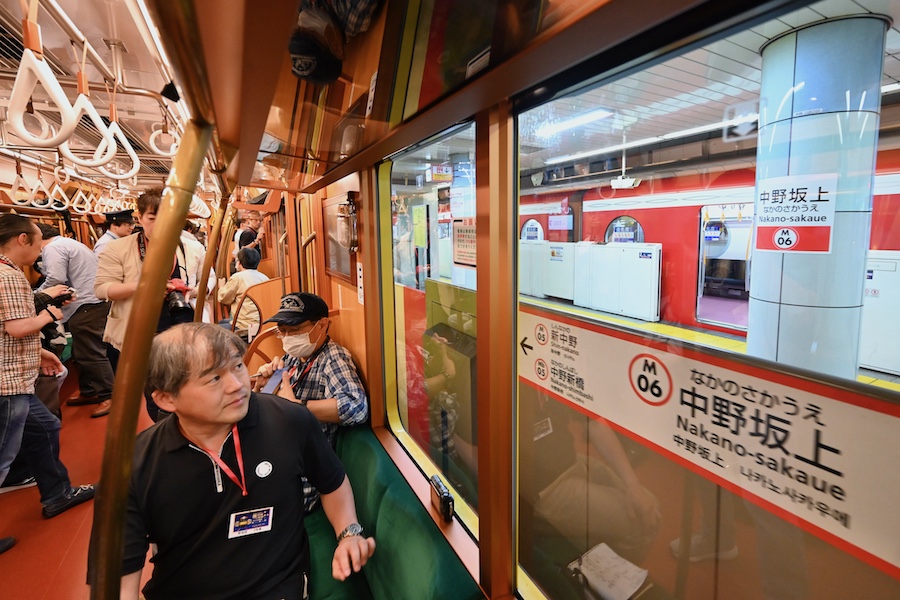
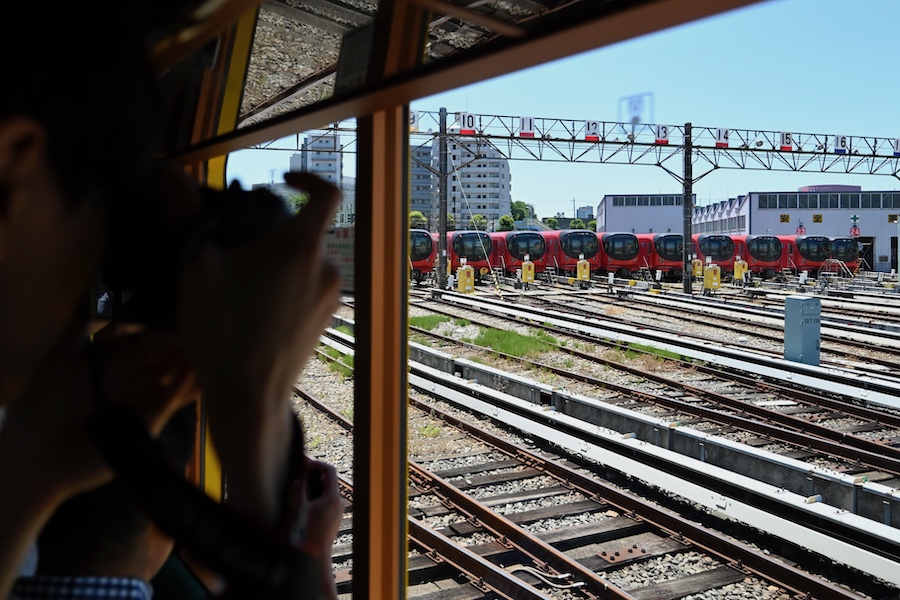
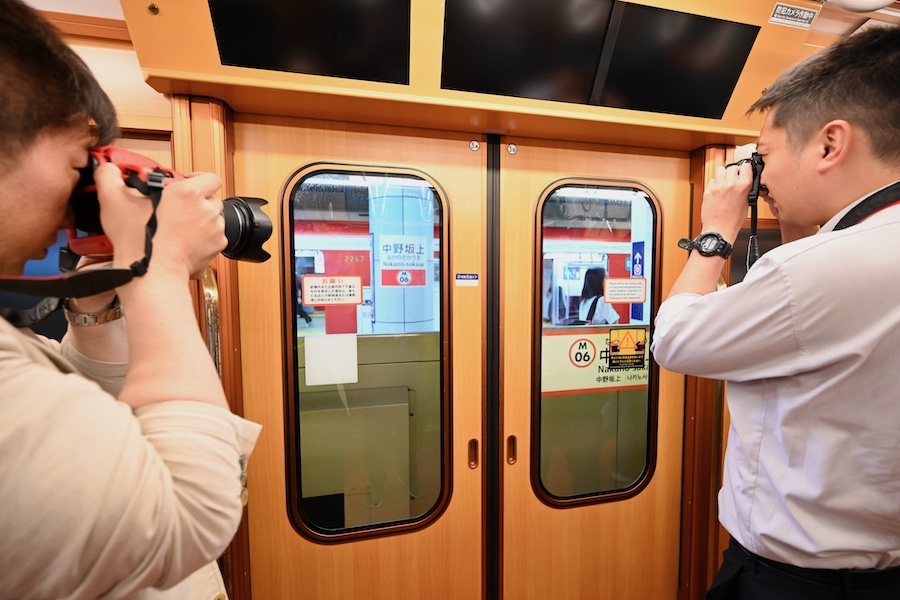
From Akasaka-mitsuke, the train ran on the Marunouchi Line tracks, passing even through Shinjuku Station—one of the world’s largest terminal stations—without stopping, and continued toward Ogikubo and Honan-chō. It stopped at Nakano-sakaue Station at around 11:19 a.m., from where it took the branch toward Honan-chō. After passing Nakano-fujimichō, it diverged onto the depot entry/exit tracks for Nakano Train Depot, climbed a gradient, and arrived at the ground-level Nakano Train Depot at around 11:30 a.m.
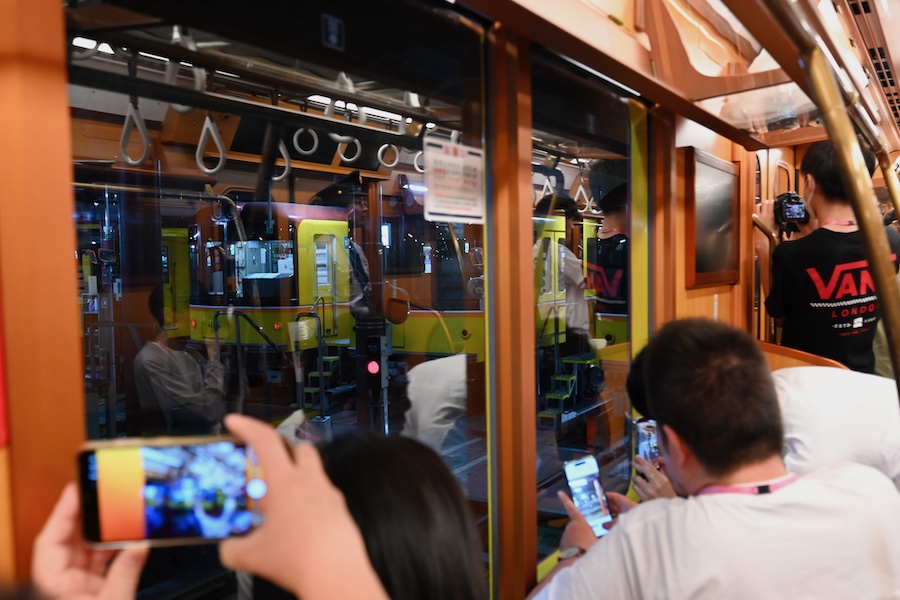
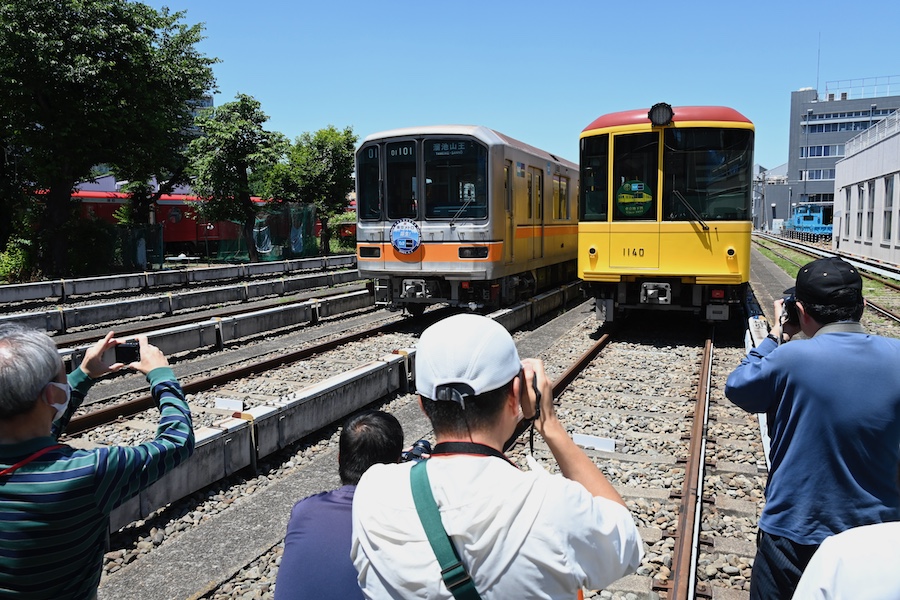
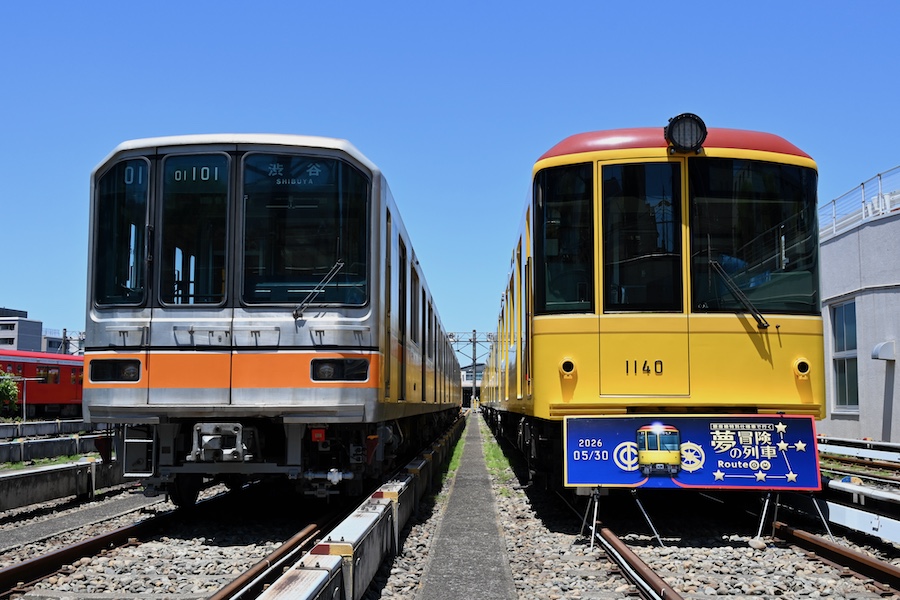
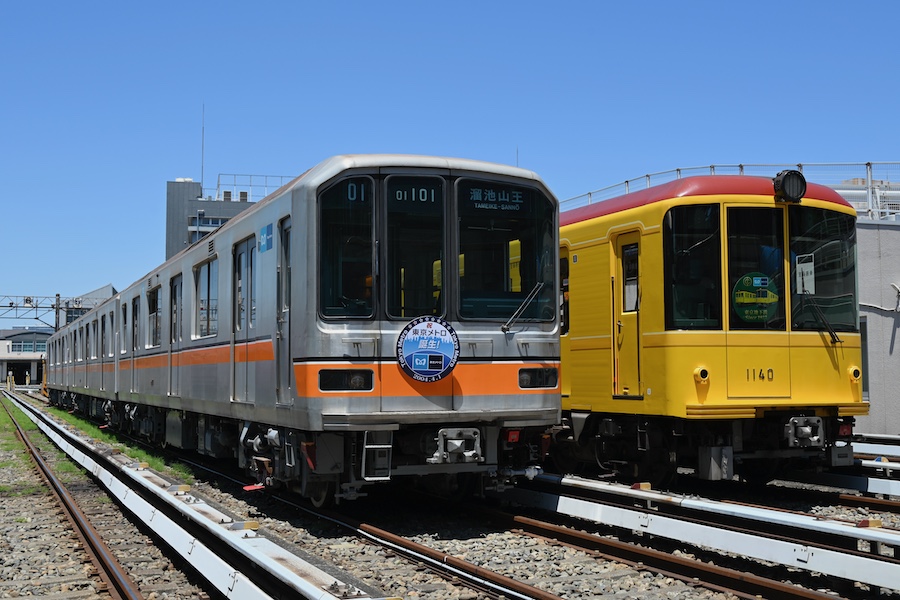
At the depot, a photo session was held with the Ginza Line Series 01 trainset—which was retired in 2017 and is now used within the depot for crew training—lined up side by side with the Series 1000 trainset.
This event was proposed mainly by staff from the Ginza Line Train Crew District, who wanted to hold an event making use of the retro trainsets. According to Naoto Eguchi, assistant train operations manager at the Asakusa Conductors’ Office, they had held an event during Japan’s Golden Week holidays in 2024 in which the interior lighting of normal revenue trains was changed to a warm color and the auxiliary lights were turned on while running, which was well received. That success led to the planning of this new event.
The planning started around September 2025. With cooperation from a variety of internal departments—including the Marunouchi Line Train Crew District, Nakano Rolling Stock Management Office, Ueno Inspection Yard, and Ginza Station Management District—they managed to bring the project to fruition. Masahiro Yamada, Grade-2 conductor at the Asakusa Conductors’ Office, recalls, “To be honest, we were worried whether the tickets would sell out,” but they sold out within a few hours of going on sale. “We are truly grateful. It made us feel that we absolutely had to make this a success,” he said, also expressing enthusiasm for holding a second installment of the event in the future. (13 more photos below)
▲Operating staff welcoming participants while wearing reproduction uniforms from the early days of the Tokyo subway. A total of about 80 employees were involved in the event on the day.
▲The train performing a shunting move while passing through “Japan’s only subway level crossing” located outside Ueno Inspection Yard
▲Crew members explaining the reversing track at Asakusa Station to participants
▲Recreating a classic Ginza Line scene where the interior lights temporarily go out and the wall-mounted auxiliary lights come on when passing a section insulator
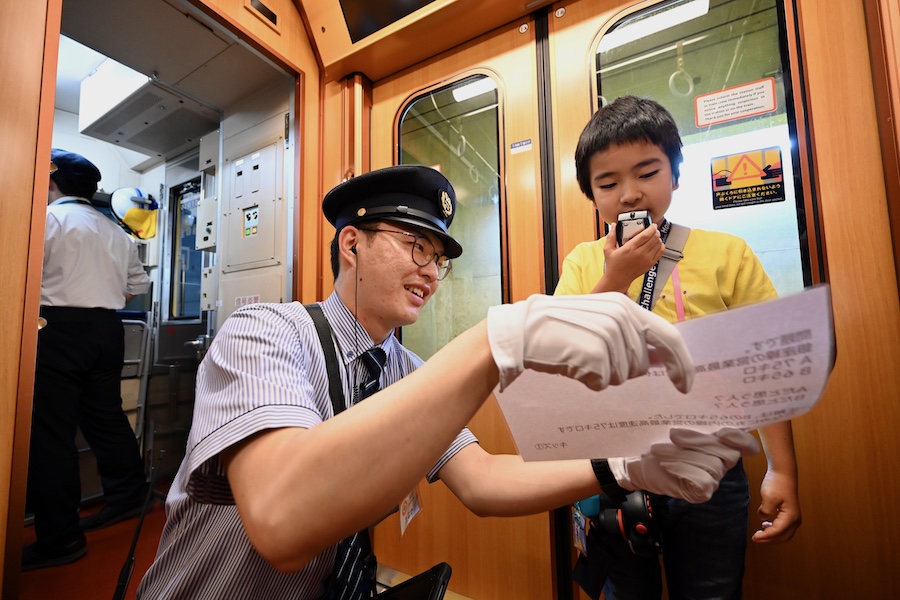
▲During the onboard quiz contest, participants asked questions using the in-car public address system
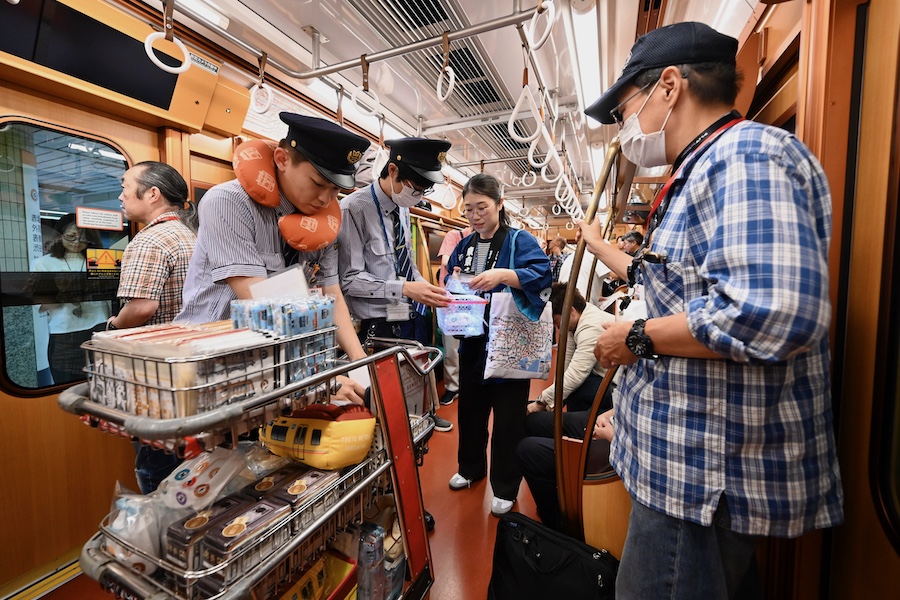
▲Onboard sales of original goods from a service trolley
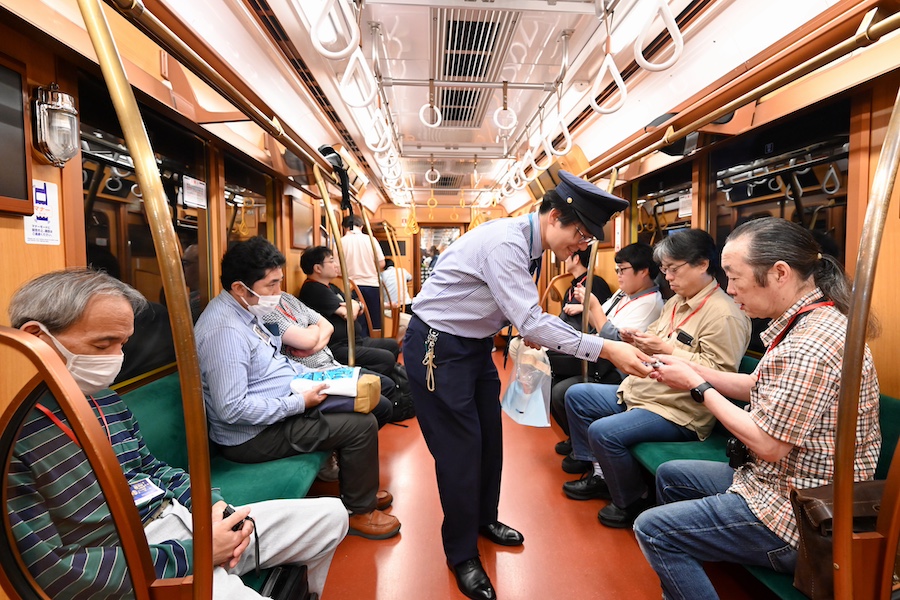
▲Crew members handing out commemorative gifts to participants
▲Photo session of Series 01 and Series 1000 held after arrival at Nakano Train Depot
▲
Notice
This article was generated using automatic translation by GPT-4 API. The translation may not be accurate.