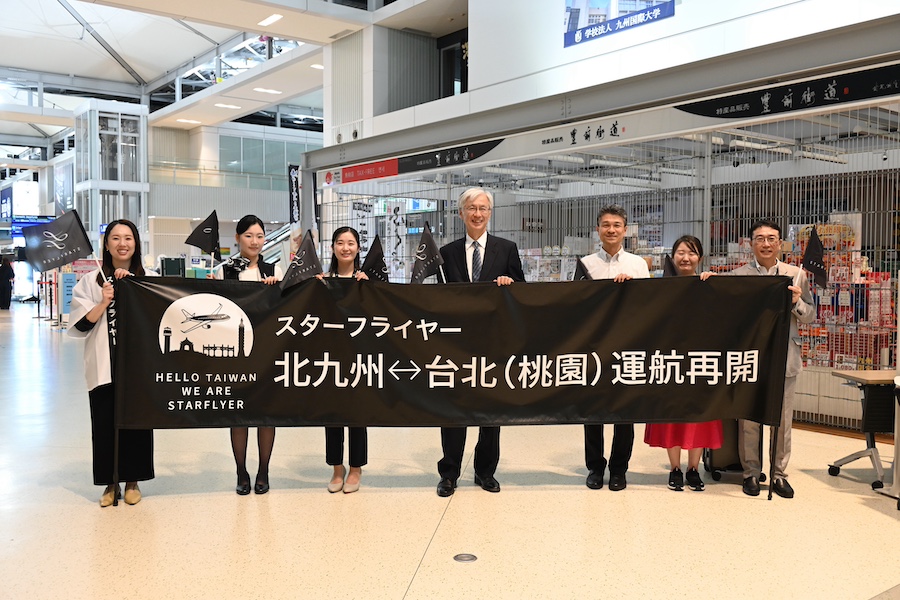
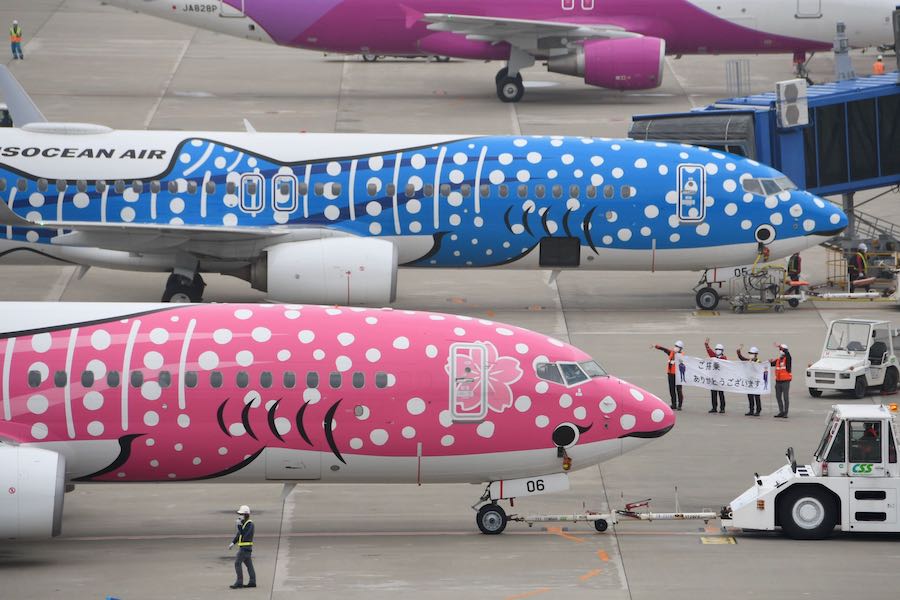
StarFlyer resumed operations on its Kitakyushu–Taipei/Taoyuan route on September 2, following an interruption of approximately six and a half years.
The route was launched on October 28, 2018. At the time, the airline operated one daily round trip using a 150-seat Airbus A320ceo, but service was suspended from March 11, 2020, due to the COVID-19 pandemic.
The resumed service will initially operate three round trips per week. Flight 7G801 from Kitakyushu operates on Wednesdays, Fridays, and Sundays, while flight 7G800 from Taipei/Taoyuan operates on Mondays, Thursdays, and Saturdays. Under the summer schedule through October 24, flight 7G801 departs Kitakyushu at 11:40 p.m. and arrives in Taipei/Taoyuan at 1:10 a.m. the following day. Flight 7G800 departs Taipei/Taoyuan at 3 a.m. and arrives in Kitakyushu at 6:20 a.m.
Under the winter schedule from October 25, flight 7G801 departs Kitakyushu at 11:50 p.m. and arrives in Taipei/Taoyuan at 1:30 a.m. the following day. Flight 7G800 departs Taipei/Taoyuan at 3 a.m. and arrives in Kitakyushu at 6:15 a.m. Both schedules operate during late-night and early-morning hours.
For travelers departing Japan, both arrival in Taipei and departure on the return flight take place late at night. At a commemorative ceremony held at Kitakyushu Airport on September 2, StarFlyer President Osamu Machida explained that the schedule takes advantage of the fact that both Kitakyushu and Taipei/Taoyuan airports operate around the clock. He said that passengers can make effective use of their time at their destination, making the service convenient for both leisure and business travel.
Before the suspension, aircraft from JA25MC onward, equipped with galley ovens for serving hot meals, were used as international-service aircraft. With the resumption, StarFlyer has eliminated the distinction between domestic and international cabin configurations. In principle, the airline will deploy 162-seat Airbus A320neos, which it has been introducing since 2023, although conventional A320ceos may also be used depending on operational requirements.
Flying the Taipei Route for the First Time in 6½ Years
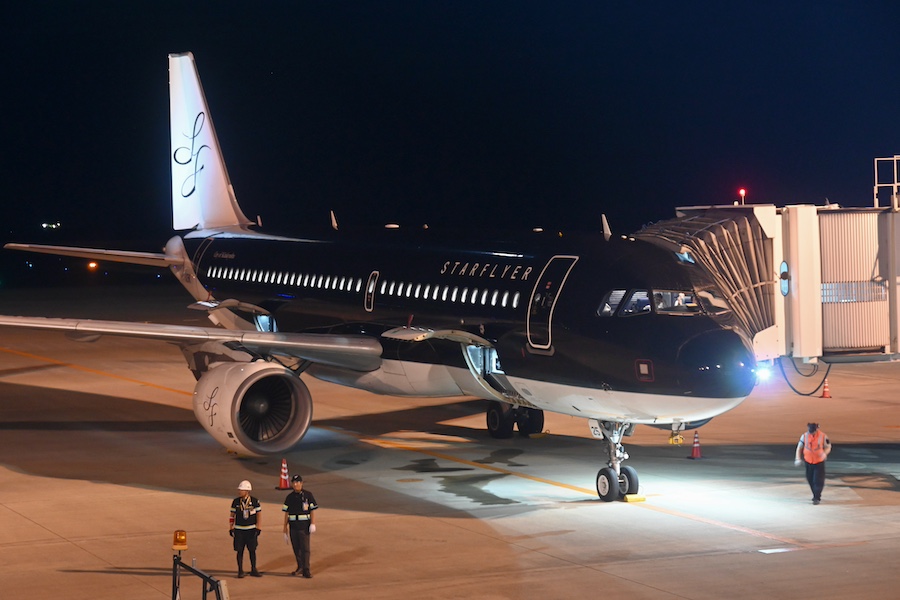
An A320ceo (registration: JA25MC) was assigned to flight 7G801 on September 2, the first flight after service resumed. There were 93 passengers, most of them Japanese, although Taiwanese travelers accounted for around 30%.
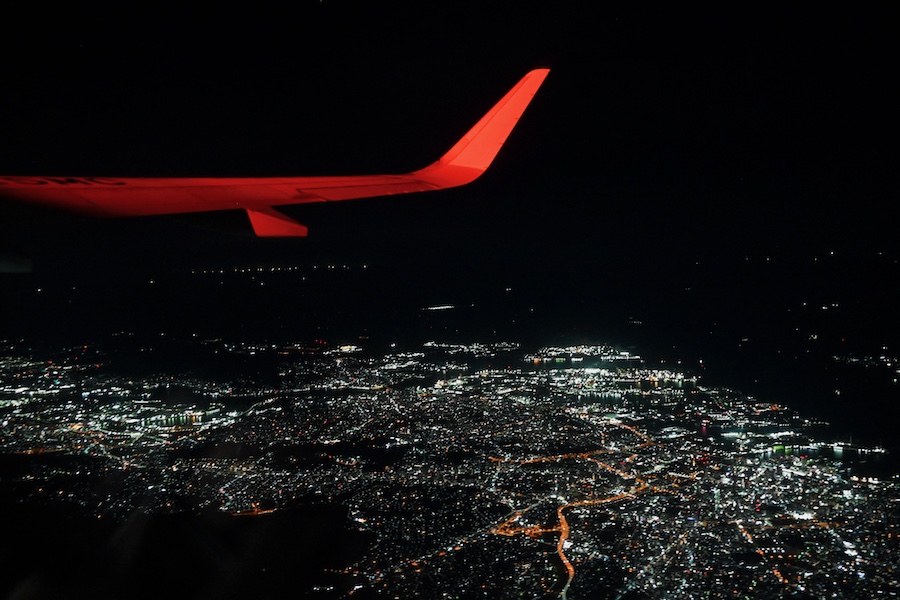
▲Heading for Taipei with Kitakyushu’s nightscape below
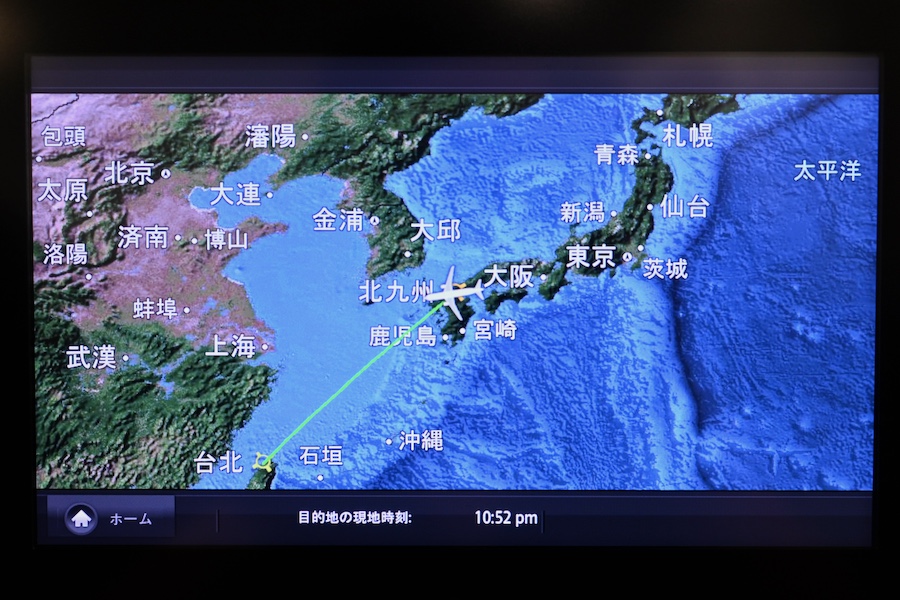
Preparations for departure took some time, and the aircraft departed Kitakyushu Airport at 12:06 a.m. on September 3, crossing into the next day after a delay from its scheduled 11:40 p.m. departure. The approximately two-hour overnight flight had begun.
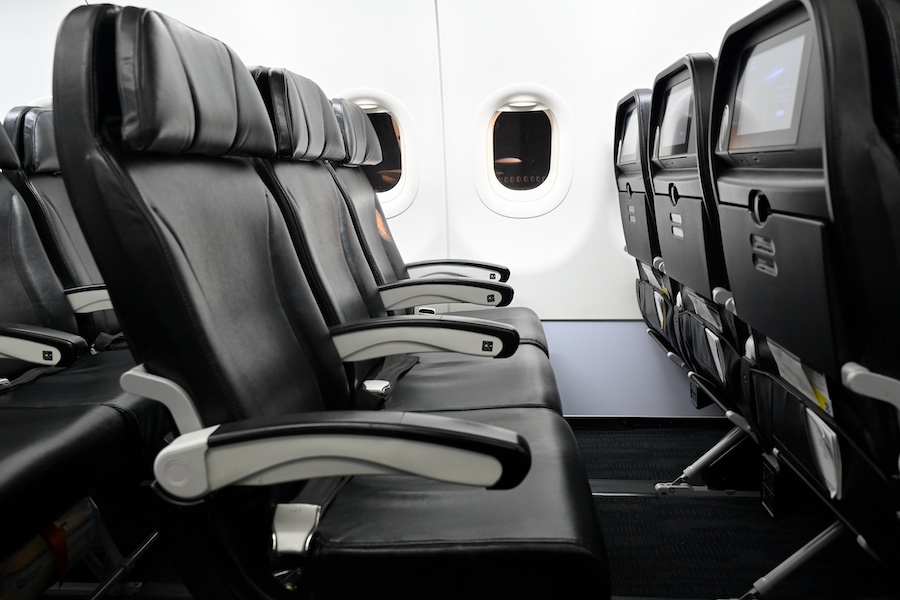
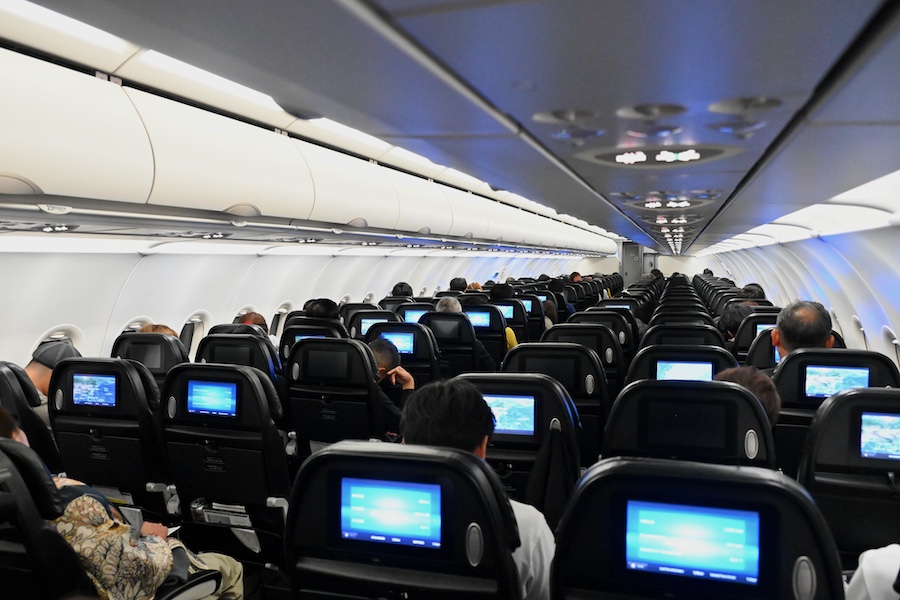
StarFlyer’s aircraft are characterized by their generous seat pitch, made possible by limiting the number of seats. The black leather seats also feature footrests, offering a comfortable experience even on this short-haul international route. On the A320neo, seatback monitors have been replaced with device holders, and complimentary onboard Wi-Fi using Inmarsat’s GX satellite service is available, including on international flights.
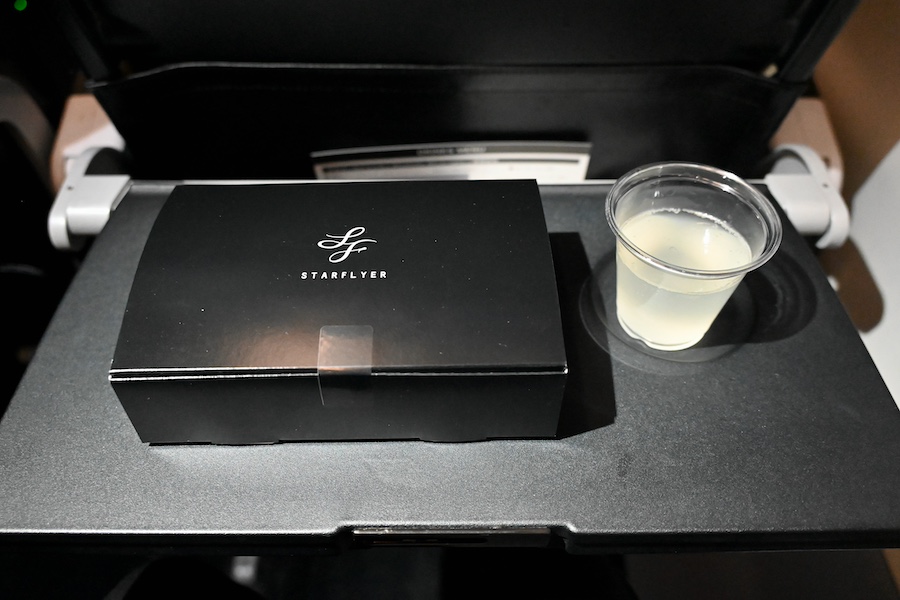
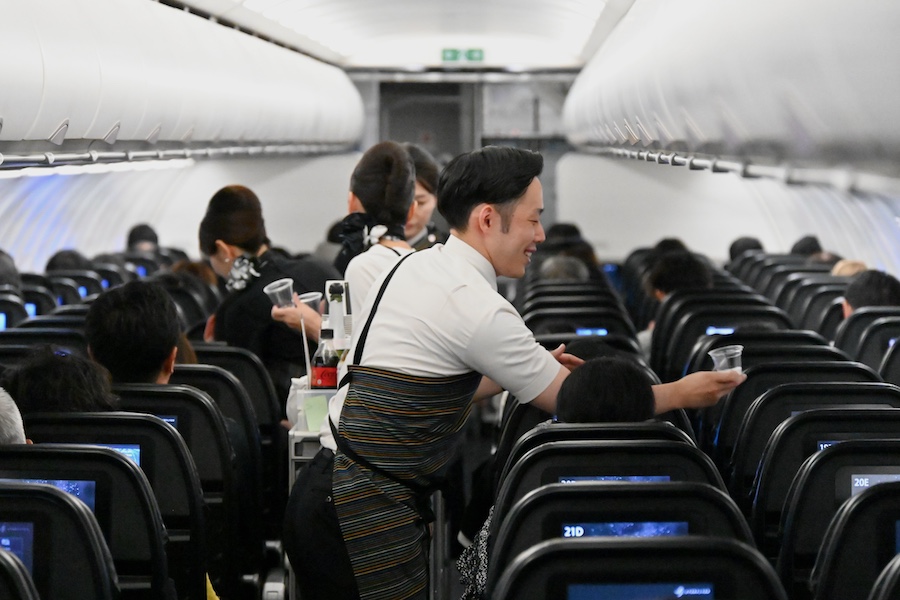
Before the suspension, the Taipei route offered hot meals in containers designed to resemble bento boxes. Following the resumption, StarFlyer has switched to snack boxes containing specialty confectionery from Kitakyushu City, taking into account the late-night and early-morning schedule.
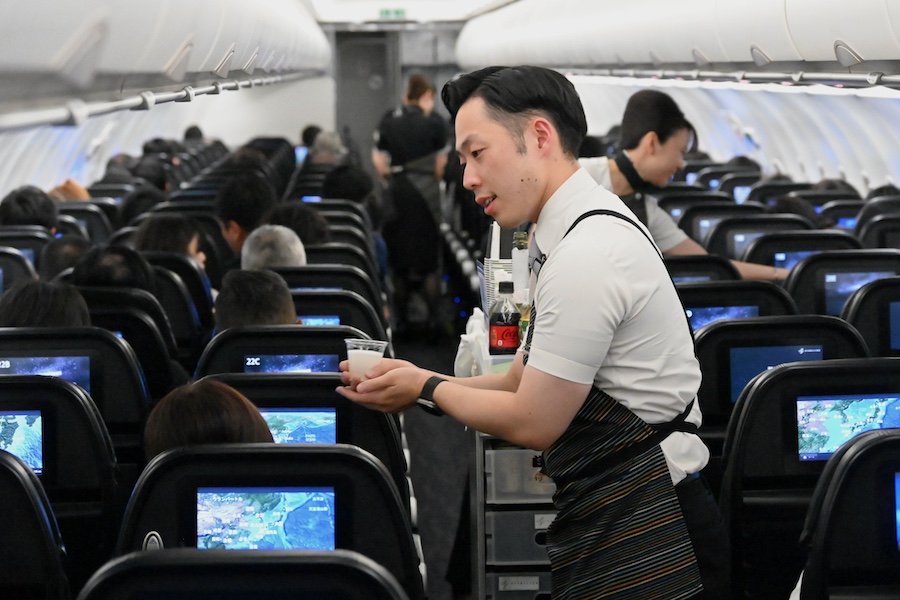
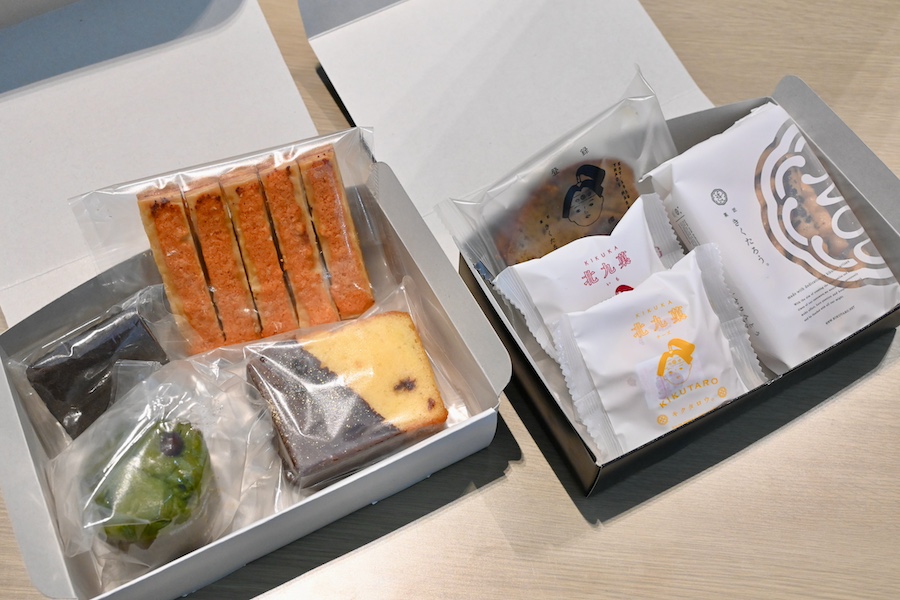
On flights departing Kitakyushu, the airline serves a “KYUSHU SWEETS BOX” containing four items from Kasho Kikutaro: Ariake Sea nori seaweed karinto, hojicha pound cake, Kitakyuka cheese confection, and Kitakyuka sweet potato confection. The predominantly black box is also distinctly StarFlyer in style.
On flights departing Taipei, the “KYUSHU SNACK BOX” includes Hoshinomura matcha muffins, mentaiko cheese pies, salted butter sandwiches with chocolate cookies, and raisin pound cake from Crown Seipan, a bakery founded in Kitakyushu City.
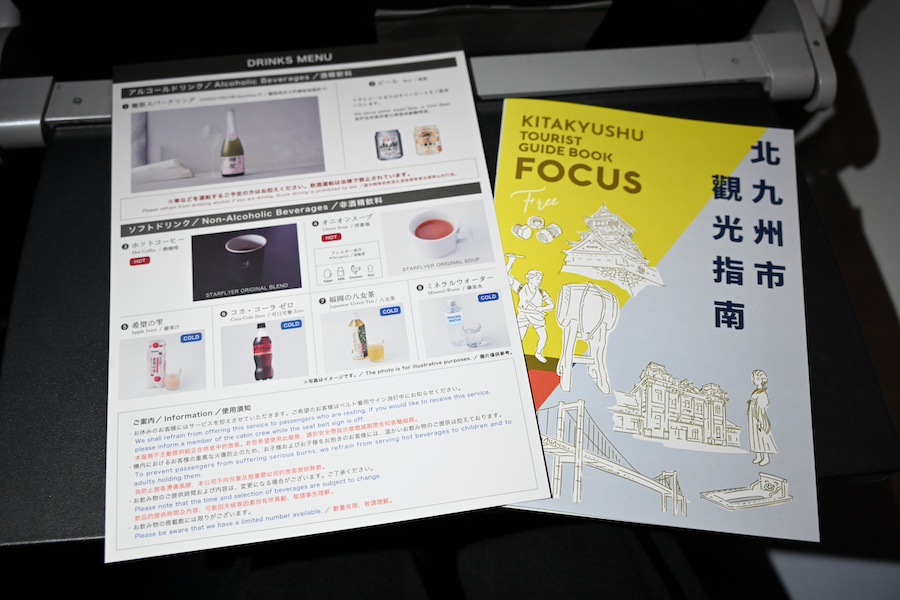
Drinks include familiar domestic-flight offerings such as hot coffee, onion soup, apple juice, Coca-Cola Zero, and Yame tea from Fukuoka Prefecture. Alcoholic beverages are also available on international flights, including Dassai Junmai Daiginjo 45 Nigori Sparkling sake and beer.
As this was an overnight flight, the cabin gradually became quiet after the light meal was served. Although the flight lasts only around two hours, the seats’ ample legroom is welcome at a time when passengers want to rest as much as possible.
▲Blankets exclusively for international flights are also provided. They are lighter and softer than those used on domestic flights.
Arriving at Taoyuan at 1 a.m.: How Do You Get to the City?
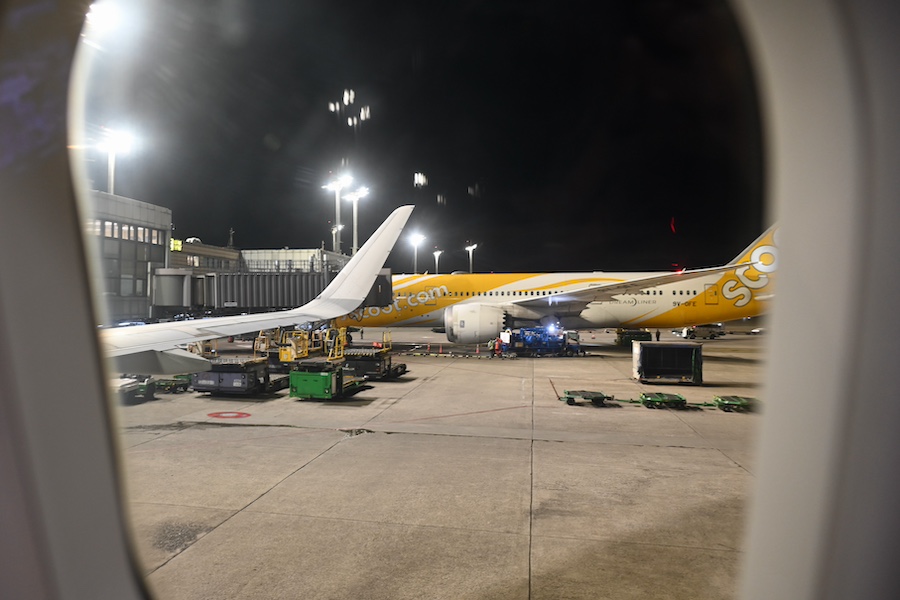
Flight 7G801 landed at Taoyuan Airport at 1:14 a.m. and arrived at gate B6 in Terminal 1 at 1:21 a.m.
Immigration at Taoyuan Airport can often be crowded depending on the time of day, but it was extremely quiet late at night, with virtually no waiting time. Passengers without checked baggage could likely reach the arrivals lobby within around 10 minutes of disembarking.
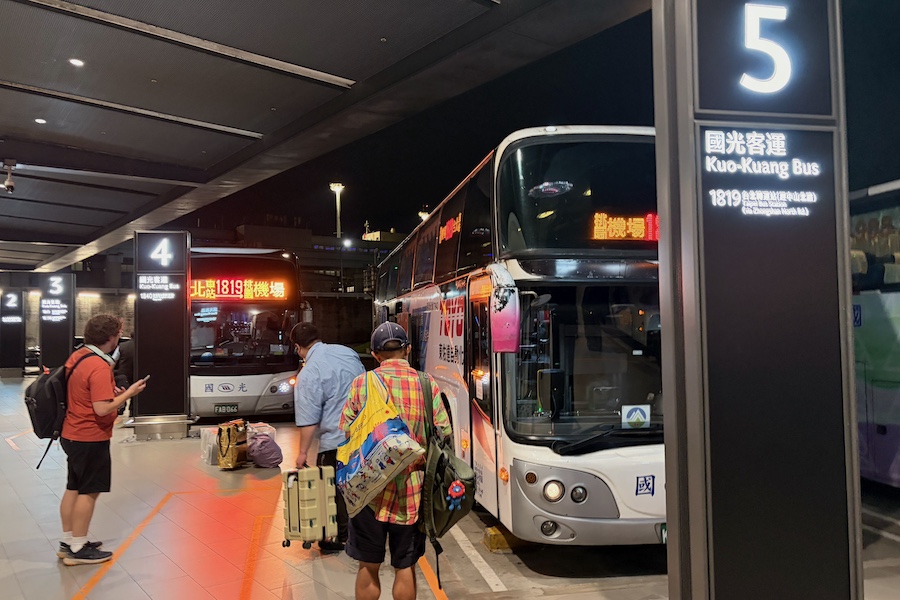
The challenge comes after that. For travel from Taoyuan Airport to central Taipei late at night, the Kuokuang Motor Transport airport bus, commonly known as the 1819 bus, which connects to the Taipei Main Station Bus Terminal, is an option. It operates 24 hours a day, with buses running approximately every 20 to 30 minutes even during the 1 a.m. and 2 a.m. hours. The fare is NT$164 (as of the time of reporting).
The journey is listed as taking around 55 minutes, but with little traffic late at night, the bus arrived at Taipei Main Station in about 40 minutes on this occasion. After resting at a hotel, travelers can make use of the entire following day from the morning onward. This schedule may offer a particularly useful option for those wishing to minimize travel time during the day.
Return Inaugural Flight Nearly Full
A total of 147 passengers used flight 7G800 on September 3, the inaugural return service. Taiwanese travelers accounted for around 90% of passengers, and the 150-seat aircraft was nearly full. The flight departed Taipei/Taoyuan at 2:55 a.m. and arrived in Kitakyushu at 6:17 a.m.
From the Taiwan side, travelers can head to the airport after work or dinner, spend the night onboard, and arrive in Kitakyushu early in the morning. During an interview the previous day, President Machida emphasized the convenience for passengers departing Taiwan, saying that after finishing work, they can go home for dinner, take a shower, travel to Taoyuan Airport, arrive in the morning, and spend the entire day sightseeing.
Indeed, while the inaugural outbound flight carried 93 passengers, the return flight from Taiwan carried 147. Although demand trends cannot be judged from the first flight alone, the launch suggested strong demand among visitors from Taiwan traveling to Kyushu, Japan.
According to StarFlyer, bookings for September are generally in line with plans, and reservations have continued to increase steadily for October and beyond. The airline said it also expects further growth in Japan-originating outbound demand, as Taipei is popular as a relatively nearby overseas travel destination.
President Machida expressed his determination regarding the Kitakyushu route, saying, “We do not intend to stop at three flights a week.” The airline aims to introduce daily operations while assessing demand from both Japan and Taiwan. It also plans to expand its international network to as many as four routes in East Asia by fiscal 2028, with a future expansion into Southeast Asia also in view.
Kitakyushu and Taipei are connected once again after a gap of six and a half years. The service is restarting with three weekly round trips, but how much demand this route can generate will likely determine the prospects for daily operations and StarFlyer’s next international expansion.
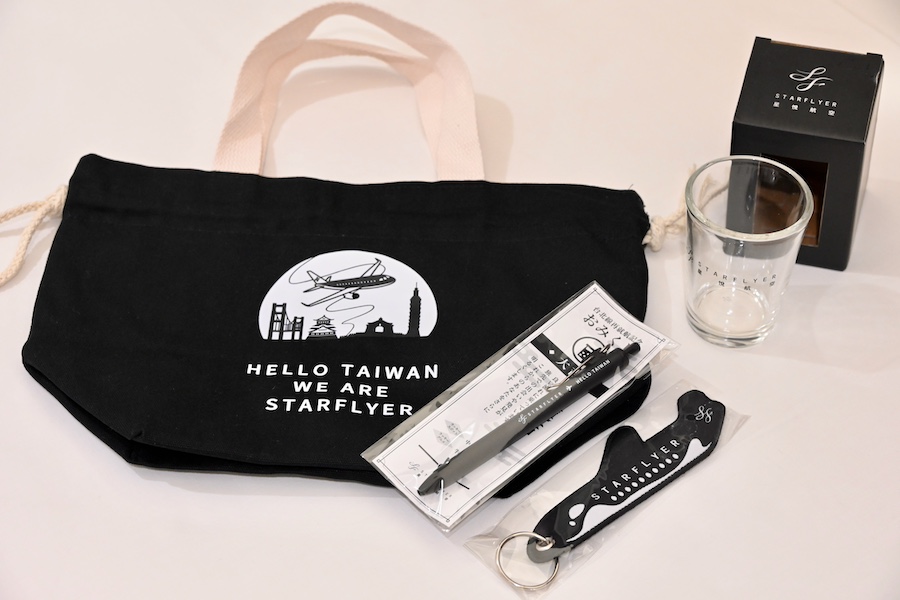
▲Commemorative gifts handed out to passengers on the inaugural flight
■Schedule 7G801 Kitakyushu (23:40)–Taipei/Taoyuan (01:10+1) / Wed, Fri, Sun (through October 24) 7G801 Kitakyushu (23:50)–Taipei/Taoyuan (01:30+1) / Wed, Fri, Sun (October 25, 2026–March 27, 2027) 7G800 Taipei/Taoyuan (03:00)–Kitakyushu (06:20) / Mon, Thu, Sat (through October 24) 7G800 Taipei/Taoyuan (03:00)–Kitakyushu (06:15) / Mon, Thu, Sat (October 25, 2026–March 27, 2027)
Notice
This article was generated using automatic translation by GPT-4 API. The translation may not be accurate.