Japan Airlines (JAL) and Donecle, a French manufacturer of aircraft maintenance drones, have begun trials using fully autonomous drones for aircraft exterior inspections.
Traditionally, maintenance technicians visually inspect aircraft directly. Under the new approach, a drone flies around the aircraft and photographs details, with technicians reviewing the images afterward. The initiative aims to reduce the burden of working at height, improve quality through standardized inspections, address a future shortage of maintenance personnel, and enable aircraft to return to service more quickly.
According to the two companies, this is the first initiative in Japan to conduct live-aircraft trials as actual maintenance work using fully autonomous drones approved in aircraft manufacturers’ maintenance manuals.
In aircraft exterior inspections known as GVI (General Visual Inspection), maintenance technicians visually check the aircraft surface for scratches, corrosion, peeling paint, and other issues. Inspecting large areas requires considerable time and manpower, while inspections at height, such as on the vertical stabilizer, require aerial work platforms or scaffolding. Conventionally, this has taken approximately five to 10 hours per aircraft. With drone inspections, however, the total time per aircraft can be reduced to around two to three hours, including preparation and setup, photography, and image review.
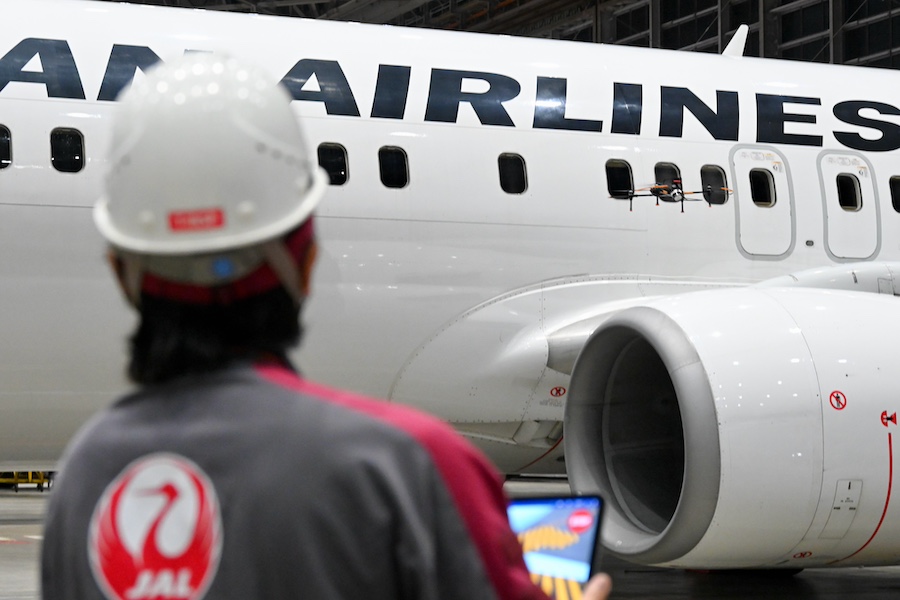
Once the necessary flight setup has been completed, the drone can be launched from a computer with a single click, without requiring specialized piloting skills. It can take photographs to consistent standards regardless of the operator’s skill level. This improves the consistency and reproducibility of inspections and also makes it possible to accumulate digital records of an aircraft’s condition.
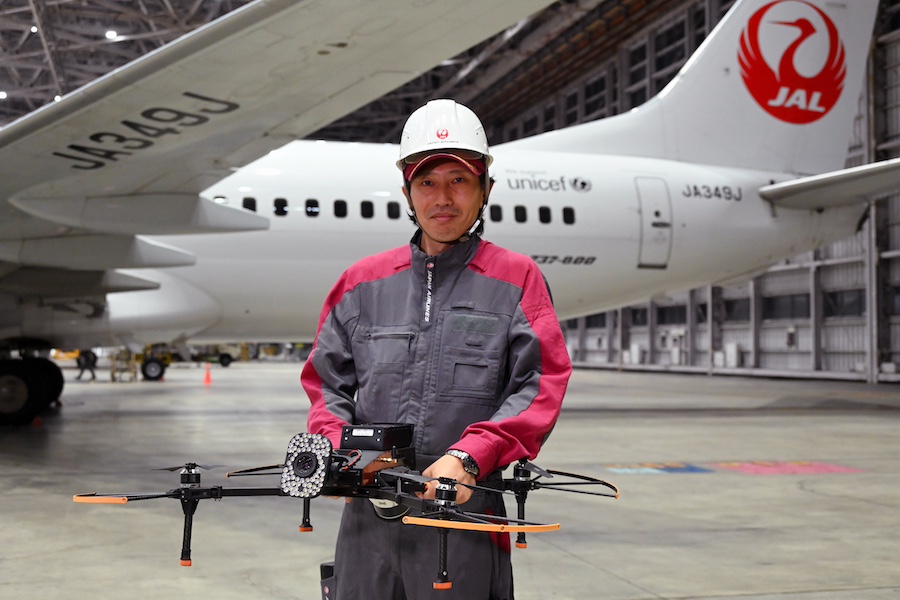
Efficiency gains in staffing are also expected. Conventional exterior inspections require at least two people, and three to four people depending on the work involved. In contrast, drone operations are expected to be conducted by two people, while post-flight image review will generally be handled by one person. According to Hirotada Kondo of the Maintenance Technology Group at JAL Engineering’s Haneda Aircraft Maintenance Center, who leads the drone inspection project, “We expect to reduce labor hours by around 60%.” However, if an issue is found during an inspection, the staffing required for subsequent maintenance work will remain unchanged.
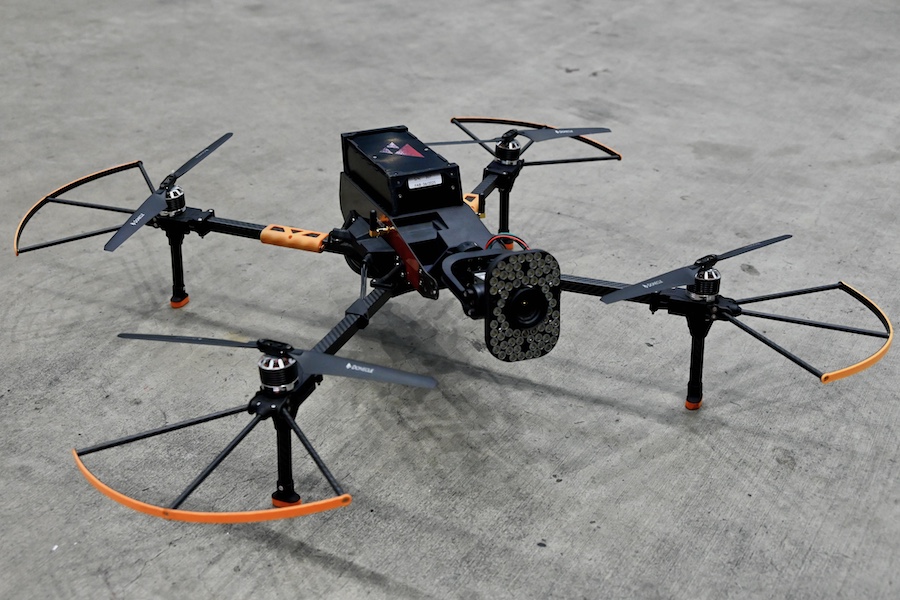
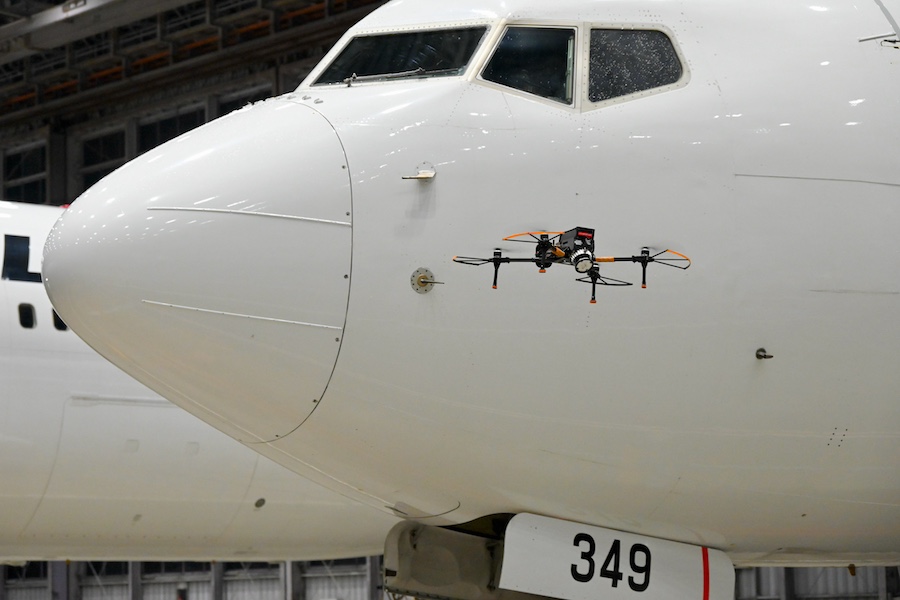
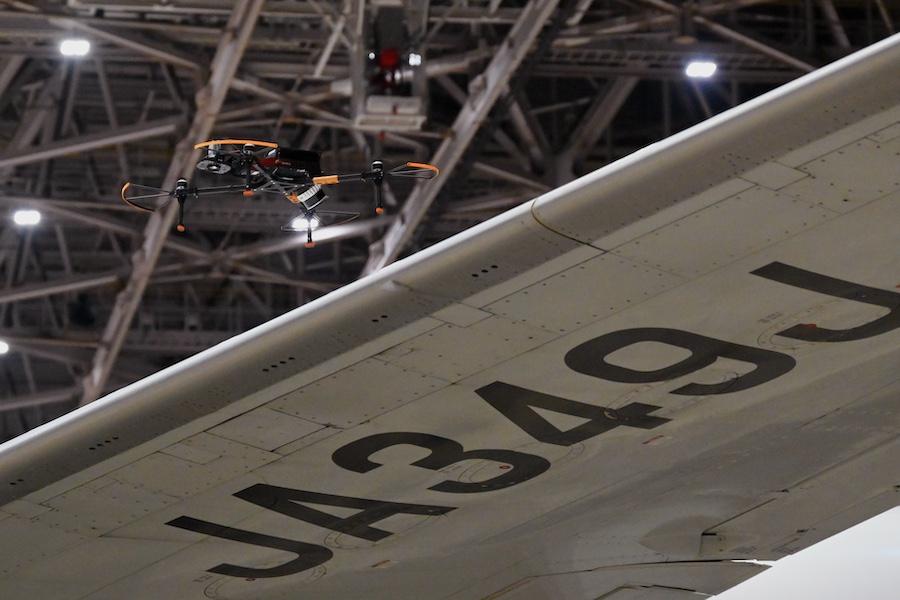
The drone used in the trials is Donecle’s fully autonomous “Iris GVI.” Using laser positioning and obstacle-detection technology, it automatically flies around the aircraft along a preconfigured inspection route. The drone measures 855 millimeters long, 855 millimeters wide, and 245 millimeters high, and weighs 3.7 kilograms including its battery. Its camera has an effective resolution of 24 megapixels.
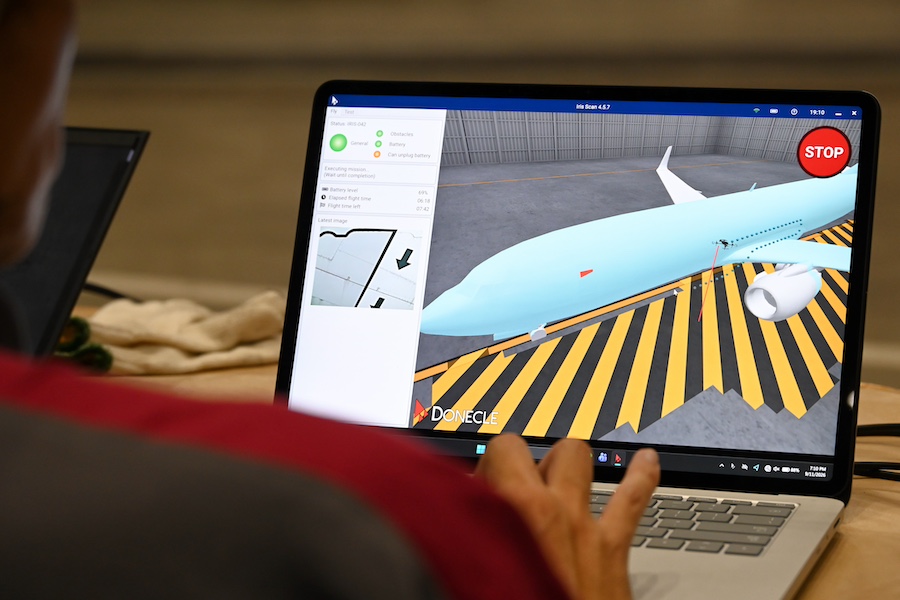
The photographs are reviewed and managed by maintenance technicians using a dedicated application. By selecting an area to inspect on a 3D model of the aircraft displayed on the screen, they can view the corresponding photographs. They can also register and retain records of the type and location of defects, such as corrosion, cracks, and peeling paint.
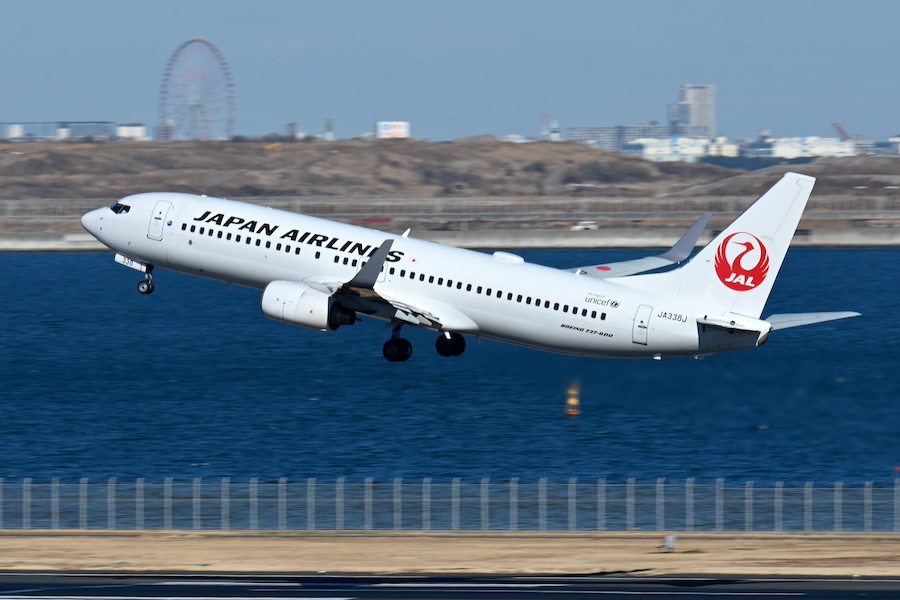
The types of inspections for which drones may be used, as well as the eligible aircraft types, are specified in aircraft manufacturers’ maintenance manuals. Currently approved are exterior inspections of Boeing 737-800 and 777 aircraft, as well as lightning-strike inspections of the Airbus A320 family. The scope is expected to expand in the future to include aircraft such as the Boeing 787 and Airbus A350.
One drone is currently deployed at Haneda Airport. JAL began training operators and developing operating procedures in March, and started live-aircraft trials at the end of June. In September, it also began trials to inspect aircraft paint conditions. By the end of the fiscal year, JAL plans to expand the scope of trials to include lightning-strike inspections, which may be required unexpectedly, and monitoring to prevent parts from detaching.
According to Kondo, the drone takes 800 to 900 photographs in approximately 30 minutes for each Boeing 737-800. For the larger Boeing 777-300ER, it takes 1,500 to 1,600 photographs in about one hour.
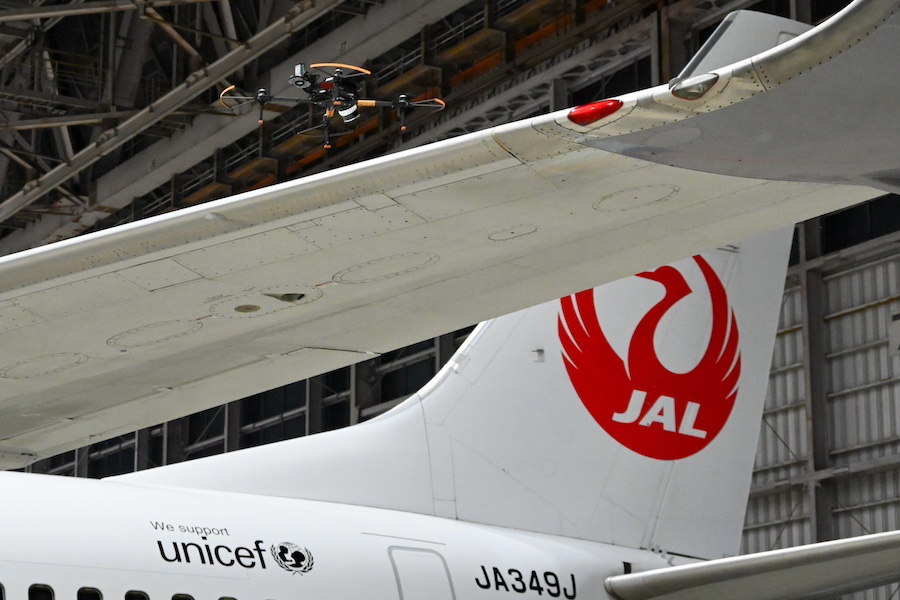
During a demonstration inspection conducted in a hangar at Haneda Airport on the night of September 11, the drone flew along the left side of a Boeing 737-800 (registration JA349J), taking 428 photographs in 14 minutes and four seconds.
A maintenance technician who participated in the demonstration said, “It is convenient because no operator control is needed and the drone can be flown with a single click. It takes photographs at this speed, so inspection time can be significantly reduced. The quality is also consistent.”
Operational challenges remain before practical implementation. As outdoor drone flights are restricted around airports, the current trials are being conducted indoors. During flights, all hangar doors must be closed, and this work takes time.
JAL is also considering introducing the system at other airports, including Narita Airport. This fiscal year, however, it will focus first on confirming the effectiveness of drone inspections. Decisions on expanding the number of deployment locations and drones will be considered in the future based on the trial results.
Notice
This article was generated using automatic translation by GPT-4 API. The translation may not be accurate.