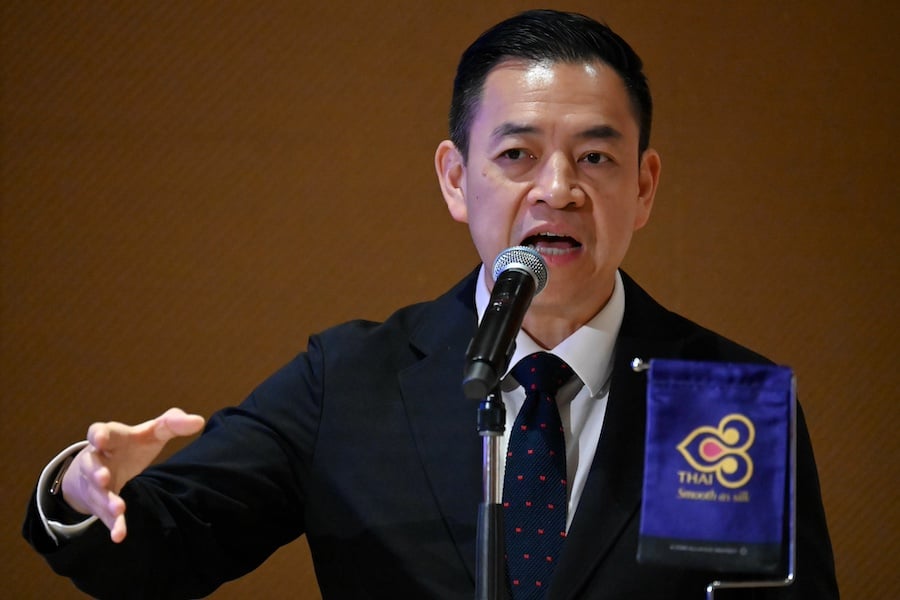
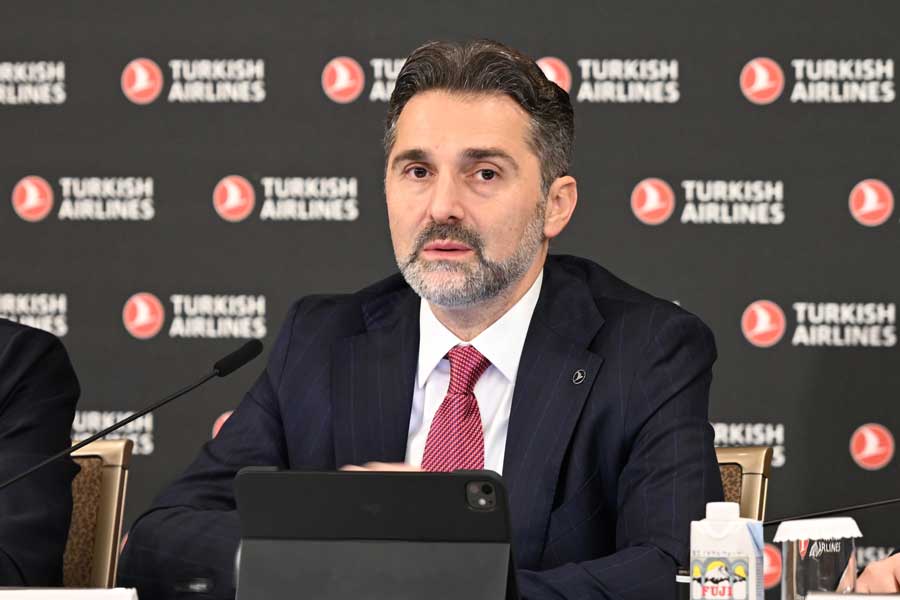
Thai Airways Chief Commercial Officer (CCO) Kitipong Sansomboon visited Japan and held a product and service briefing for travel industry representatives and the media in Tokyo on November 16. He introduced initiatives including the expansion of the airline’s operating network, including Japan routes, as well as inflight meals, beverages, and amenities.
The airline currently operates around 70 weekly flights from Japan, connecting Bangkok/Suvarnabhumi with Tokyo/Haneda, Tokyo/Narita, Sapporo/Chitose, Nagoya/Chubu, Osaka/Kansai, and Fukuoka. Noting that Japan has been a destination since the airline’s early days of operations, CCO Kitipong expressed his gratitude for the longstanding support, saying, “We could not have come this far without the support of the people of Japan.”
From January 19, 2027, the airline plans to resume late-night flights on the Nagoya/Chubu–Bangkok/Suvarnabhumi route for the first time since March 2025. Together with its existing morning departures, the Nagoya/Chubu route will offer 12 weekly flights. The schedule will also enable same-day connections via Bangkok to Jakarta and cities across India, targeting both business and leisure demand.
For its network strategy, the airline is promoting a “Silk Hub Strategy” centered on Bangkok’s Suvarnabhumi Airport. The plan combines services to cities across Southeast Asia and to populous destinations in India and China with long-haul routes to Europe and Australia, aiming to capture connecting demand via Bangkok. The name was inspired by the Silk Road. CCO Kitipong explained, “Like the Silk Road of the past, we will connect cities, people, economies, and cultures by air.”
For the winter schedule, the airline will gradually increase services on European routes including Paris, Munich, and Zurich, while also expanding its Asian network. It resumed flights to Xiamen on October 25 for the first time in around six years, and will launch flights to Da Nang on December 1.
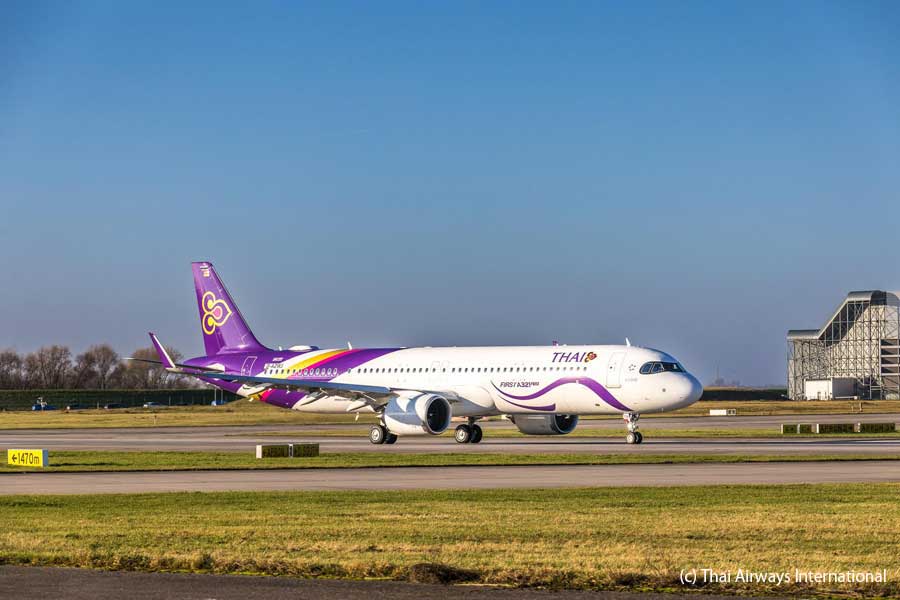
In terms of aircraft, the airline introduced the Airbus A321neo for short- and medium-haul routes in January this year. Its Royal Silk Class business cabin features fully flat seats, while Economy Class is equipped with personal monitors. The aircraft also offer inflight internet connectivity, enhancing facilities even on short-haul services.
For inflight services, the airline is focusing on developing menus that showcase Thai cuisine and culture. Its “Taste of THAI Tales” program features collaborations with Chef Pichaya Soontornyanakij, owner-chef of Bangkok restaurant POTONG, among others. CCO Kitipong said, “It is important not only for food to be delicious, but also for it to have a story behind it,” expressing the airline’s intention to communicate Thailand’s appeal through cuisine.
For “The Journey of Taste,” which offers Western cuisine and other dishes, the airline collaborates with “Mezzaluna by lebua” and “Chef’s Table by lebua,” restaurants under the lebua hotel brand. The meals are served in First Class and Business Class on eligible Bangkok-originating routes, including flights to Japan. Caviar is also offered in Business Class on European routes, and the airline is considering expanding this offering to Australian routes.
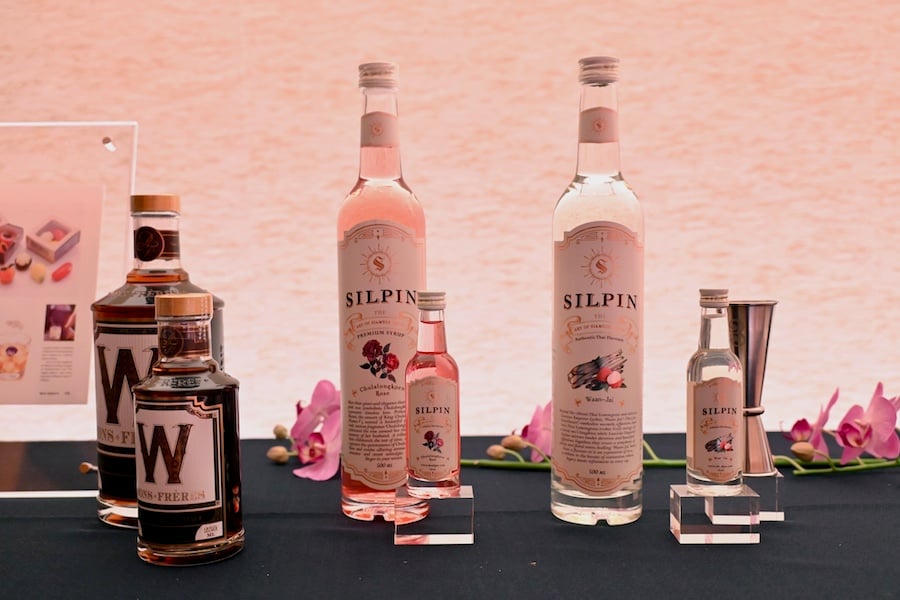
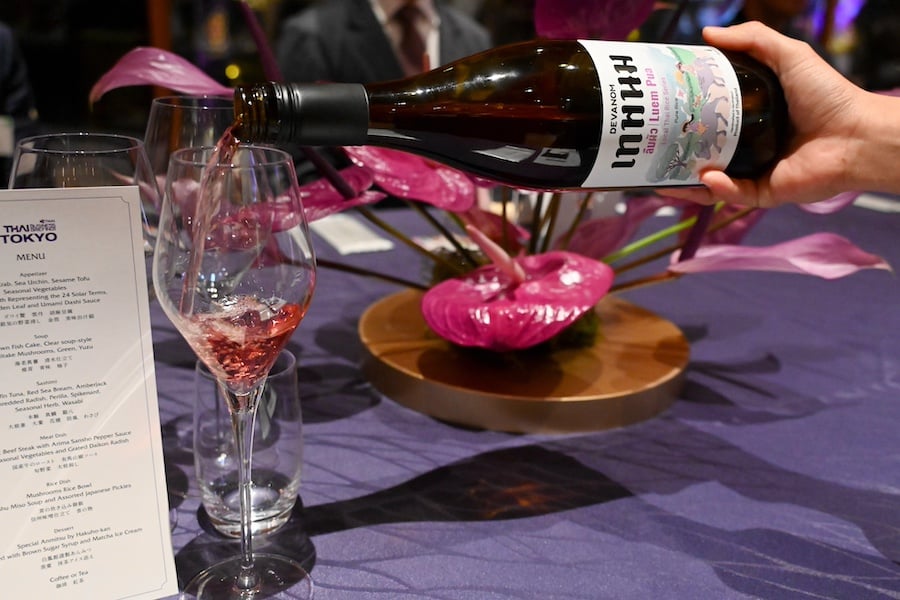
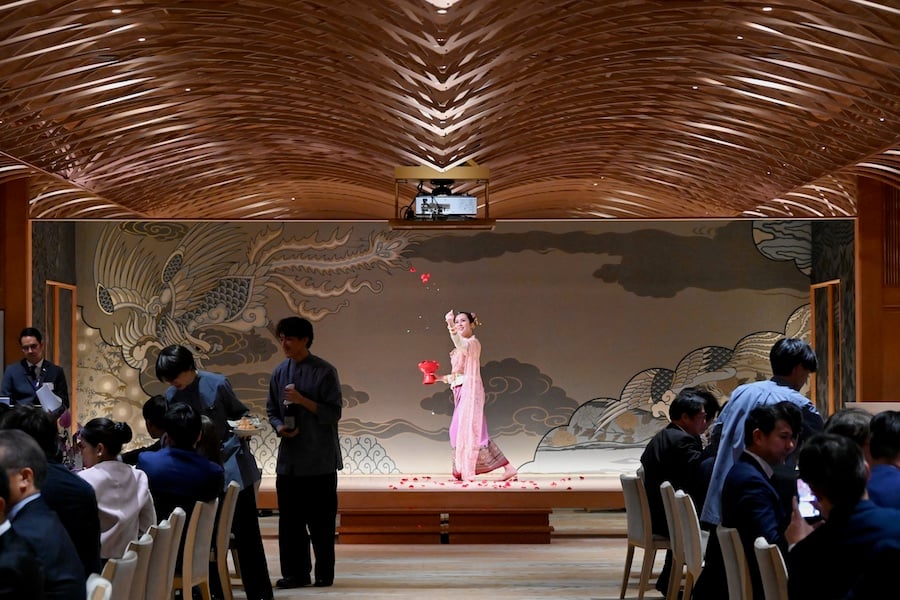
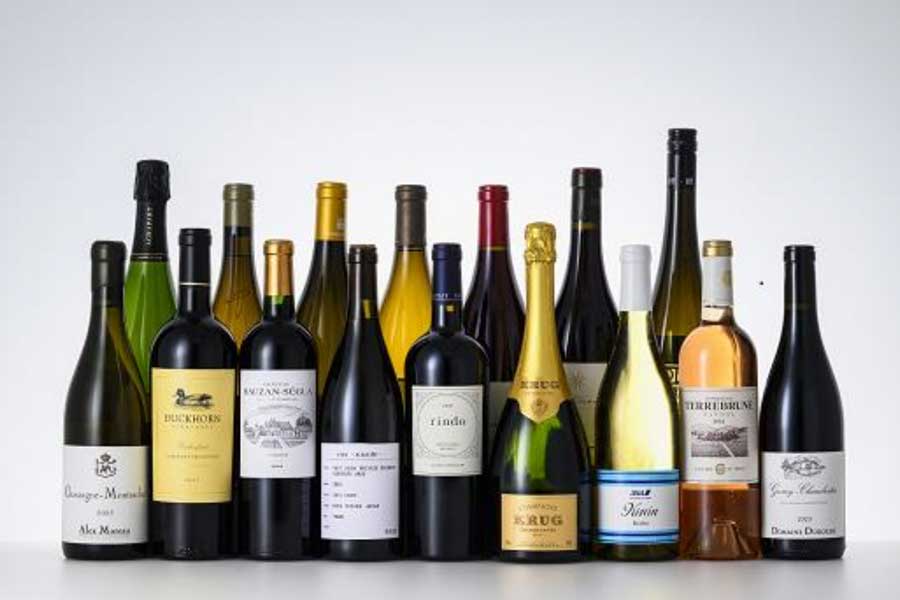
The beverage selection also reflects Thai history and the airline’s heritage. The original cocktail “Rose of the Royal Voyage” was inspired by King Chulalongkorn’s visit to Europe. It combines champagne with syrup from “SILPIN,” which uses roses associated with the King, and has a pink hue. In addition to sake from Japan and makgeolli from South Korea, the airline also serves sato, a traditional Thai fermented rice wine.
▲Sato, served at the venue as well. CCO Kitipong noted that cultures of making alcohol from rice exist in many countries, introducing cultural connections through beverages.
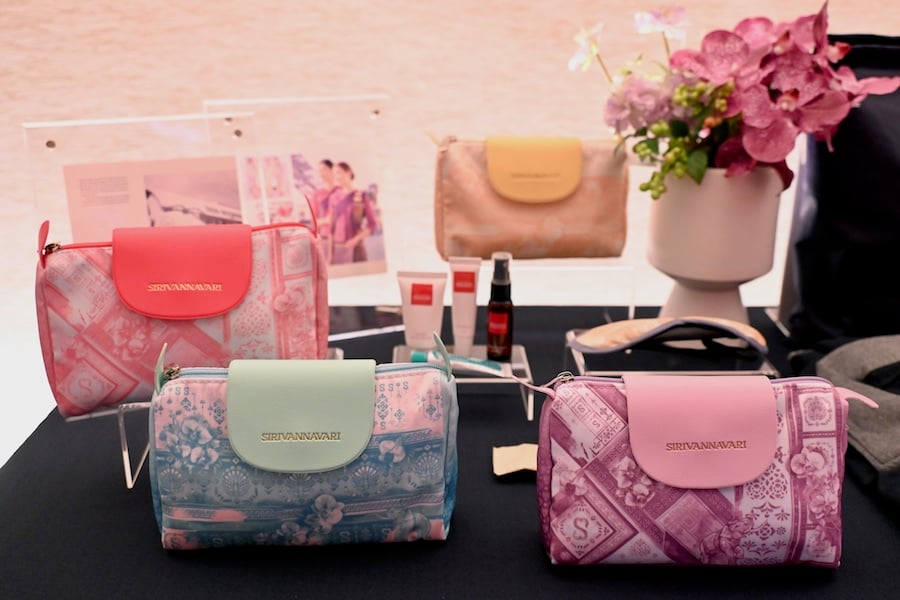
For amenities and sleepwear, the airline collaborates with Thai brands. First Class and Business Class passengers on selected routes, including Tokyo/Narita and Osaka/Kansai, are provided with amenity kits by SIRIVANNAVARI. Business Class sleepwear developed with Jim Thompson was inspired by elephant-patterned pants, a well-known Thai souvenir. The elephants are depicted in an origami-like style and used as small motifs, resulting in a subdued design.
For children, the airline offers its original “Junior Sky Explorers” characters. Inspired by elephants, Siamese cats, and other motifs, the characters are used in onboard toys and games. CCO Kitipong revealed that they were inspired by Japanese five-member superhero teams, explaining that the initiative is intended to familiarize children with the airline from an early age and encourage them to fly with it in the future.
Through its Royal Orchid Holidays travel products, the airline proposes journeys themed around food, physical and mental wellness, film locations, history, and culture. “People need a reason to visit a place when they travel,” CCO Kitipong said, outlining plans to develop travel demand to Thailand by combining the airline’s network with local experiences.
Notice
This article was generated using automatic translation by GPT-4 API. The translation may not be accurate.