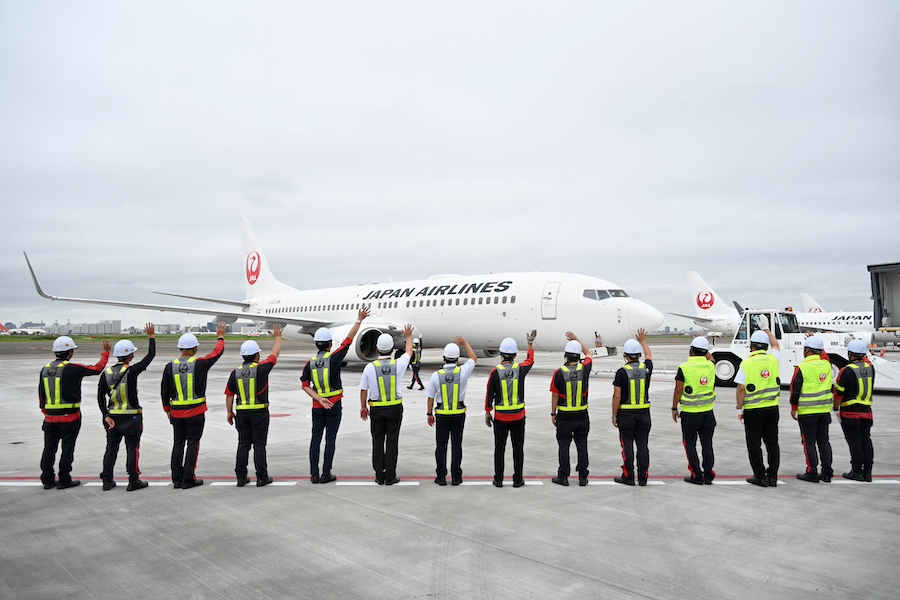
Japan Airlines (JAL) announced that it has achieved the disposable plastic reduction target set for fiscal year 2025, in conjunction with World Environment Day on June 5.
The airline has completely eliminated the use of new petroleum-derived plastics in its own standard disposable products used in cabins and lounges. In addition, it has completed the switch to environmentally conscious materials for cargo and airport operations.
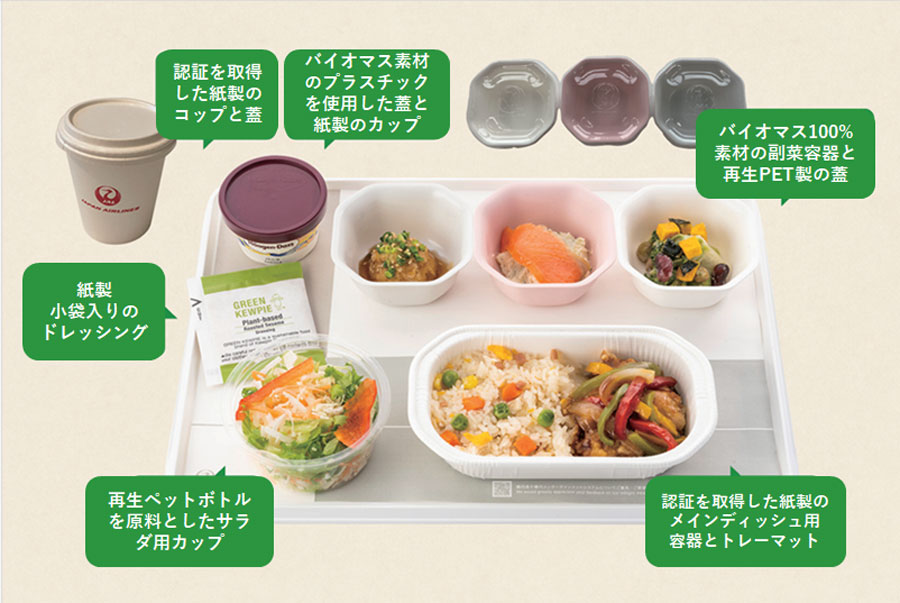
Under the JAL Group’s four guiding principles of action—3R (Reduce, Reuse, Recycle) plus “Redesign”—the company has promoted reductions by first reassessing the need for disposable plastics. For items that could not be discontinued, JAL has either redesigned them for reuse or switched to alternative materials that are not newly petroleum-derived, such as biomass, recycled plastics, and certified paper.
In aircraft cabins, initiatives include 100% biomass toothbrushes and caps upcycled from side dish containers; in lounges, the elimination of individually wrapped wet towels and meals; at airports, the discontinuation of plastic bags used to wrap checked baggage; and in cargo operations, the adoption of stretch film made from biomass materials.
Beyond reducing disposable plastics, the JAL Group is also working on effective resource utilization aimed at realizing a circular economy, such as recycling in-flight waste and reducing food loss. Efforts include recycling paper cups used on board, serving soups made with non-standard ingredients, and composting residue generated during in-flight meal preparation.
The JAL Group has set a goal of achieving net-zero carbon dioxide emissions by 2050, and this latest achievement is positioned as part of that broader initiative.
Notice
This article was generated using automatic translation by GPT-4 API. The translation may not be accurate.