Airbus has released its latest aircraft market forecast, the “Global Market Forecast 2026–2045.”
It forecasts that urbanization and GDP growth will drive long-term passenger demand, leading to the expansion and greater efficiency of aviation networks. Over the next 20 years, the wave of urbanization is expected to shift toward smaller cities. Along with an increase in the middle class and people living abroad, improved aircraft efficiency and growing passenger traffic are expected to make new economically viable routes between cities possible.
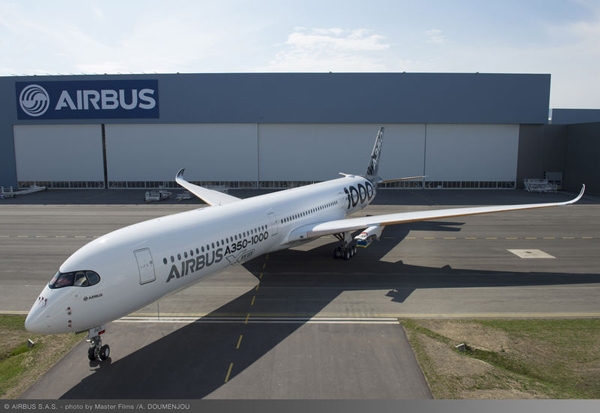
Aviation networks are becoming more decentralized and are expected to expand to routes linking small and mid-sized cities. The Riga–Tenerife and Melbourne–Alice Springs routes can be operated efficiently with the Airbus A220. Increased range will also make it possible to fly the Lisbon–Recife route with the Airbus A321neo, the Dublin–Nashville route with the Airbus A321XLR, the Algiers–Kuala Lumpur route with the Airbus A330neo, and the Taipei–Phoenix route with the Airbus A350.
Passenger traffic is expected to maintain steady growth. The middle-class population, which is most likely to travel by air, is projected to increase by 1.4 billion people, or 34%, by 2045. Global passenger traffic will grow at an annual rate of 3.9%, with the number of passengers reaching approximately 10 billion per year.
A total of 42,060 aircraft will be required over the next 20 years, including 19,820 to replace aging aircraft and 22,240 to meet growth demand. Single-aisle aircraft will account for 81% of the total, while wide-body aircraft will account for 19%.
Reflecting the economic shift toward the Asia-Pacific region, strong growth in emerging countries such as India, Vietnam, Indonesia, and Malaysia is changing air travel trends. Cross-border travel and trips to visit relatives and friends are increasing.
Notice
This article was generated using automatic translation by GPT-4 API. The translation may not be accurate.