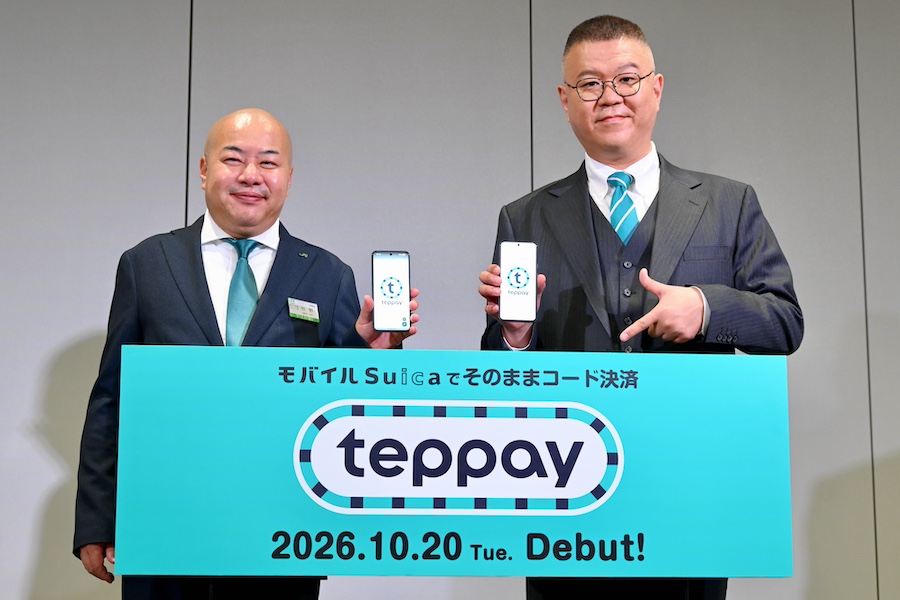
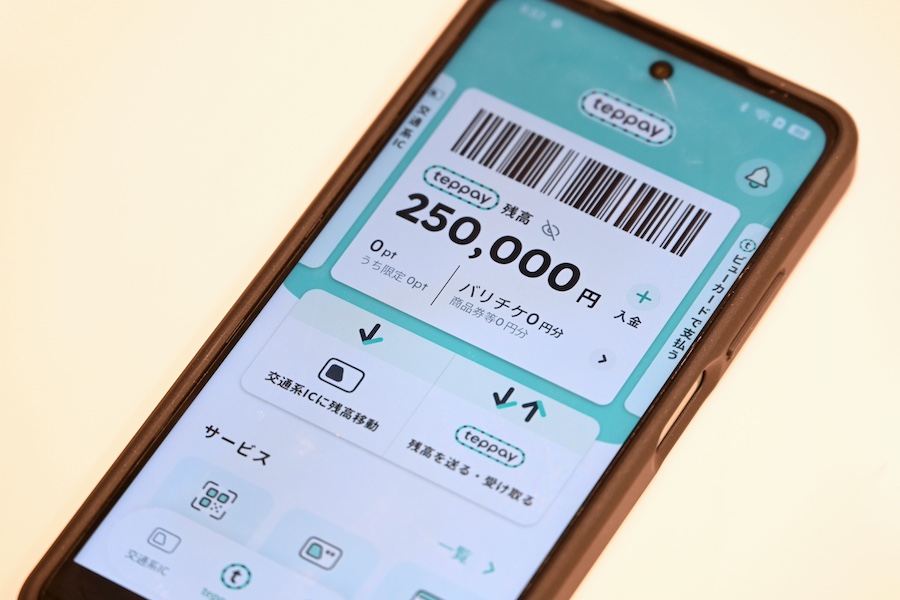
JR East launched its new code payment service, “teppay,” on October 20. Available within the Mobile Suica app, the service maintains a balance separate from the Suica transportation IC card balance and supports purchases exceeding 20,000 yen as well as transfers of balances between users.
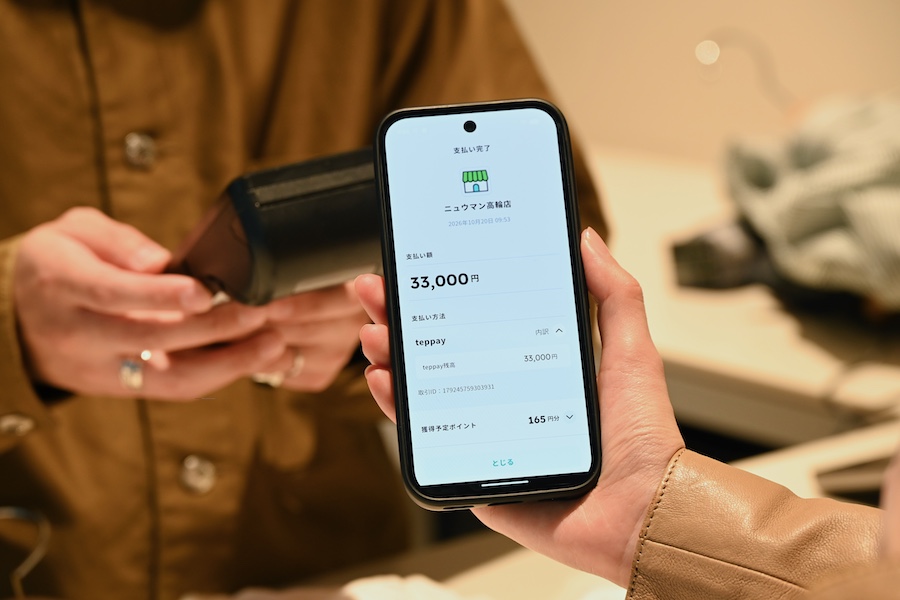
Balances can be topped up via bank account, View Card, or cash, with no top-up fee. Users who complete identity verification using a My Number Card can make payments of up to 300,000 yen from their balance. By linking a View Card, users can make payments up to the card’s credit limit without topping up in advance.
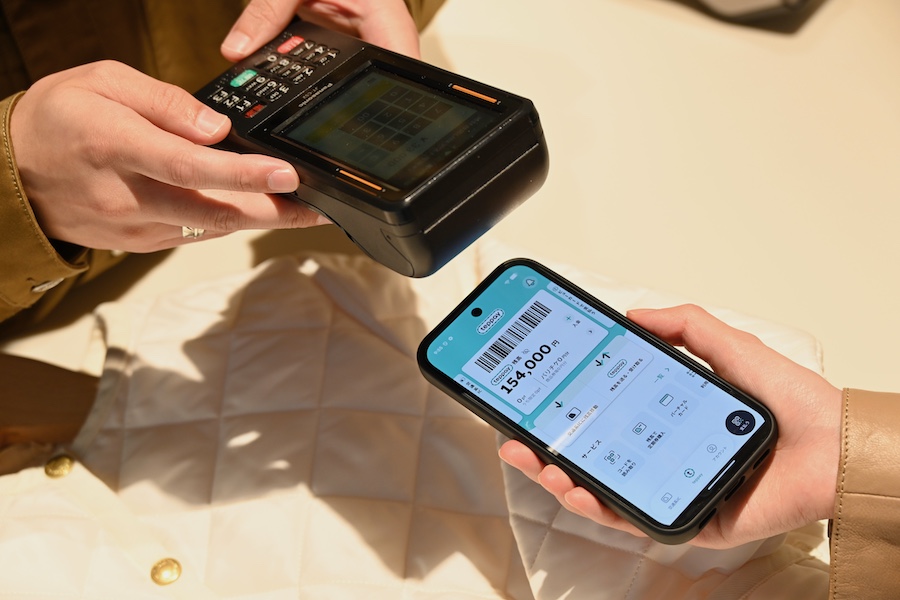
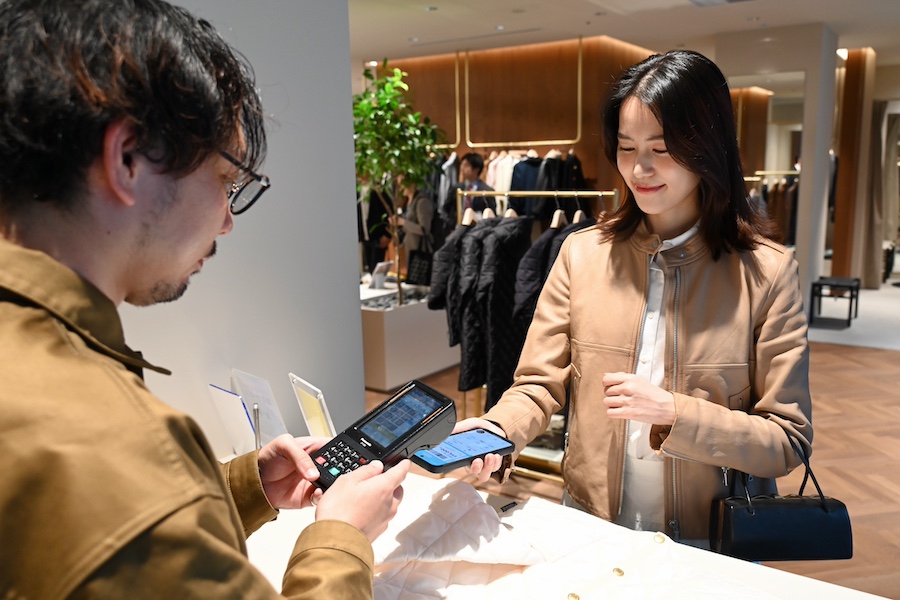
At stores, customers can either have the merchant scan a code displayed on their smartphone or scan the store’s QR code themselves to make a payment. In addition to teppay merchants, the service can be used at more than 1.7 million locations nationwide that support JCB’s “Smart Code” payment scheme.
Balances can also be used to top up Suica, purchase Mobile Suica commuter passes, Suica Green Car tickets, and discount rail tickets. However, teppay balances cannot be used directly to pay train or bus fares; users must first top up their transportation IC card balance.
On Ekinet, JR East’s online rail ticket reservation service, users can purchase ticketless products with the “teppay JCB Prepaid Card,” a JCB-branded virtual prepaid card issued within the app. Users enter the card number and other details on Ekinet, with payment deducted from their teppay balance. It cannot be used for reservations that include paper tickets.
Standard point rewards are 0.5% in teppay points for balance payments and 1% in JRE POINT for payments made using a linked View Card. Teppay points can be used for payments at a rate of 1 point per 1 yen, while regular points can also be exchanged for JRE POINT. Top-ups to Suica and purchases of commuter passes and similar products are not eligible for teppay point rewards.
To commemorate the launch, a 20% point-back campaign will run from November 4 through December 25. After registering in advance, users who make code payments of 500 yen or more, including tax, at eligible stores will receive limited-time teppay points. The maximum reward is 5,000 points per person. Suica top-ups, commuter pass purchases, and payments made with the teppay JCB Prepaid Card are not eligible. The company said it is also considering future campaigns in areas such as rail transportation.
The service is scheduled to become available on Mobile PASMO in spring 2027, enabling teppay balance transfers between Mobile Suica and Mobile PASMO users.
Suica began service as a fare card in 2001 and has enhanced its features and convenience through additions such as electronic money functionality, the introduction of Mobile Suica, and the launch of nationwide mutual-use services. However, transportation IC card balances are capped at 20,000 yen, limiting their use for high-value purchases.
Tatsuro Makino, Executive Officer and General Manager of the Suica and Payment Platform Development Unit in JR East’s Marketing Strategy Department, noted that lifestyles and the use of cashless payments have changed since the COVID-19 pandemic. He said the company felt a sense of urgency that “if Suica does not respond to these changes and evolve, customers may no longer choose it,” and expressed the intention to develop it beyond its conventional role centered on transportation and small-value payments into a service that can be used across a wide range of everyday situations.
Nahoto Takamatsu, General Manager of the Payment and Financial Services Department in the same unit, cited Suica’s ability to make quick contactless payments without opening an app as a key strength. At the same time, he said the company had long received requests for features that would address the need to top up and the balance cap, explaining that teppay “fills this gap.” He added, “We believe that using Suica together with payment services will increase the value of Suica itself.”
Notice
This article was generated using automatic translation by GPT-4 API. The translation may not be accurate.