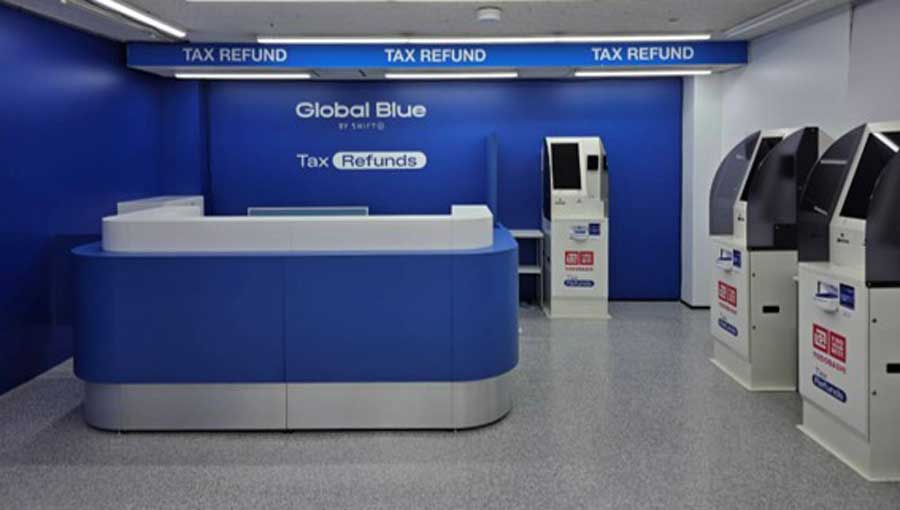
Japan’s consumption tax exemption system transitioned to a refund method today, November 1.
Previously, eligible tax-free shoppers could purchase tax-exempt goods at prices excluding consumption tax. Under the new system, shoppers purchase goods at tax-inclusive prices and, when departing Japan within 90 days of the purchase date, receive a refund equivalent to the consumption tax from the tax-free retailer or another source after customs at an airport or other departure point confirms that the goods are being taken out of Japan. Duty-free stores located inside airports are not eligible for refunds.
In addition, the My Number Card for overseas transferees (including the smartphone version of the My Number Card) has been added to the documents that non-residents with Japanese nationality, such as temporary returnees to Japan, can use to prove that they have lived abroad for at least two years. This is in addition to the existing Certificate of Residence and a copy of the supplementary family register, and these documents will no longer need to include the registered domicile, including the lot number.
The method for determining whether an individual has continuously lived abroad for at least two years has also changed. Previously, eligibility was determined based on the period from the date the person established an overseas address, as stated on the Certificate of Residence or copy of the supplementary family register, to the date of issuance or preparation. Under the new system, regardless of the issuance date, eligibility will be determined based on the period from the planned date of overseas relocation (the date of establishing permanent residence abroad) to the date of the most recent entry into Japan (the date of landing recorded in the passport).
The “planned date of overseas relocation (date of establishing permanent residence abroad)” refers to such entries as the “planned date of overseas relocation” on the My Number Card, the “date of establishing residence at this location” on the Certificate of Residence, or the “date of establishing an overseas address” and “planned departure date” on a copy of the supplementary family register.
On the other hand, there is no change to the requirement that the Certificate of Residence and copy of the supplementary family register must have been prepared on or after the date six months before the most recent entry into Japan. There is also no change to the fact that travelers entering Japan through automated gates may be unable to receive the tax exemption because no entry stamp is placed in their passport.
During procedures at tax-free stores, in addition to a passport, shoppers must present one of the following: a Certificate of Residence, a copy of the supplementary family register, or a My Number Card, and provide the information stated on the document. The information to be confirmed includes that the period from the date of establishing permanent residence abroad or planned date of overseas relocation to the most recent entry date is at least two years, and that the current address is outside Japan. For Certificates of Residence and copies of supplementary family registers, it must also be confirmed that the document was prepared on or after the date six months before the most recent entry date. For My Number Cards, it must be confirmed that the card is within its validity period.
Purchase record information must include the type of certificate (1 = Certificate of Residence, 2 = copy of supplementary family register, 3 = My Number Card) and the date of overseas relocation. The name of the Japanese diplomatic mission abroad, issuance/preparation date, registered domicile, and issuance number, which were required before the transition to the refund method, are no longer required. For smartphone My Number Cards, the information displayed in the My Number Card In-Person Verification App provided by Japan’s Digital Agency can be checked.
Details of the system are available on the websites of the Japan Tourism Agency and the National Tax Agency.
Notice
This article was generated using automatic translation by GPT-4 API. The translation may not be accurate.