APA Group has relocated its corporate museum, APA Museum, which had operated at APA Hotel & Resort Joetsu Myoko, to APA Hotel & Resort Tokyo Bay Makuhari, where it has reopened following a renovation.
The museum is located on the 48th and 49th floors of the Central Tower. Admission is free. The exhibition theme on the 49th floor is “INNOVATION HERITAGE,” tracing “From the Past to the Present,” while the 48th floor features “NEXT INNOVATION,” looking “From the Present to the Future.”
The APA Museum in Myoko primarily displayed collections, but the renewed museum incorporates numerous hands-on exhibits. It was designed, produced, and curated by Total Media Development Institute, which has also worked on the Cup Noodles Museum Yokohama. Based on the concept of “the first APA experience: see, touch, feel, and learn,” the space allows visitors to experience innovations in hotel stays as they move through each room.
In addition to “HERITAGE CLOAK,” which looks back on the company’s history through its collections, the museum offers “INNOVATION ROOMS,” where visitors can experience guest rooms from different eras; “APA NOW,” which presents today’s APA Hotels; “Room Designer,” where visitors can explore guest room design through play; “Sleep Comfort Scan,” which visualizes bed comfort through body-pressure measurement; “Eco Line Challenge,” which teaches environmental initiatives; “APA Dress-Up Mirror,” an AI-powered virtual outfit experience; “APA PRI,” where visitors can make original APA President Curry; and “APA POWER SPOT,” where visitors can write down their wishes. Some attractions require a fee.
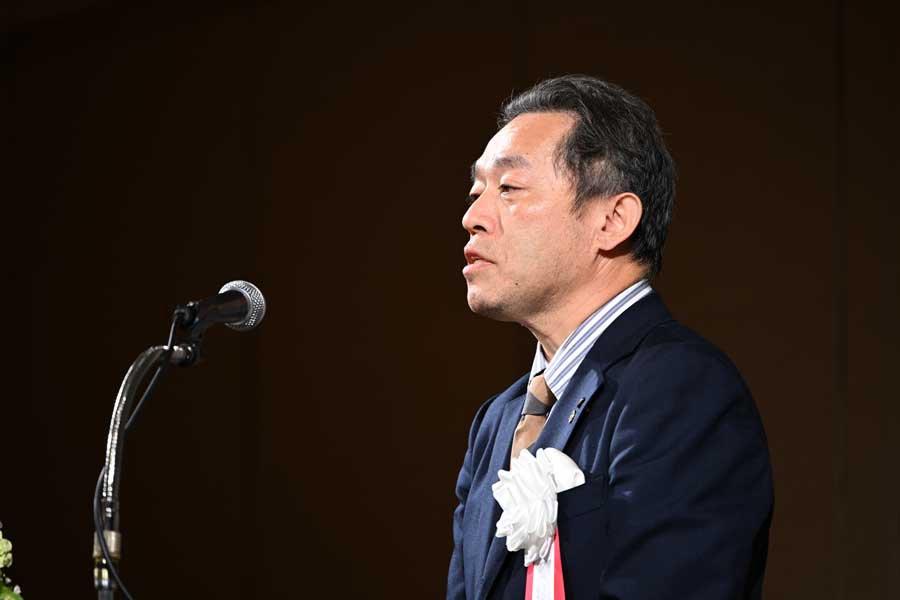
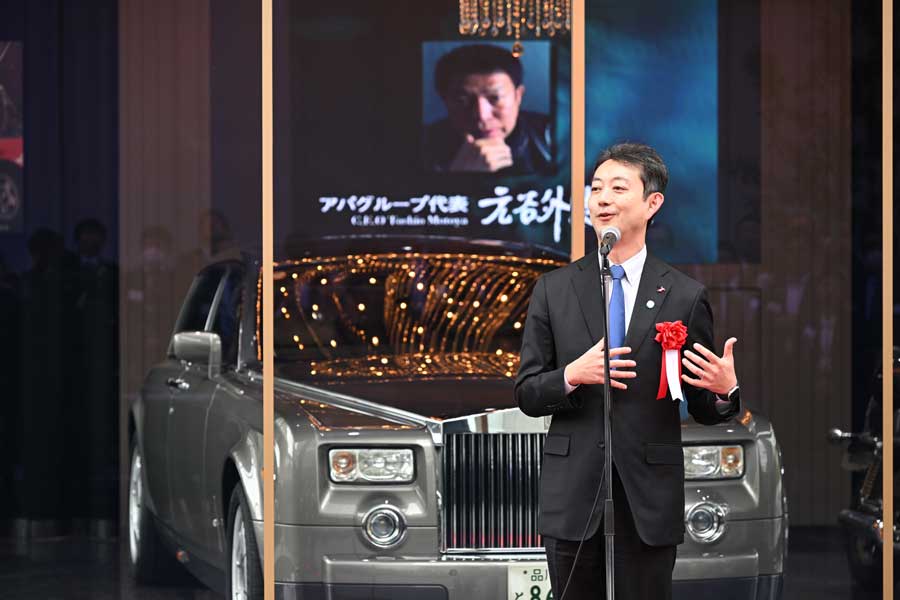
At a press conference, APA Group President and CEO Kazushi Motoya explained that the 48th and 49th floors were turned into a museum because the group hopes to make Makuhari a sacred place for the company as it pursues global expansion from the area. The museum aims both to provide hotel guests with a complimentary attraction during their resort-style stays and to build a future fan base by welcoming visitors who are not hotel guests. Taking into account the potential for visitors to move between nearby attractions, including the Kandu Makuhari pavilion, which opened at Aeon Mall Makuhari New City on October 2, the museum is also expected to be used for social studies field trips, particularly by elementary and junior high school students living in Chiba City.
Regarding visitor targets, Motoya said the initial goal had been raised from 100,000 to 150,000 visitors. He added that the group hopes to continue surpassing its targets each year while maintaining even greater ambitions. He also said the museum will continue to evolve over the next five and 10 years and that its current form is not the final version.
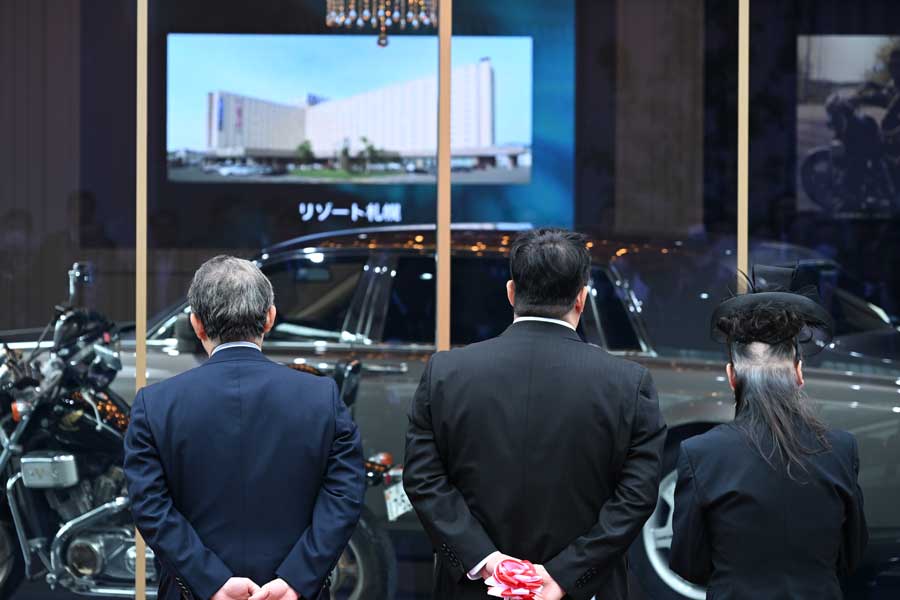
APA Hotel & Resort Tokyo Bay Makuhari was formerly the Makuhari Prince Hotel, which was considered Japan’s tallest hotel building at the time. APA Group acquired it from Seibu Railway in December 2005. The following year, it added a large public bath, renovated the lobby and restaurants, and held a grand opening. The hotel was expanded in stages into a mega hotel with 2,007 rooms. Motoya referred to the circumstances of the acquisition, in which the group submitted a bid exceeding its annual sales at the time—JPY 13.212 billion—and explained that it won the bid after factoring in the building’s floor-area ratio, based on a philosophy of pursuing expansion rather than balanced contraction.
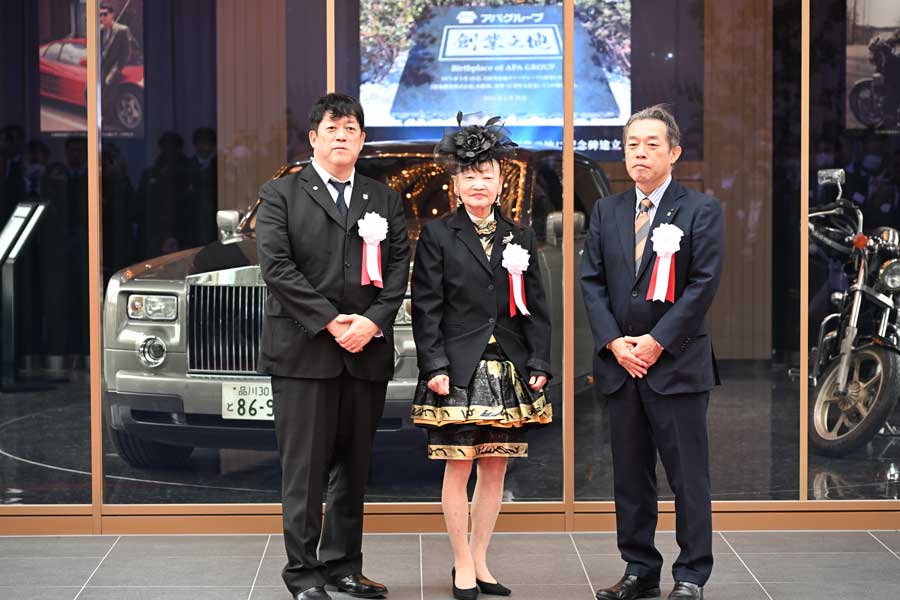
Following this, an unveiling ceremony was held for the “APA Group Founder Collection,” a garage installed in front of the Central Tower’s main entrance to display cars and motorcycles owned by the group’s founder, Toshio Motoya.
Kazushi Motoya explained that the exhibition space features four vehicles that Toshio Motoya enjoyed during his lifetime, with two vehicles replaced every six months. The display incorporates a mechanism that rotates the vehicles rather than simply displaying them. It is also designed to be visible from the glass elevator. He also noted that plans are advancing in Makuhari to consider the renovation of Chiba Marine Stadium and to develop a dome stadium, and said he hopes people will enjoy the facility as part of a walkable circuit of attractions.
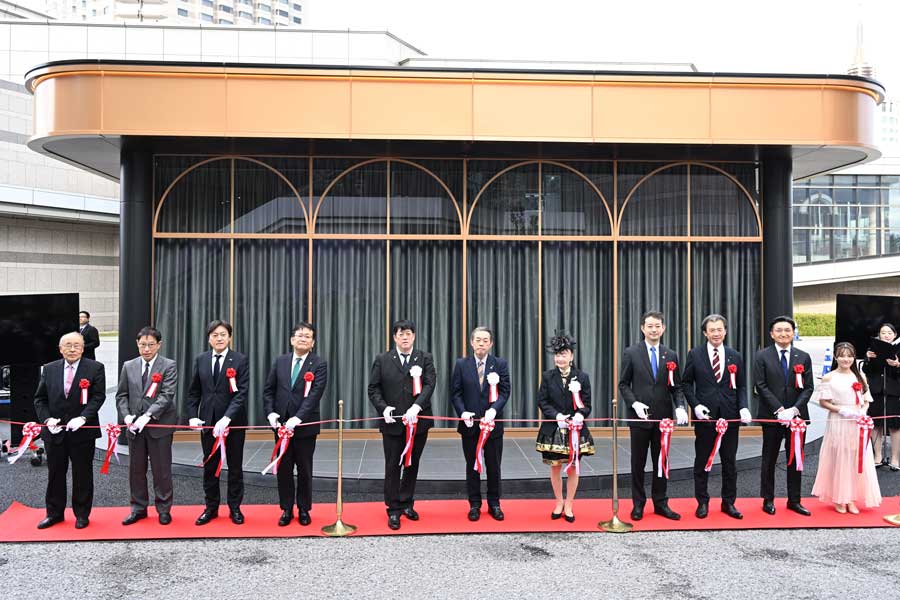
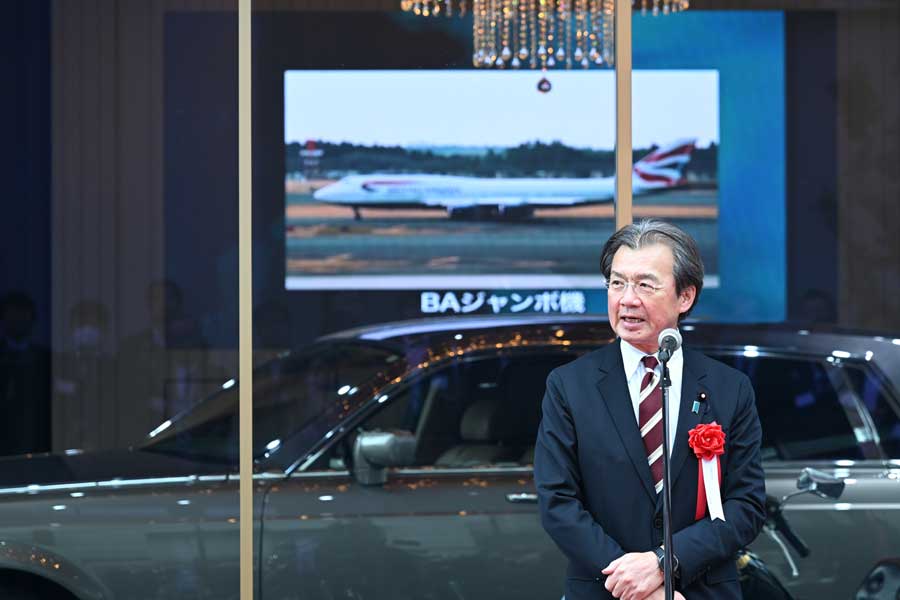
Participants in the ribbon-cutting ceremony included Kazushi Motoya; Fumiko Motoya, President and Representative Director of APA Hotel; Taku Motoya, Executive Managing Director of APA Group; Toshihito Kumagai, Governor of Chiba Prefecture; Shunichi Kamiya, Mayor of Chiba City; and Ken’ya Akiba, a member of Japan’s House of Representatives.
Kumagai noted that Chiba Prefecture recorded 28 million total overnight stays in 2025, ranking sixth in Japan, and that a national project is underway to expand Narita Airport’s annual number of takeoffs and landings from 340,000 to 500,000. He also addressed the current shortage of workers in the hotel industry, expressing hope that the museum will inspire children and young people to pursue careers in hospitality.
Kamiya said Makuhari New City is entering a period akin to its second opening. In addition to discussions on rebuilding Chiba Marine Stadium, he noted that construction has begun on a new arena for Alvark? Chiba’s professional basketball team, Altiri Chiba, and that the city has started developing a lively hub on the opposite side of the railway tracks. Regarding social studies field trips, he said the city also hopes to support visits by children.
A video message from Hajime Moriyasu, head coach of Japan’s national soccer team, was also shown. APA Hotel has supported Japan’s national soccer team as a JFA National Team Partner since 2023, and the partnership will continue through 2030.
The museum is open year-round. Opening hours are from 1:00 p.m. to 9:00 p.m. on weekdays and Saturdays, and from 7:00 a.m. to 3:00 p.m. on Sundays and public holidays. During Golden Week, Silver Week, and the year-end and New Year holidays, it is open from 7:00 a.m. to 11:00 a.m. and from 5:00 p.m. to 9:00 p.m. Morning openings are also available for groups.
APA Group operates 346 hotels with 83,893 rooms in Japan and 54 hotels with 5,454 rooms overseas under its own brands. Under its five-year medium-term management plan, “AIM5-II,” launched in April, the group aims to have 100,000 rooms in Japan under its own brands and 10,000 rooms overseas by the end of March 2031.
Notice
This article was generated using automatic translation by GPT-4 API. The translation may not be accurate.