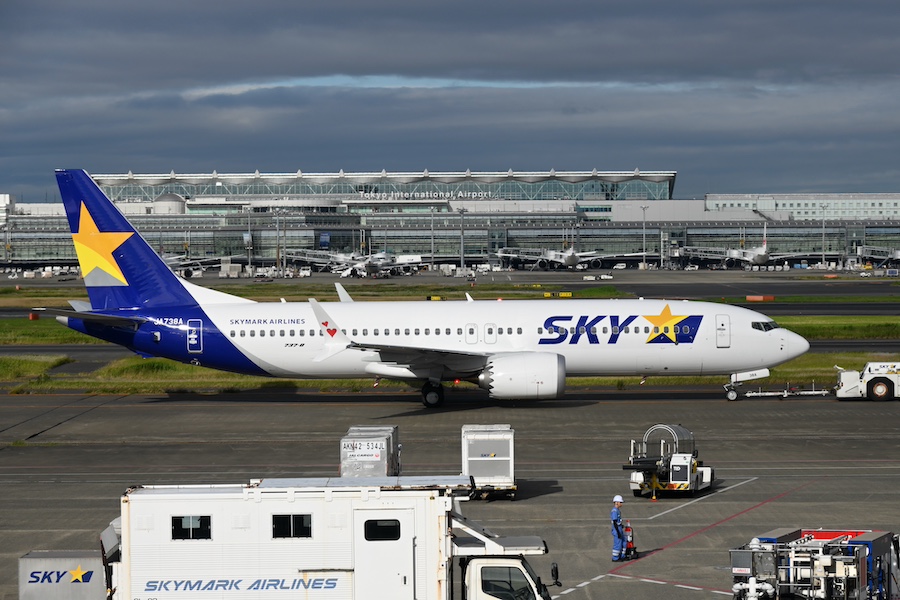
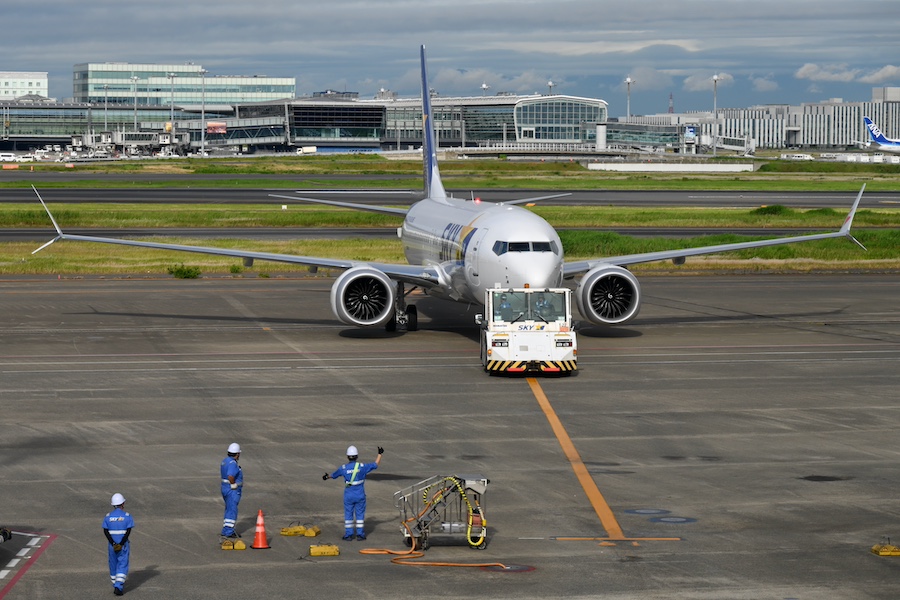
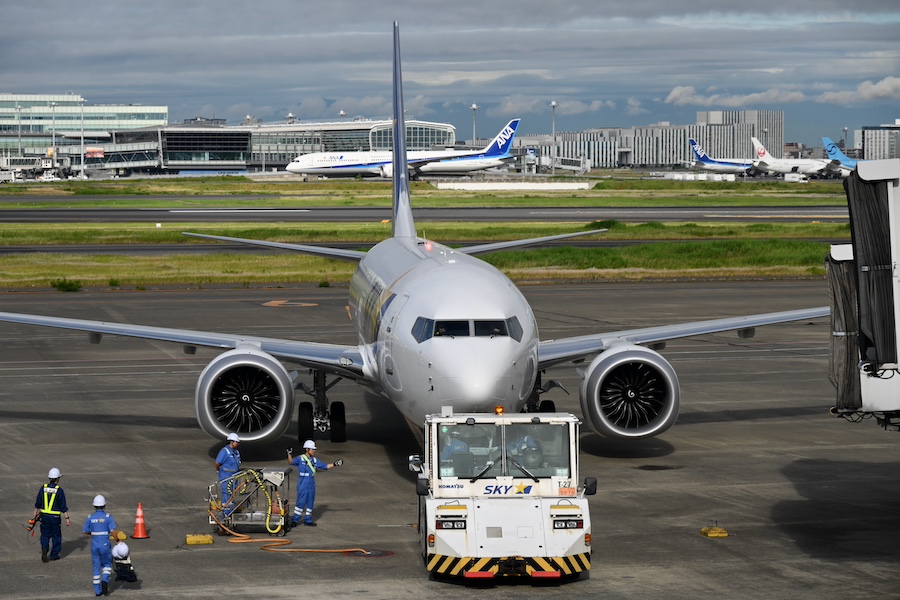
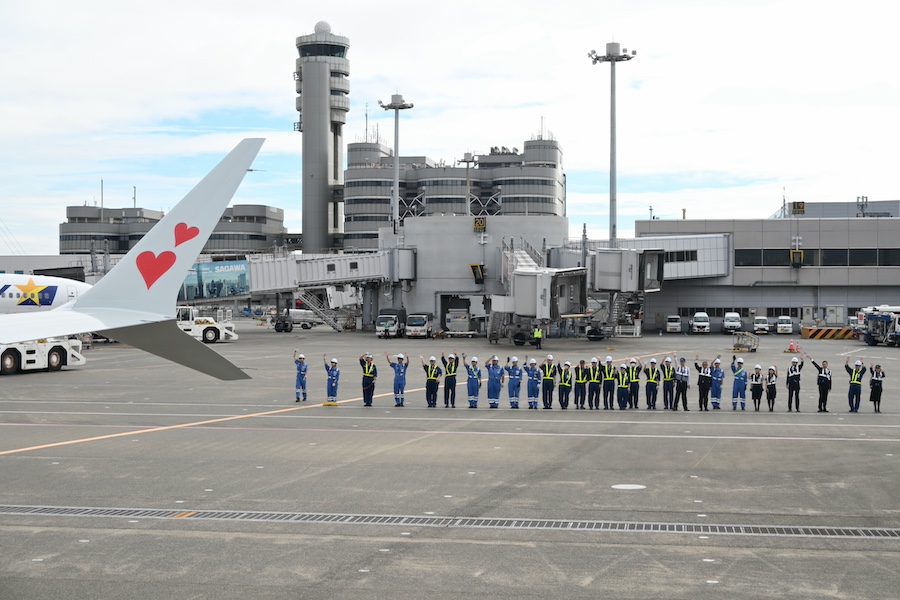
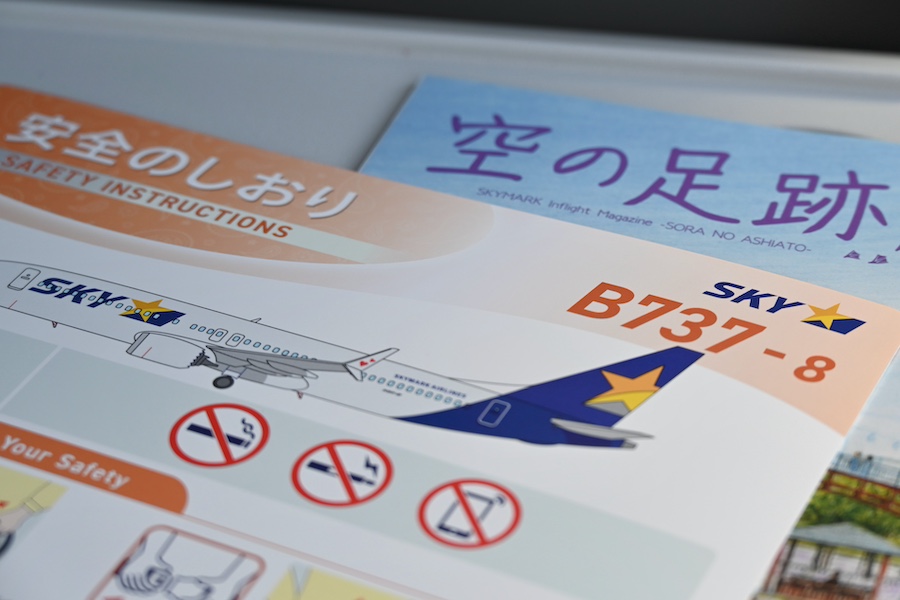
On May 28, Skymark Airlines launched operations with the Boeing 737-8. This marks the first introduction of the 737 MAX series by a Japanese airline. For the time being, the aircraft will be operated on the Tokyo/Haneda–Fukuoka route.
The 737 MAX series is the successor to the 737-800, and Skymark has ordered a total of 20 aircraft: 13 Boeing 737-8s and 7 of the extra-long-fuselage Boeing 737-10s. The first 737-8 (registration: JA738A) was delivered in Seattle, Washington, USA, where Boeing’s factory is located, on April 29 local time, and arrived at Tokyo Haneda Airport on May 4. After familiarization flights and other preparations for entry into service, an unveiling event for stakeholders and the media was held on May 25.
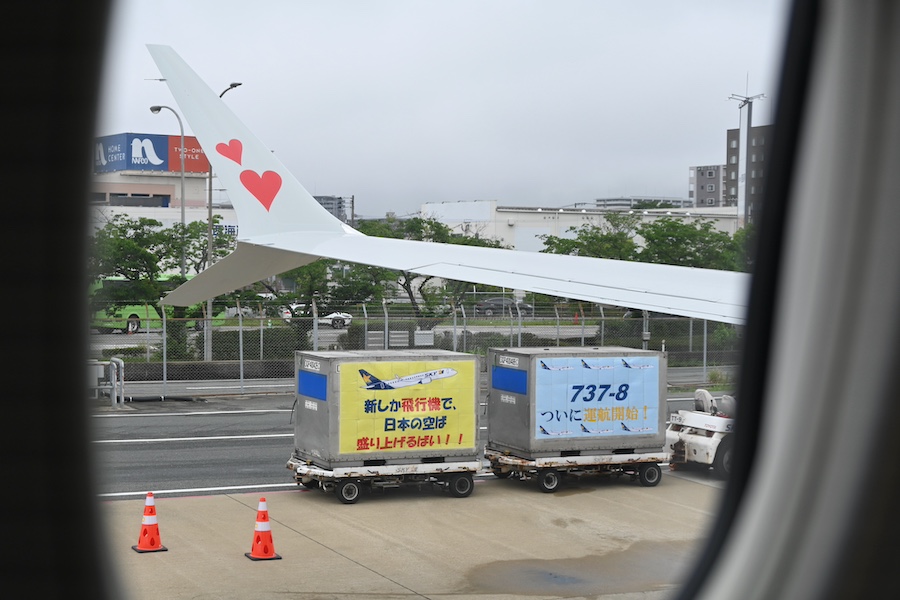
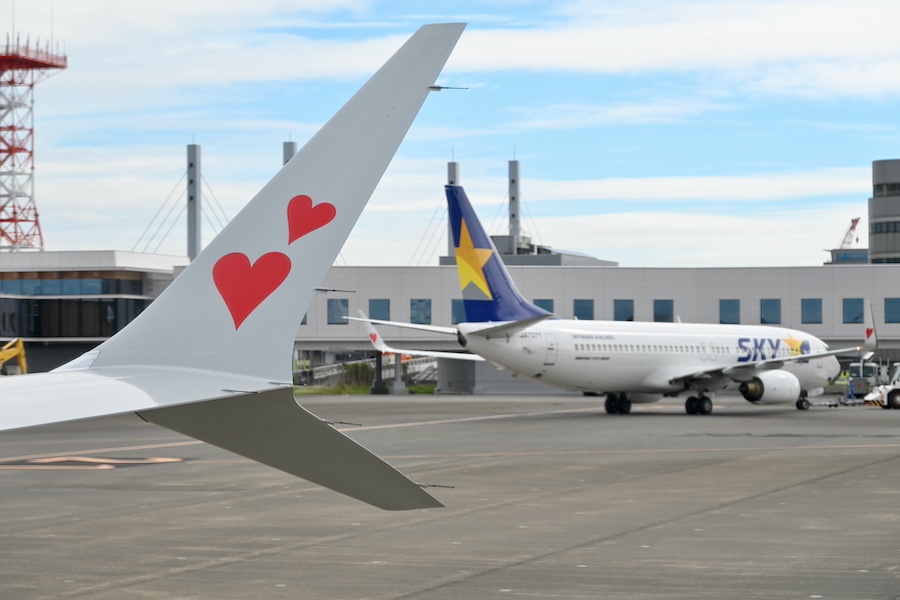
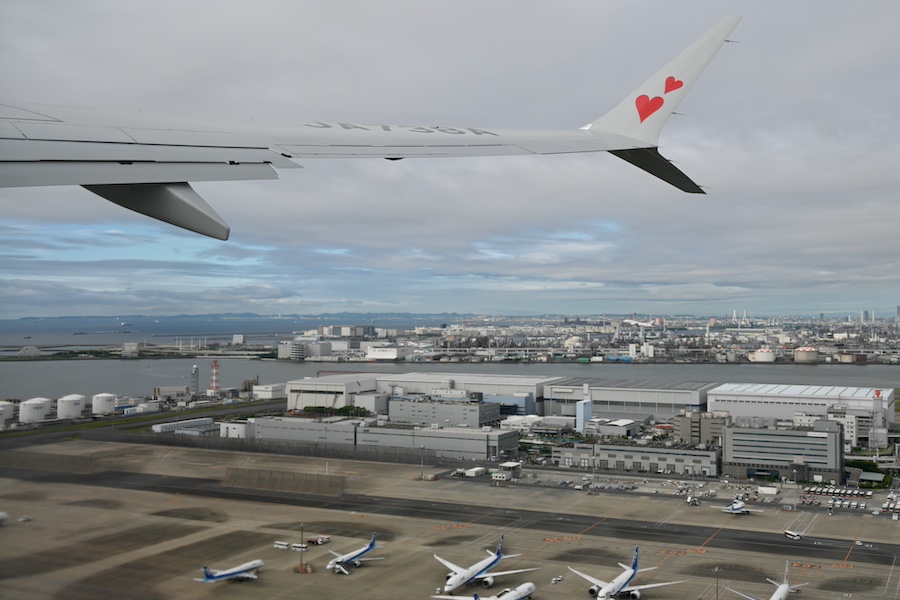
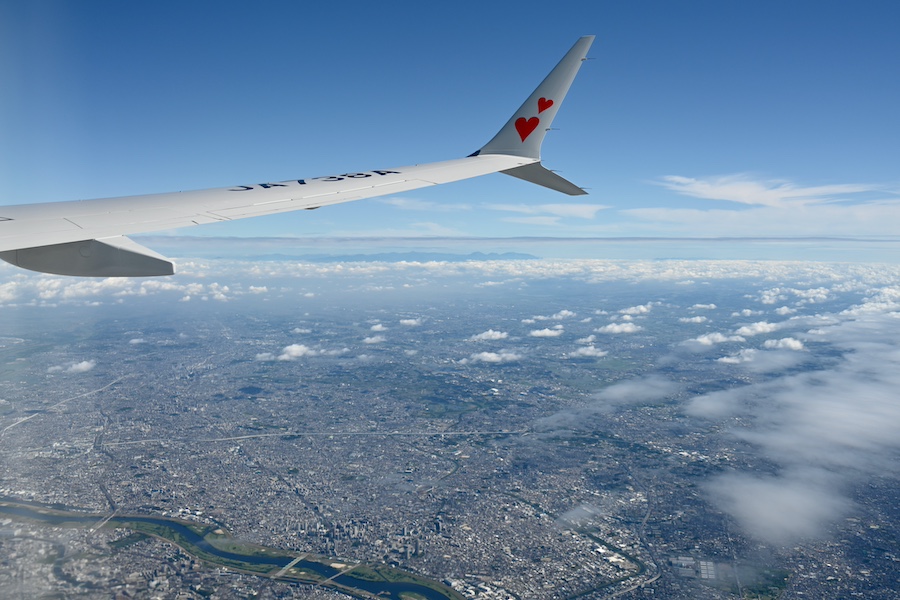
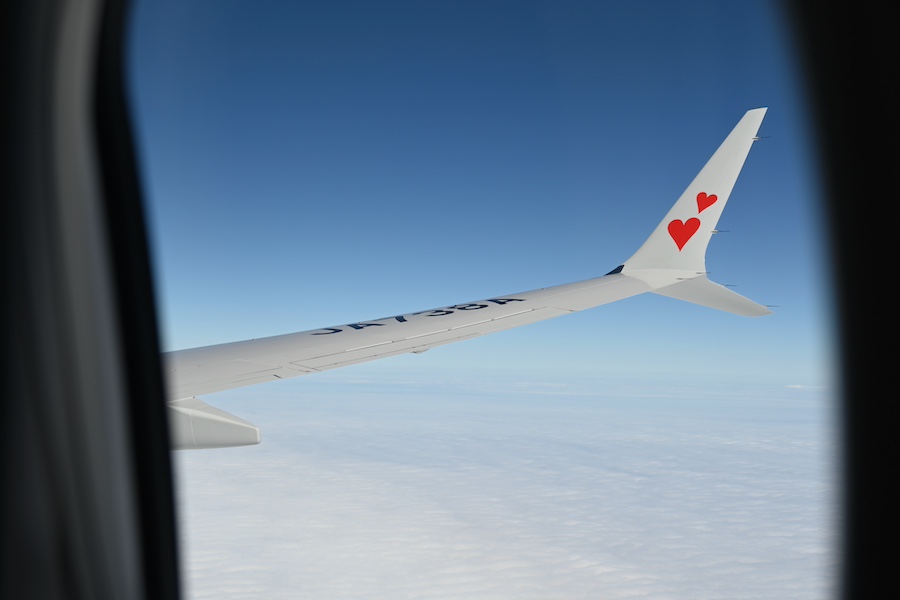
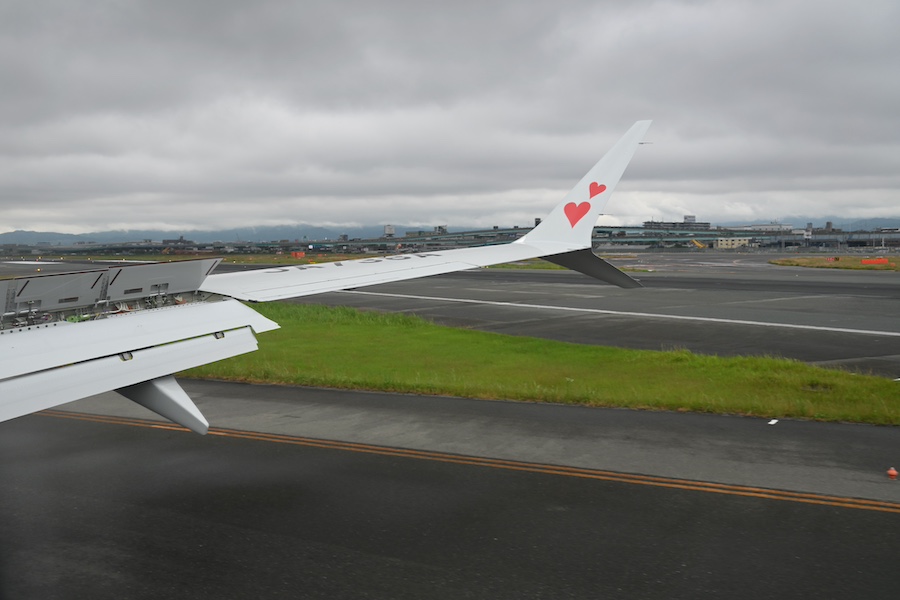
The aircraft design basically follows that of the existing 737-800, while extending the brand color “SKY BLUE,” which had been applied to the vertical stabilizer, down to the lower part of the fuselage. The number of red heart marks on the winglets has been increased from one to two on the new aircraft, expressing the wish to “deliver even more warmth to an even greater number of people.”
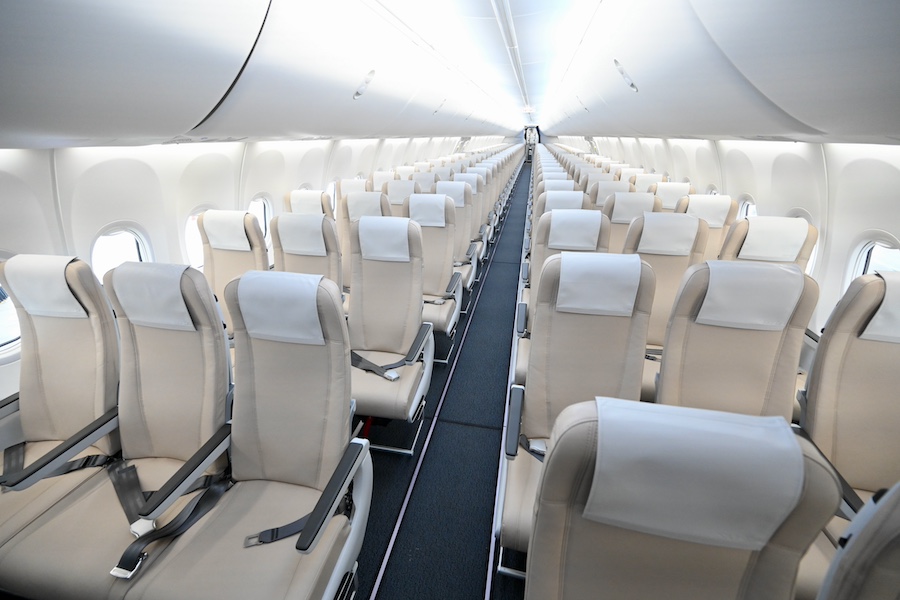
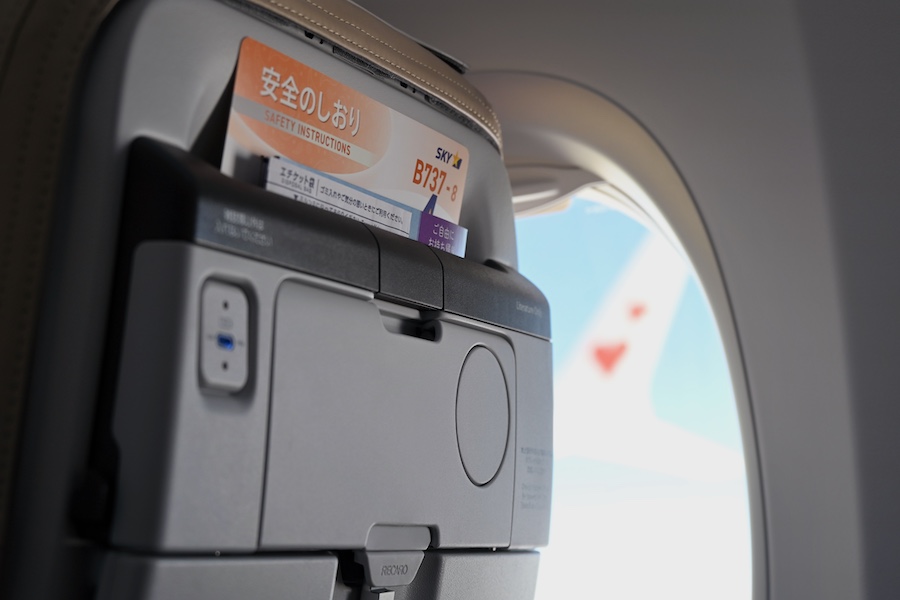
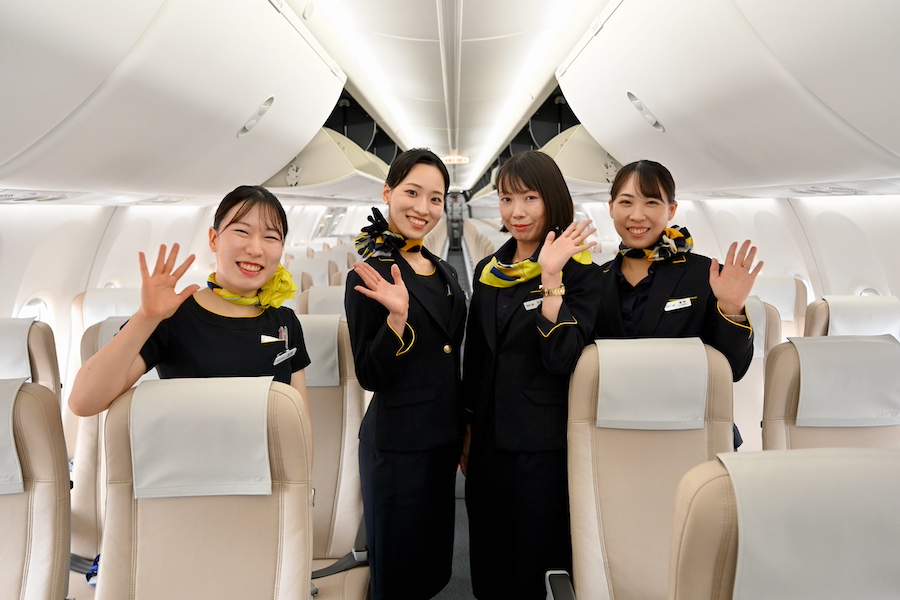
The seating capacity is 177, the same as the current 737-800, and the aircraft is equipped with slimline seats manufactured by Recaro. Seat pitch is about 31 inches (approximately 79 centimeters). Each seat has a universal power outlet under the seat and a USB Type-C port on the seatback. Inflight Wi-Fi service is also planned to be offered in the future.
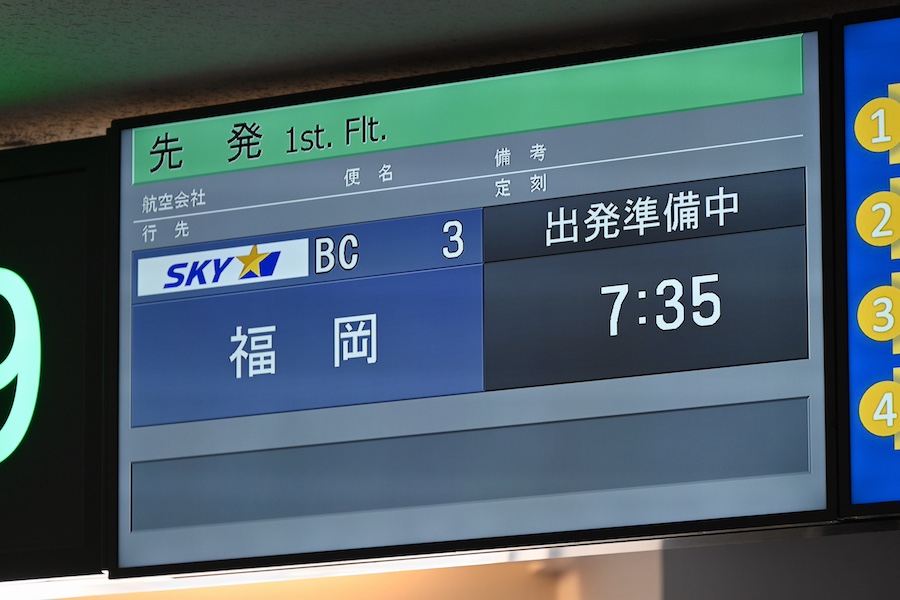
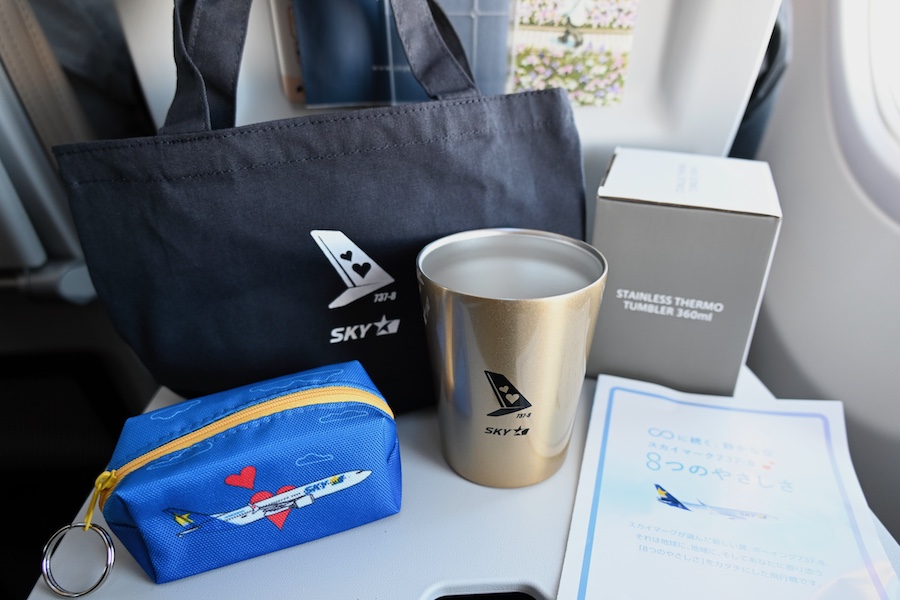
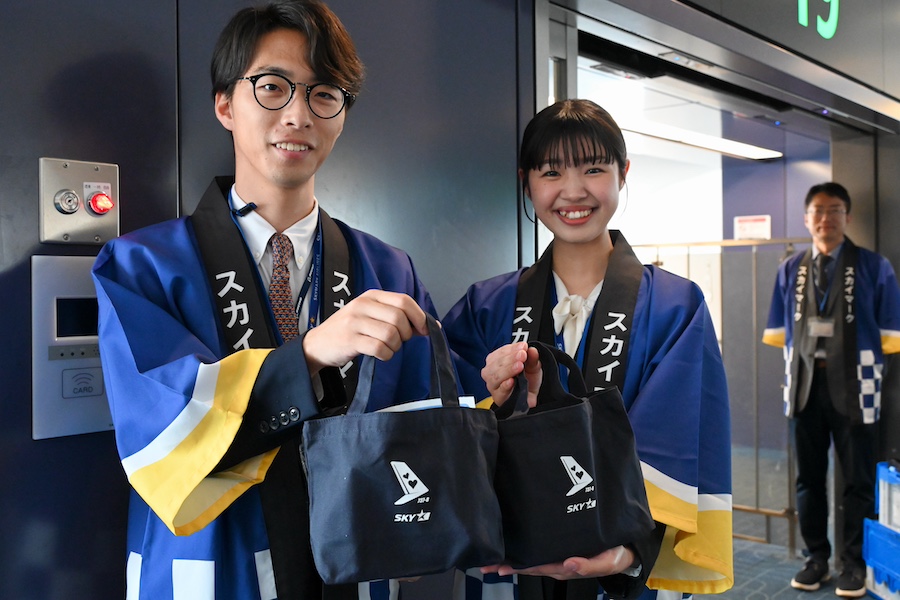
The first revenue flight, BC3 from Tokyo/Haneda to Fukuoka, departed with 174 passengers on board, almost a full load. It left stand 19 at 7:38 a.m. and took off from Runway 16L on the C runway. No special ceremonies for passengers were held at Haneda Airport, but commemorative tumblers and mini pouches were distributed at the gate.
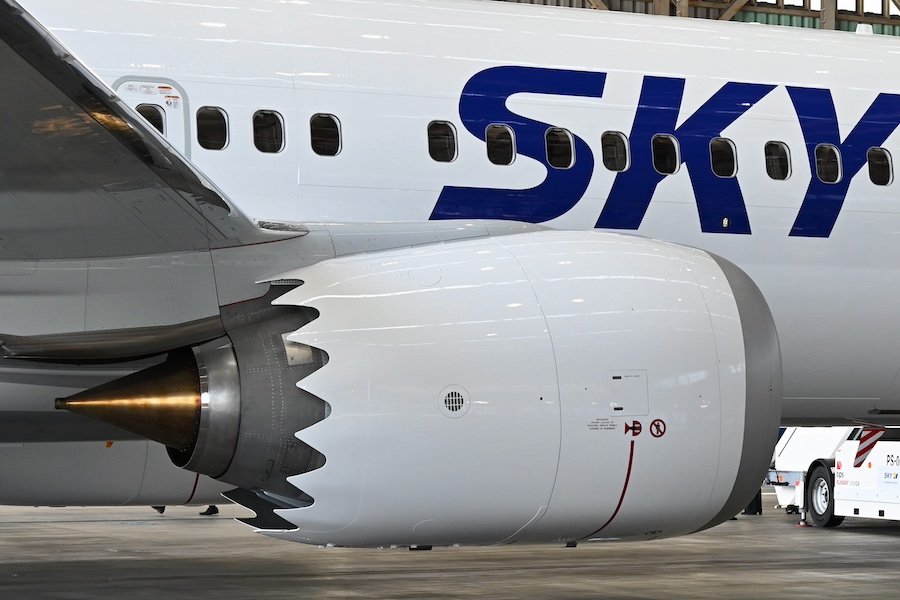
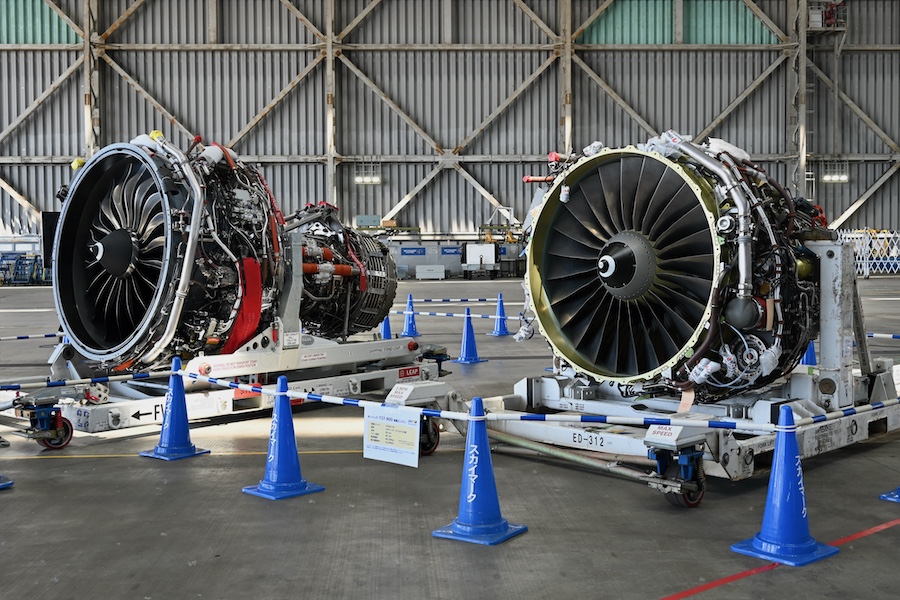
One of the greatest features of the 737-8 is the quietness of the cabin provided by its new engines. The CFM International LEAP-1B engines installed on the 737-8 have a serrated, sawtooth pattern on the aft part of the nacelle. By mixing the exhaust flow with the surrounding air, this design significantly reduces jet noise.
In practice, compared to the 737-800 fitted with the older CFM56-7B engines, the improved quietness during cruise is obvious even in the rear seats, which are more susceptible to engine noise. It feels easier to enjoy conversation, sleep, and music without stress. According to Boeing, the noise footprint (area affected by aircraft noise) on the ground has also been reduced by 50% compared to the 737-800.
▲ The LEAP-1B engine installed on the 737-8 (left) and the CFM56-7B engine on the 737-800
Environmental performance has also improved significantly. Fuel burn and carbon dioxide emissions per seat have been reduced by about 15% compared to the 737-800. The maximum range has been extended from 5,440 kilometers to 6,480 kilometers. At the unveiling ceremony, Skymark President Manabu Motohashi, who joined a pre-service familiarization flight, shared an episode in which the pilots commented during the flight that they were amazed by the aircraft’s fuel efficiency. He stated, “The surprise expressed by the frontline crews who stand on the very front line of the skies speaks more eloquently than anything else about the outstanding fuel efficiency of this aircraft.”
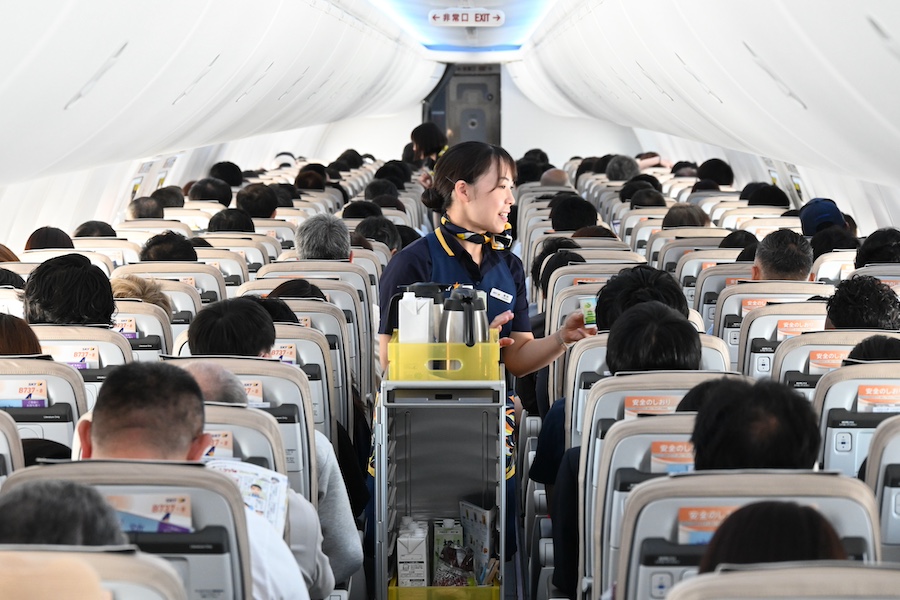
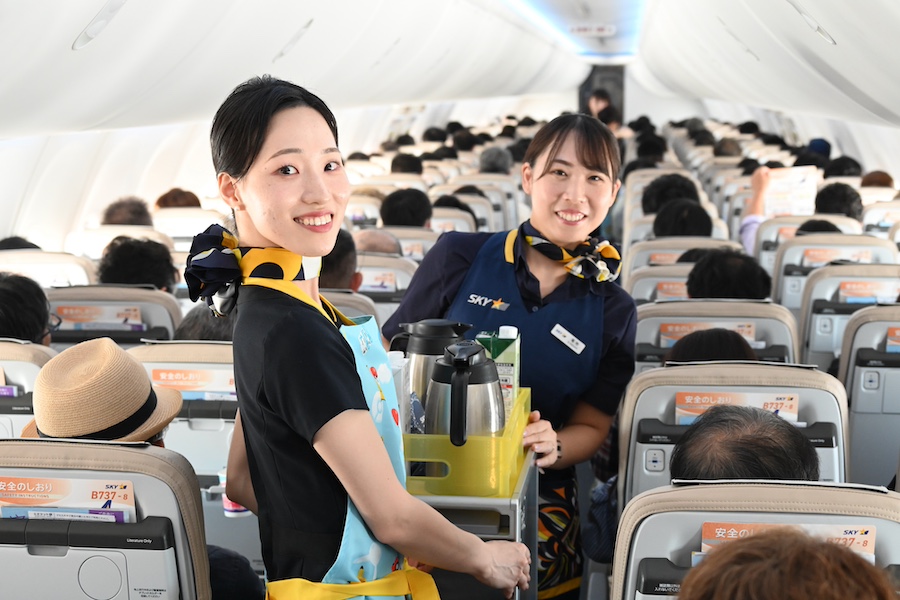
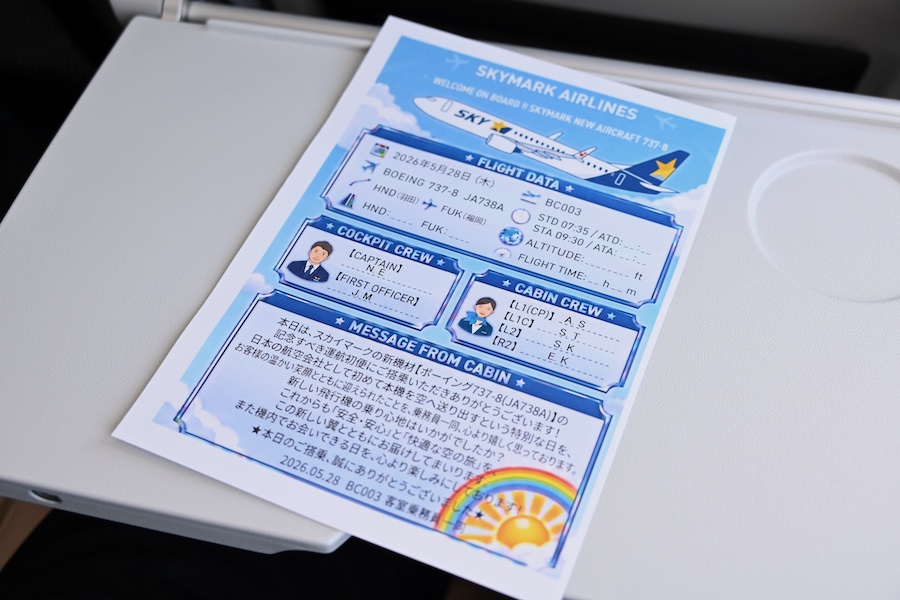
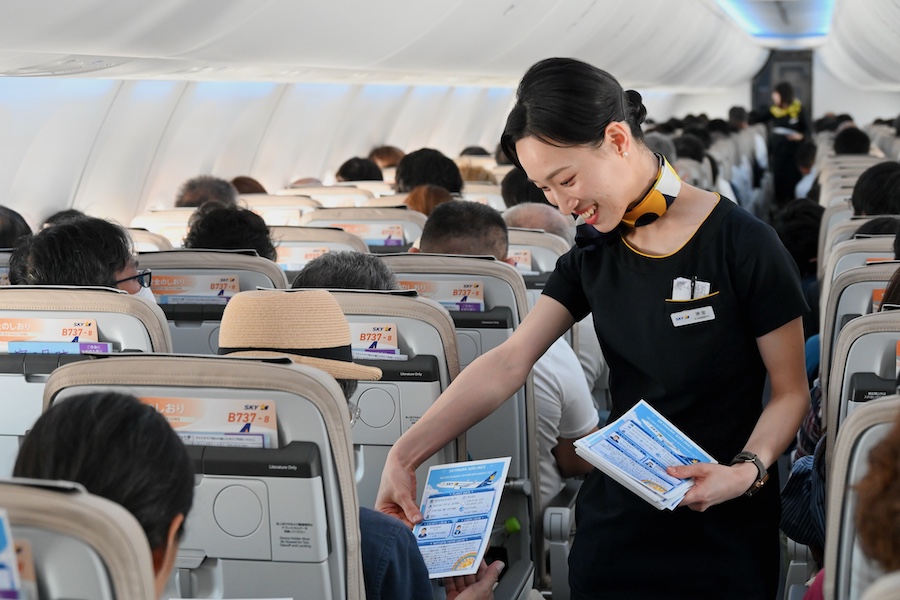
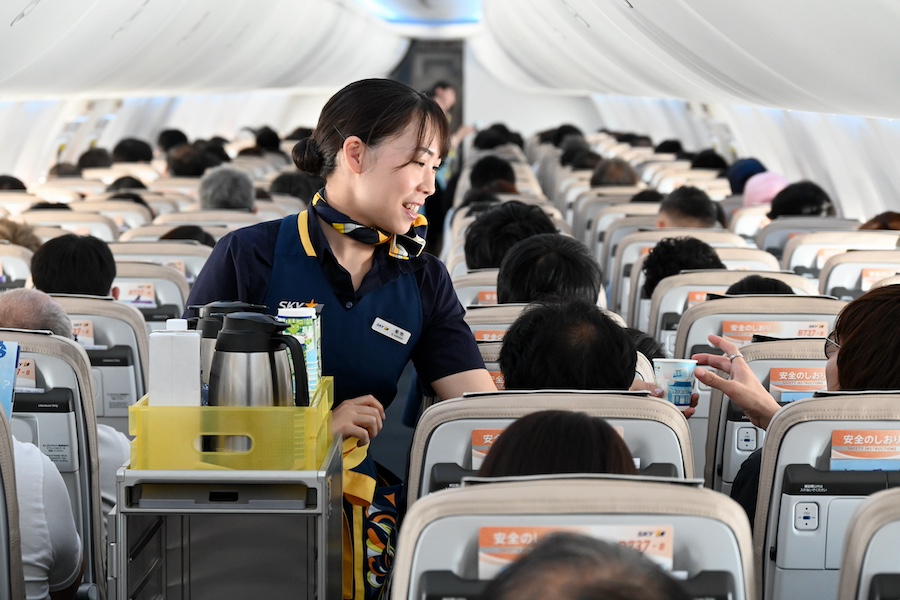
In addition to the usual inflight services such as drinks, passengers who wished could receive a handmade flight log sheet prepared by the cabin crew. The pilots announced flight details such as departure time, takeoff runway, cruising altitude, and flight time, and passengers themselves wrote them down—an arrangement unique to a commemorative flight.
As an aside, Skymark’s inflight drink service was renewed on April 1, with new menu items inspired by destinations the airline serves within Japan. Three new drinks were added: “Hot Kelp Dashi Soup,” made by grinding Hidaka-produced ne-kombu kelp from Hokkaido and blending it with bonito extract; “Pine the Sky,” a pineapple drink jointly developed with Sujahta Meiraku using pineapples from Okinawa Prefecture; and “Chiran Tea Yume Hotaru,” made with tea leaves from Chiran Town in Kagoshima Prefecture. Hot coffee and mineral water continue to be available.
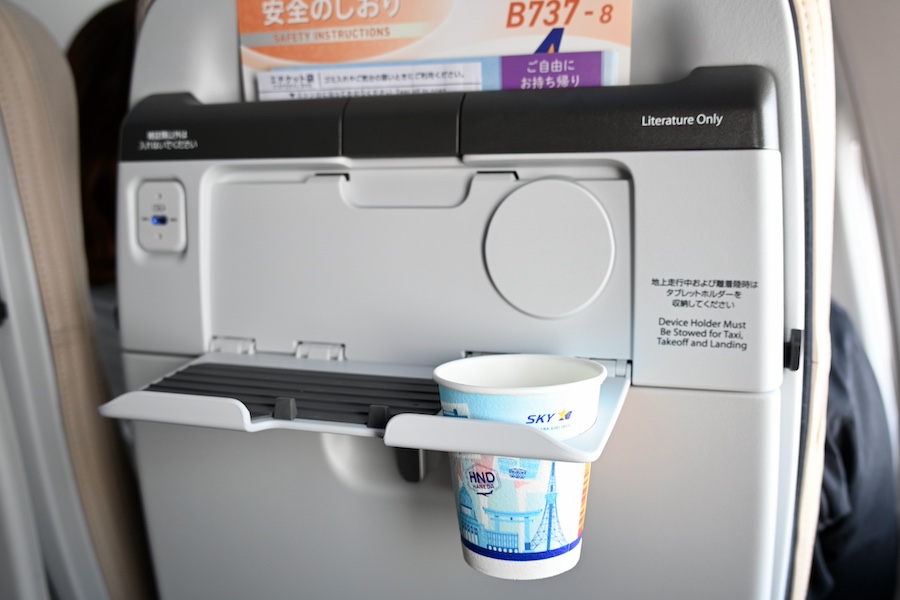
The new seats adopted on the 737-8 feature tray tables that also function as cup holders and tablet holders, allowing passengers to place drinks without fully lowering the tray table.
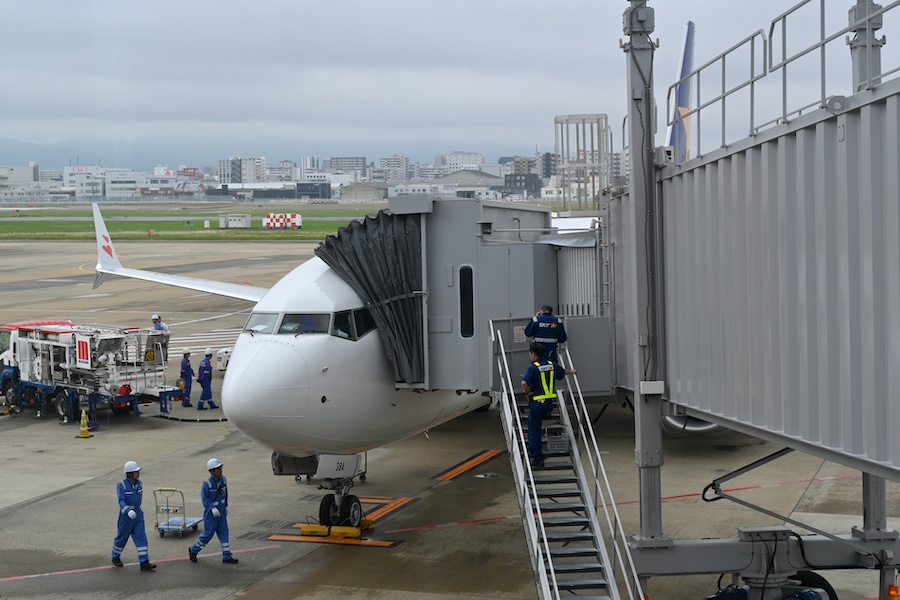
On the day of the first flight, a low-pressure system and a front brought cloudy and rainy weather across Japan. Right after takeoff there were brief breaks in the clouds, offering views of the cityscapes of Tokyo and Saitama below, but the aircraft then cruised above thick cloud layers for the rest of the flight. After a flight time of about an hour and a half, it arrived at Fukuoka Airport at 9:31 a.m. Next to the stand was a cargo container bearing a message in the Fukuoka dialect meaning roughly, “We’ll energize Japan’s skies with this brand-new aircraft!!,” quietly celebrating the entry into service of the new type.
For the time being, the 737-8 will continue to operate mainly on the Tokyo/Haneda–Fukuoka route, and will be gradually introduced on other routes as well. Flights operated by the type can be checked on the seat availability screen, where the aircraft type is shown as “738.” The second aircraft is scheduled to be delivered in July, and deliveries of the 737-10 are expected to begin in fiscal year 2027. As Skymark continues to introduce these new aircraft, more passengers will be able to experience an even more comfortable journey in Japan’s skies. (16 photos follow)
Notice
This article was generated using automatic translation by GPT-4 API. The translation may not be accurate.