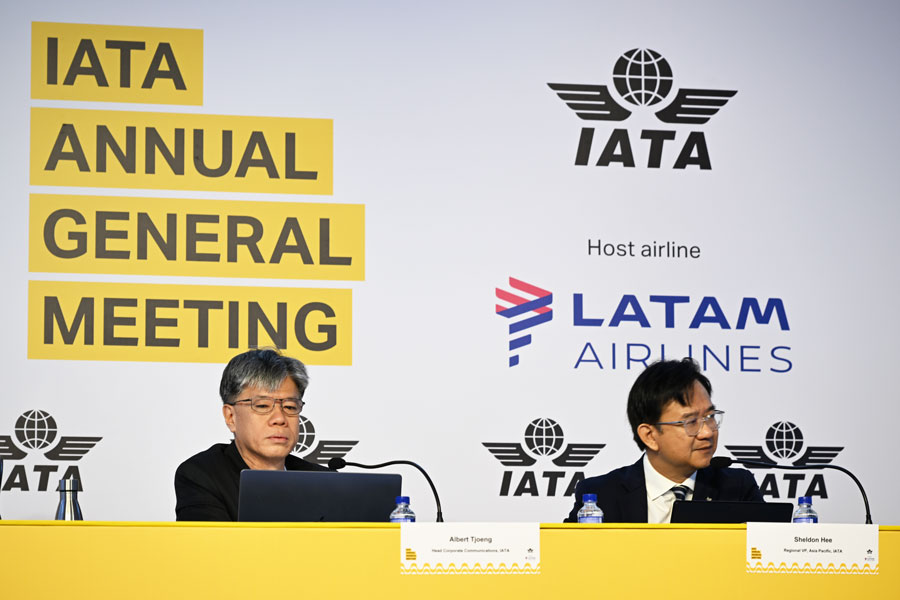
The International Air Transport Association (IATA) held a media briefing on the current situation and challenges of the aviation industry in the Asia-Pacific region during its Annual General Meeting (AGM) taking place in Rio de Janeiro, Brazil.
Passenger demand in Asia-Pacific is expected to continue growing by around 3.8% annually over the next 20 years, with the number of passengers reaching about three times the current level around 2050. China and India are expected to be the main drivers, backed by their large populations, relatively young demographic structures, and the continued expansion of the middle and affluent classes. IATA noted that underlying demand will not fundamentally change due to the situation in the Middle East or other political issues.
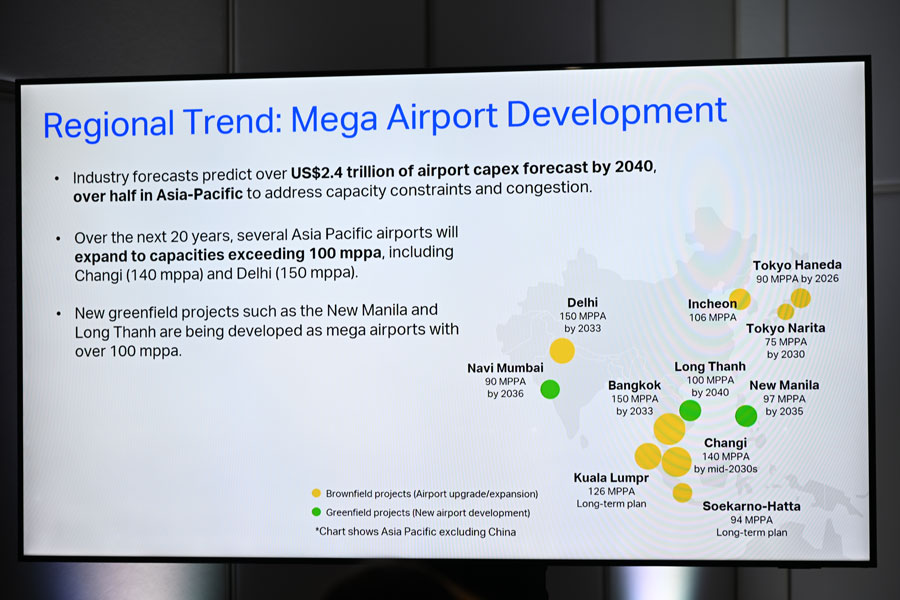
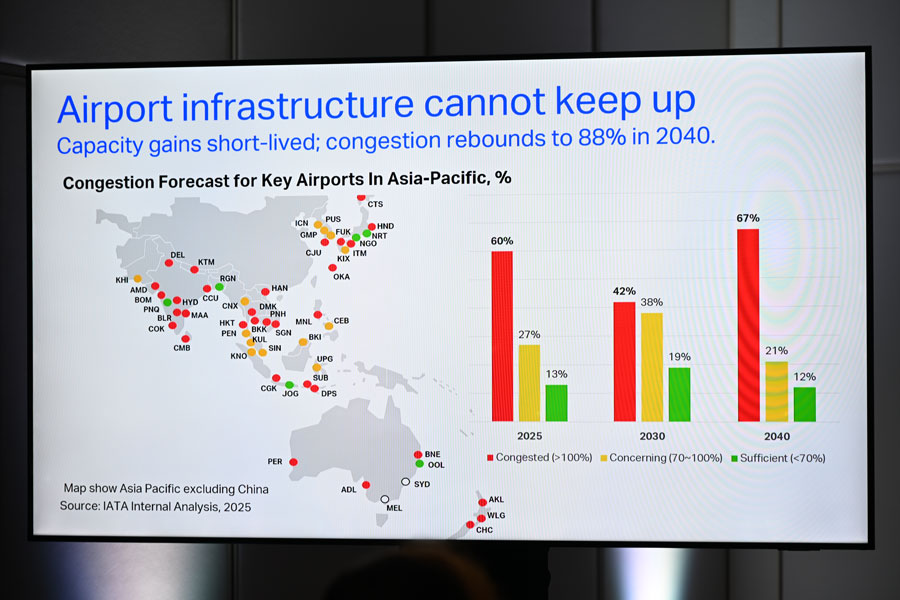
To support this growth, around 90 airport projects are underway in the Asia-Pacific region excluding China alone, and capital investment of 2.4 trillion US dollars is expected by 2040, with more than half of that concentrated in Asia-Pacific. On the other hand, it is projected that about 88% of all airports will reach capacity constraints in the 2040s, making infrastructure development at regional airports in particular an urgent priority. The issue is whether facilities of an appropriate scale will be in place to meet future demand; terminal and airport layouts should reflect not only traffic volumes, but also future customer needs and connectivity patterns.
Furthermore, IATA stressed that transparent and objective processes are required for financing infrastructure development, calling for clarity on what is built, how funds are used and refurbished, and how costs are shared. If financing methods are not optimal, airlines and passengers may face unsustainably high airport charges, which IATA highlighted as a recurring risk observed in various regions around the world.
Regarding fuel costs, IATA noted that jet fuel prices have fallen from a peak of 218–220 US dollars per barrel to around 150–160 US dollars at present, and that the short-term impact on the industry as a whole is expected to be limited. Although airlines in the Asia-Pacific region are particularly vulnerable to spikes in fuel prices, the industry has performed well over the past few years and is considered capable of weathering the current situation in the short term. Adjusting capacity is an effective initial response; while adjustments are being made on domestic and intra-regional routes, demand for long-haul routes remains relatively solid.
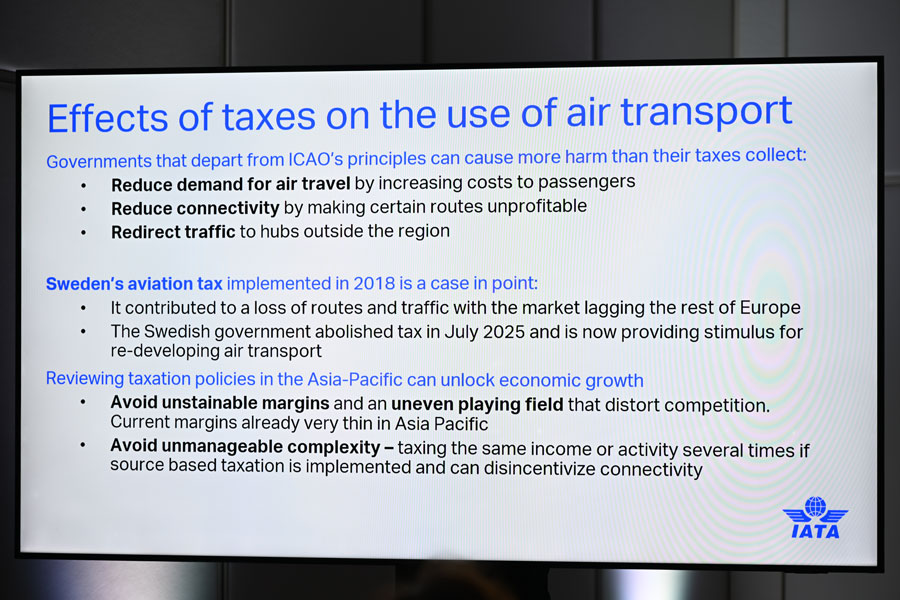
The average net profit of Asia-Pacific airlines is only 3 US dollars per passenger, indicating very thin margins. IATA urged governments to refrain from increasing taxation on aviation. As a concrete example, it cited Sweden’s aviation tax introduced in 2018, which led to the loss of routes and connectivity and was abolished in July 2025. Based on its research, IATA explained that the aviation industry has a multiplier effect: every 1 US dollar spent on aviation generates an additional 3.70 US dollars of value in other sectors of the economy.
With regard to Sustainable Aviation Fuel (SAF), global production in 2026 is expected to reach only about 2.4 million tonnes (around 0.8% of required demand). In the Asia-Pacific region, 28 projects could become operational within the next five years. IATA called on governments to introduce incentives to expand supply, identifying India, China, Indonesia, and Malaysia as important future sources.
On the protection of passenger rights, IATA criticized punitive regulations such as the EU261 rules, which impose an annual cost burden of 8 billion US dollars on the industry while not contributing to improved on-time performance. Instead, it advocated a cooperative approach focused on enhancing transparency.
Notice
This article was generated using automatic translation by GPT-4 API. The translation may not be accurate.