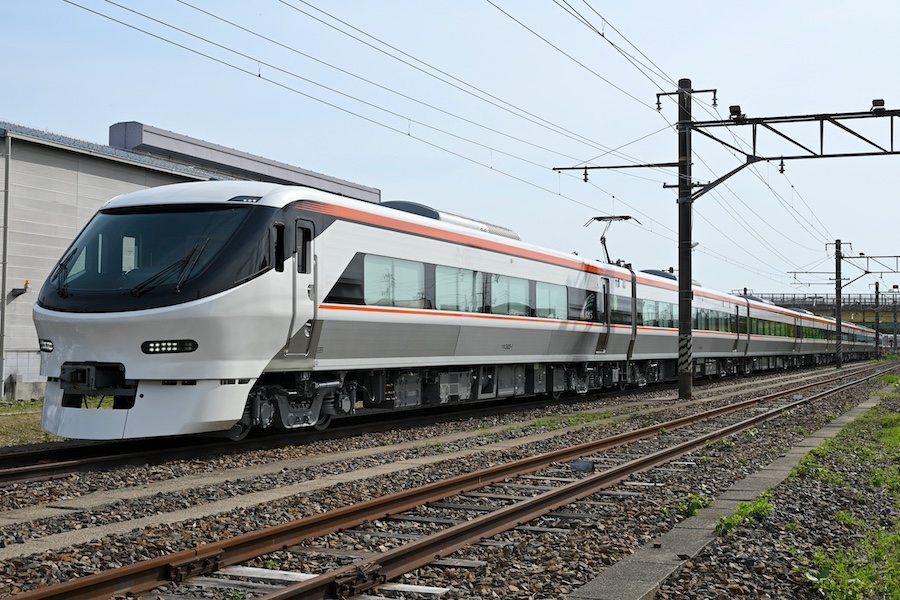
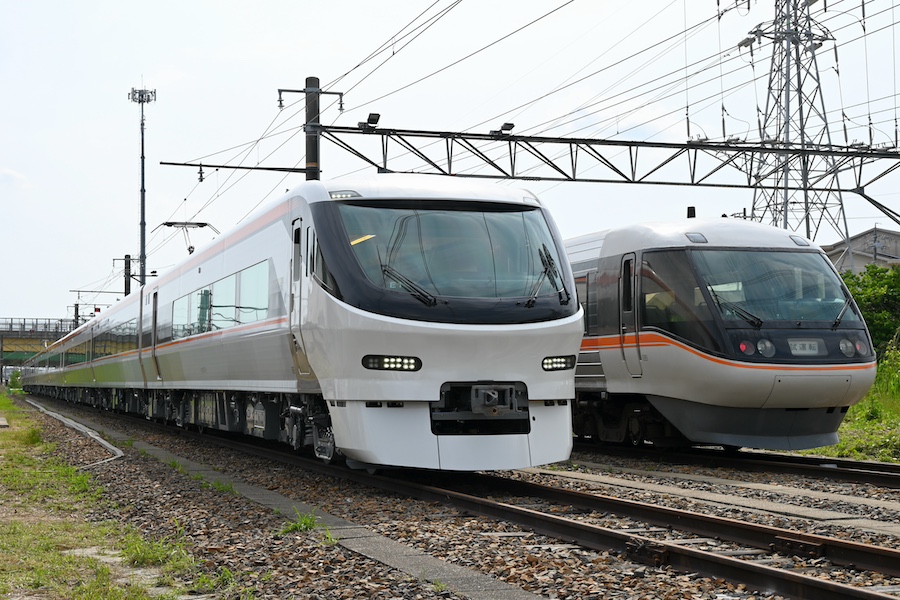
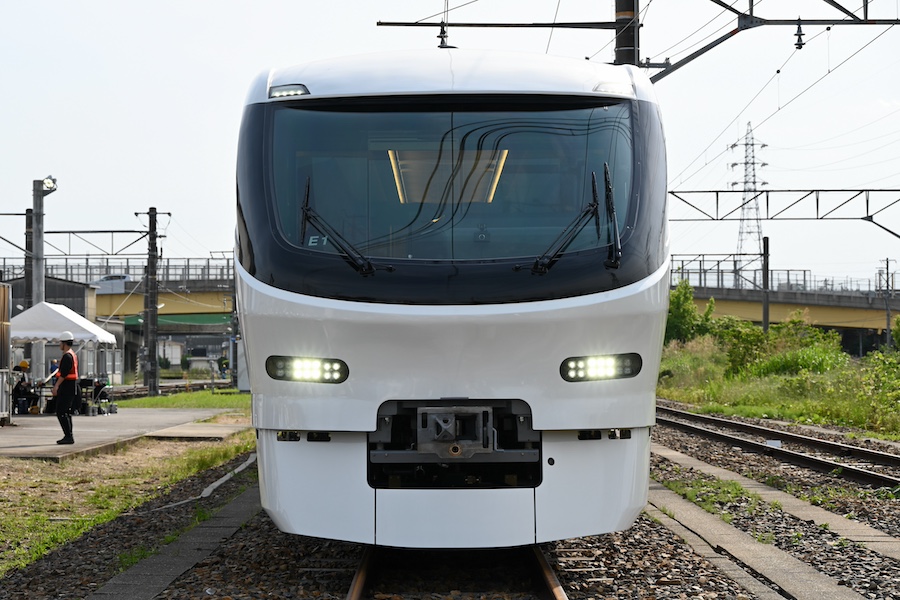
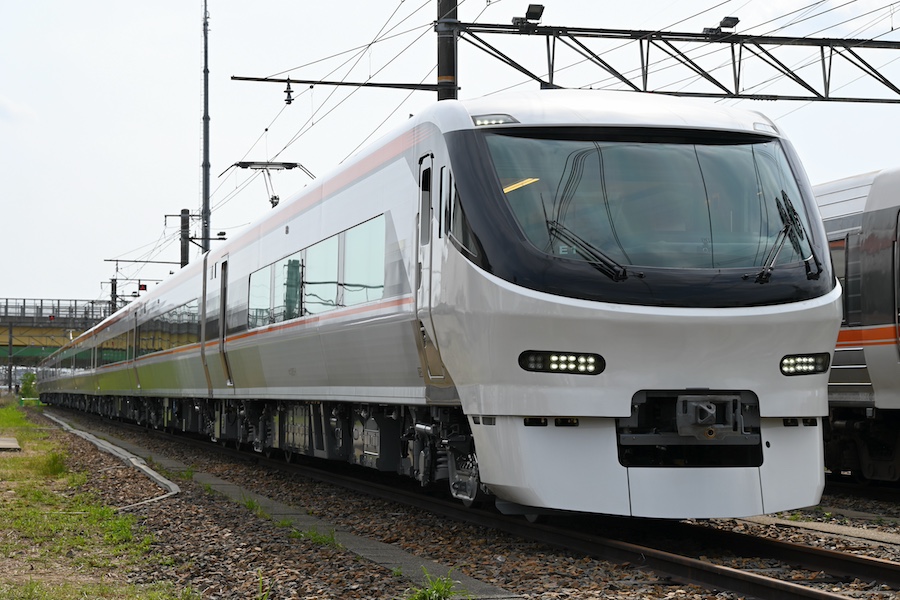
On May 12, Central Japan Railway Company (JR Central) unveiled the pre-production mass-production set of its new 385 series rolling stock for the Limited Express “Shinano” at the Jinryo Rolling Stock Depot in Aichi Prefecture, Japan.
The pre-production trainset consists of 8 cars. Car 1 on the Nagano end is Green Car (first class), and Cars 2 to 7 are ordinary cars. On the current 383 series, only the Green Car in Car 1 has a panoramic front view, but on the 385 series both end cars feature panoramic cabs, which is a major characteristic of the new design.
The overall design concept is “Harmony of the Rich Nature and Culture of the Shinano, Kiso, and Mino Regions.” The exterior theme is “Refreshing Wind Traversing the Alps,” evoking the image of wind sweeping through the ridgeline of the Japanese Alps.
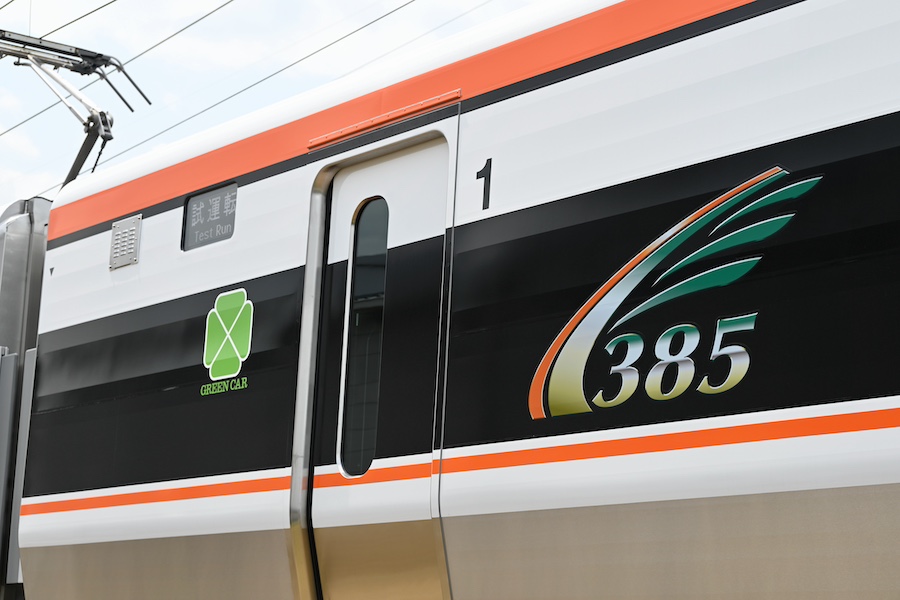
The symbol mark represents the forests of the Shinano, Kiso, and Mino regions with a green gradation, the conifer trees along the line with a large green-based curve and three lines, and the sense of speed of the train running through curves at the highest speed in Japan with an orange curve. The symbol is applied in two locations each on Cars 1, 3, 6, and 8, for a total of eight locations.
For the interior, both the Green Car and ordinary cars make extensive use of vertical lines and wood-grain-style interior materials to evoke the image of the five representative tree species of the Kiso region, known collectively as the “Kiso Godai-boku” (Five Trees of Kiso).
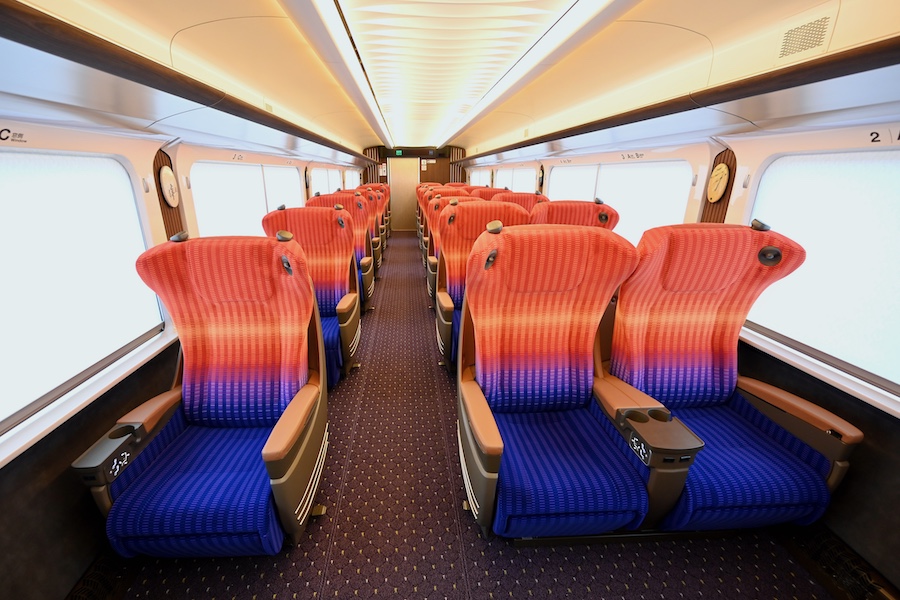
The theme of the Green Car is “Elegant Sense of Privacy.” Based on a subdued, weighty color scheme, it is equipped with back-shell seats with electric leg rests manufactured by Koito Electric Industries, arranged in a 1+2 configuration. This is the first time JR Central has adopted back-shell type seats. The moquette fabric is colored to evoke the sunrise over the Northern Japan Alps and the gentian flower, which is the prefectural flower of Nagano Prefecture, and the walls are decorated with Mino ware, a traditional craft from Gifu Prefecture.
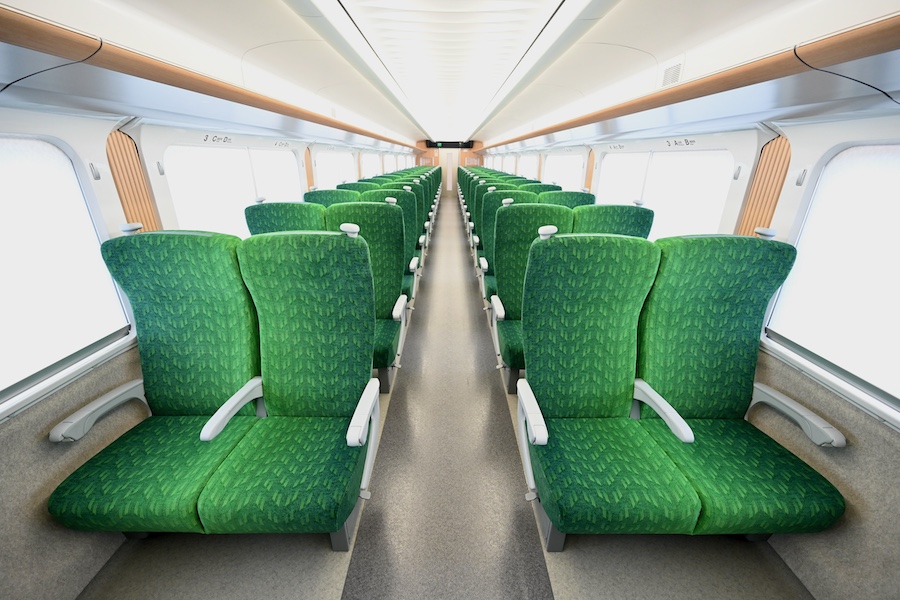
The theme of the ordinary cars is “Comfort of Nature.” Within a bright, refreshing interior, reclining seats are arranged in a 2+2 configuration, and the green-toned moquette represents the forests of the Kiso region.
Both Green Car and ordinary cars are equipped with power outlets at all seats, and the luggage racks have been enlarged to provide more space.
In terms of safety and service equipment, the train is fitted with the same systems used on the HC85 series hybrid limited express trains operated on the Limited Express “Hida” and “Nanki” services, including the DIANA condition monitoring system, which constantly monitors the operating and failure status of on-board equipment remotely, and security cameras inside the cars.
In terms of performance, the key feature is the adoption of next-generation tilting control technology. On the current 383 series, when the train passes a lineside transponder, it acquires the distance to the start of the curve and then calculates the distance traveled based on wheel rotations to detect curve timing. However, a challenge has been that in conditions such as rain, wheel slip can cause the initiation of the pendulum tilt to be delayed.
By contrast, the 385 series constantly monitors the positional relationship between the train and the curve using gyro sensors installed on the train, enabling more accurate detection of the curve starting point. This allows the pendulum tilt to always begin simultaneously with the start of the curve. According to running tests conducted using the 383 series equipped with the new system, ride comfort when passing through curves has improved by about 15 percent compared to the current equipment.
From May 13, JR Central will begin nocturnal test runs between Nagoya and Nakatsugawa stations to verify the next-generation tilting control technology and other systems. Commercial operation is planned to start around fiscal year 2029, with the 385 series gradually replacing the current 383 series. As for the number of production trainsets, cars per set, and the timing of full fleet introduction, a JR Central representative stated that the company “will make a comprehensive decision based on future demand trends and other factors.”
Notice
This article was generated using automatic translation by GPT-4 API. The translation may not be accurate.