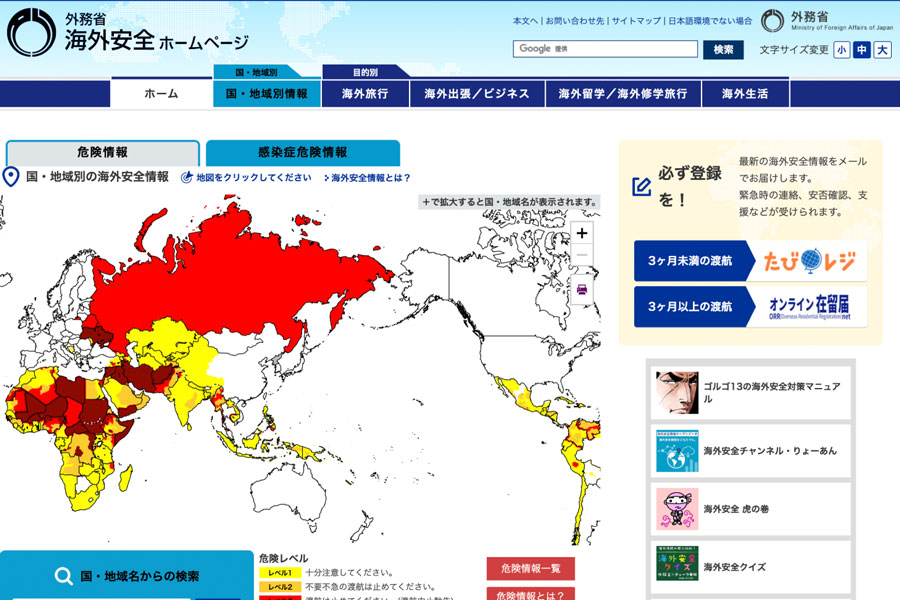
Japan’s Ministry of Foreign Affairs has issued Infectious Disease Danger Information Level 1 (“Exercise caution”) for the Democratic Republic of the Congo and Uganda.
This measure follows the World Health Organization (WHO) declaring the Ebola virus disease outbreaks in both countries a Public Health Emergency of International Concern (PHEIC).
In Ituri Province of the Democratic Republic of the Congo, 8 confirmed cases, 246 suspected cases, and 80 deaths among suspected cases have been reported. Confirmed cases have also been reported in Uganda. The WHO has pointed out that, due to the high positivity rate among the earliest collected samples, the increasing number of suspected cases, and the clustering of deaths across the province, there is a possibility of a large-scale outbreak.
Ebola virus disease is an extremely dangerous infectious disease with a very high fatality rate. It is primarily transmitted through contact with the body fluids of infected individuals. Although it is not necessarily highly contagious, there are currently no vaccines or therapeutic drugs with fully established safety and effectiveness for prevention or treatment. The incubation period ranges from 2 to 21 days, beginning with symptoms such as fever, chills, headache, muscle pain, and loss of appetite, followed by vomiting, diarrhea, and abdominal pain. If the illness further worsens, hemorrhagic tendencies can appear throughout the body, leading to death.
Notice
This article was generated using automatic translation by GPT-4 API. The translation may not be accurate.