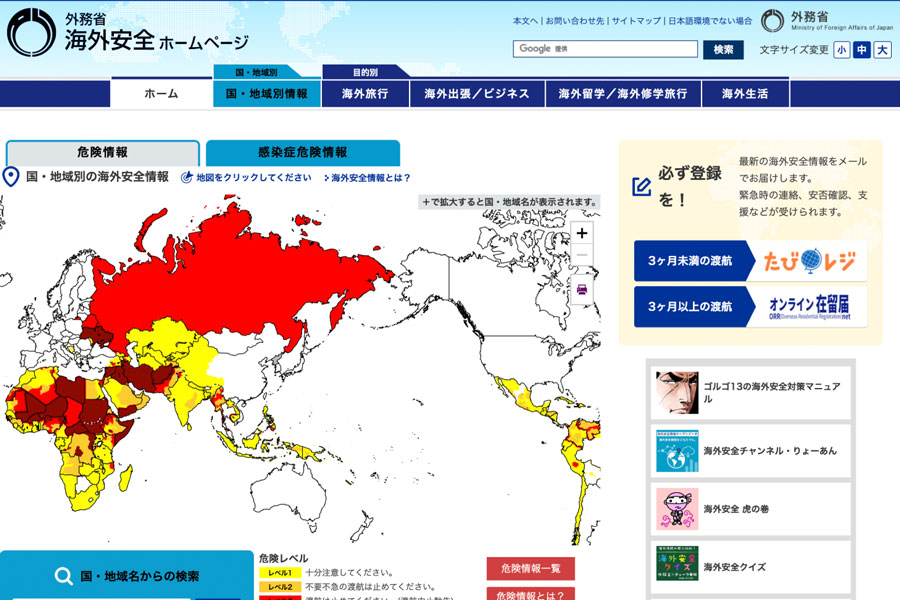
Japan’s Ministry of Foreign Affairs has issued a wide-area advisory for South America, calling for caution regarding hantavirus pulmonary syndrome.
Hantavirus infection is an infectious disease caused by viruses of the genus Orthohantavirus and can lead to severe respiratory illness. It is associated with exposure to the urine and feces of infected rodents, and in rare cases, can be transmitted from person to person. The incubation period ranges from 1 to 5 weeks, typically about 2 weeks. Symptoms include fever, cough, and muscle pain, and may also be accompanied by vomiting and diarrhea. Infection can be fatal.
Infections have spread among passengers of the Hondius, an expedition cruise ship operated by Oceanwide Expeditions, and after disembarkation, passengers have been placed under quarantine measures in various countries. The Andes virus strain confirmed in these cases is said to be a type that can be transmitted from person to person.
The Ministry of Foreign Affairs advises people overseas to avoid contact with rodents, such as mice. In addition, those who have stayed in South America and are experiencing health abnormalities such as fever or cough, or those who had contact with rodents such as mice while staying in South America, are requested to report this to the quarantine station upon returning to Japan.