Because I have a regular column in a weekly magazine, I travel around Japan several times a month. Since I live in Tokyo, I often make day trips to the Tohoku and Kanto regions, but for other areas I usually stay 1 or 2 nights. Perhaps because of that, I am sometimes asked about the impact of the Chinese government’s travel advisory on hotels in Japan. The truth is, it really depends on the location. It is true that the other day, a popular hotel just one stop from Kyoto Station was unusually empty. One night with two meals, single room, tax included for 4,580 yen.
So what about Nishinari in Osaka? To jump to the conclusion, there are many Western tourists and Asian tourists from outside China, so it doesn’t feel like there is any major impact. More than that, the wave of physical change is rolling in: Hotel Raizan, which is extremely popular with inbound tourists, has temporarily closed for rebuilding, a communal apartment building consisting mainly of 3-tatami mat single rooms is also being rebuilt, and new hotels are under construction.
Up to now, in this series I have introduced 22 hotels in Nishinari, but in fact, I had not yet written about the hotel where I stay most often.
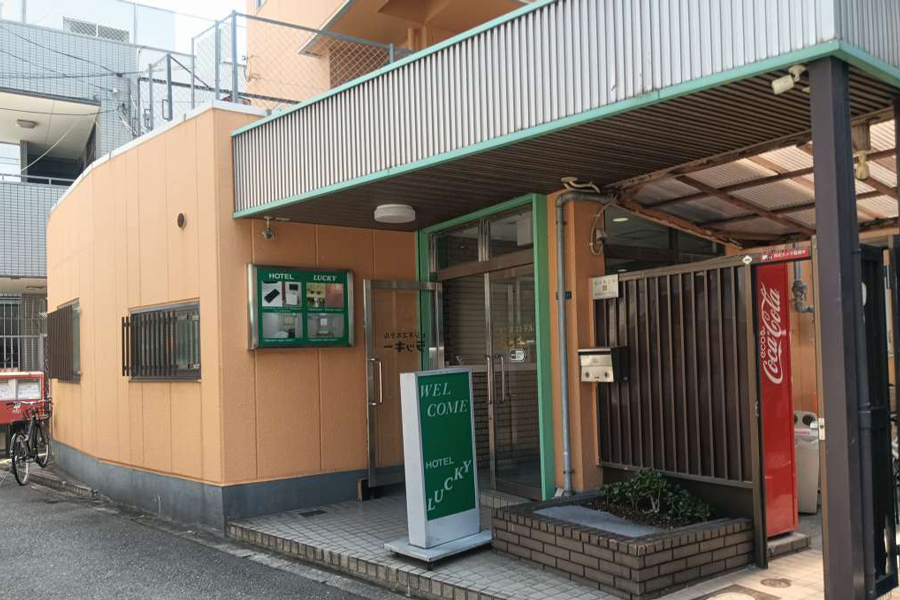
That is “Hotel Lucky.” I have stayed there several dozen nights. Why have I not introduced it until now? Partly because I wanted to keep it “in reserve” as a special hotel, but more importantly, its popularity has surged so much that recently it has often been fully booked and even I couldn’t get a room. As usual, when I search on sites like Rakuten Travel, it’s fully booked.
However, when I happened to search on Trivago, I found, to my surprise, that there was one room available. I booked it without hesitation. In practice, the process was: jump from Trivago to Expedia and then make the reservation there. The price was 1,909 yen including tax.
I was a bit worried because I occasionally hear stories that when people use overseas-based booking sites, the reservation doesn’t actually reach the hotel. Still, the price was low, and I figured that if it didn’t work out, I could just walk in to another hotel in Nishinari on the day. In the end, I even received a courteous confirmation email directly from Hotel Lucky, which put my mind at ease.
To make sure I wouldn’t be late for interviews starting the next morning, I arrived in Osaka the evening before. I have a Priority Pass, so my routine was: around 2:00 p.m., lunch buffet at “ALL DAY DINING GRANDE AILE” near Haneda Airport Terminal 3; around 3:00 p.m., a footbath and craft beer at “Ashiyu Cafe & Body Care LUCK” in Terminal 1; and a little after 4:00 p.m., some alcohol at the ANA Lounge in Terminal 2. Previously, after that I would have dinner and wine at “Osaka Airport Winery” in Itami Airport before heading to Nishinari, an itinerary with quite a drastic contrast, but since that became unavailable upon arrival, I went straight from the airport to the hotel (check-in is between 3:00 p.m. and 10:00 p.m.).
Since I had already paid by credit card, check-in was smooth. I received my key from a friendly front desk staff member who appeared to be Japanese. A few years ago, there was a Southeast Asian-looking male staff member who spoke fluent Japanese and would explain the facilities in the lobby, but I haven’t seen him lately. Shoes are not allowed inside the building, so you take them off and change into slippers. You bring your shoes with you to your room. Incidentally, the slippers used to be the type you would find at a traditional ryokan or in a hospital, but recently they have been updated to a more modern style.
The room assigned to me was on the 4th floor. I took the elevator up. The hotel has both Japanese-style and Western-style rooms, and this time I got a Japanese-style room.
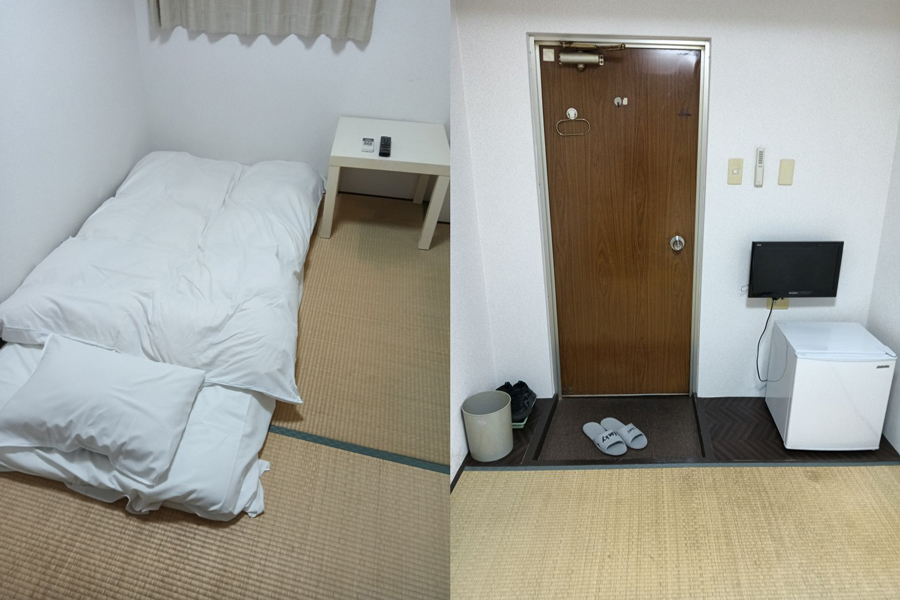
When I opened the door with the key, a 3-tatami mat Japanese-style room spread out before me. Personally, I actually prefer Western-style rooms. With Japanese-style rooms, especially with tatami, I can’t help worrying about the possibility of bugs. That said, Hotel Lucky is well maintained, and from my experience up to now I have never had a problem. The room is the same size as the Western-style ones, but it actually feels more spacious than the Western rooms.
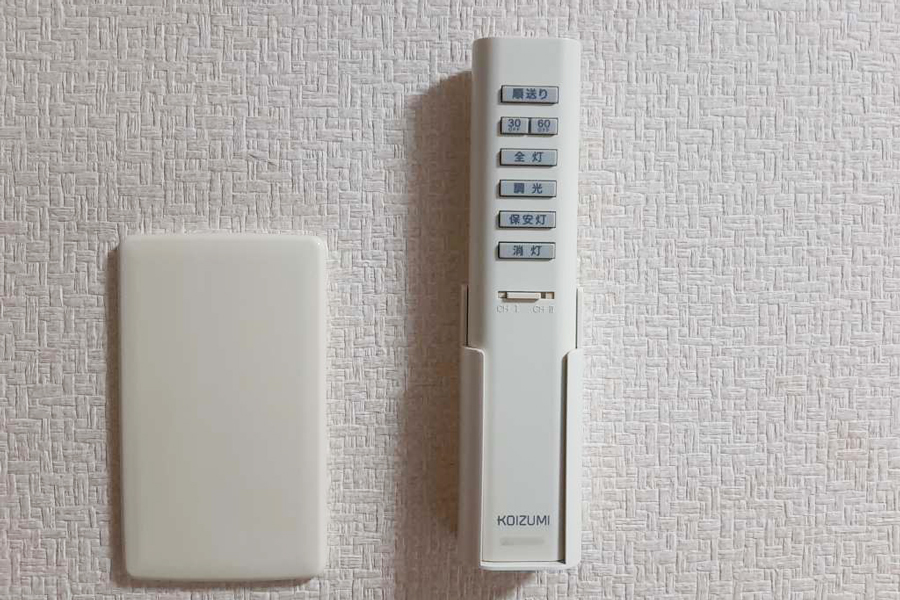
The room is equipped with a small square table, a refrigerator, and a television. Of course, there is also air conditioning. What’s more, the ceiling light is remote-controlled and you can even adjust the brightness.
There is free Wi-Fi (password-protected), so you have everything you need.
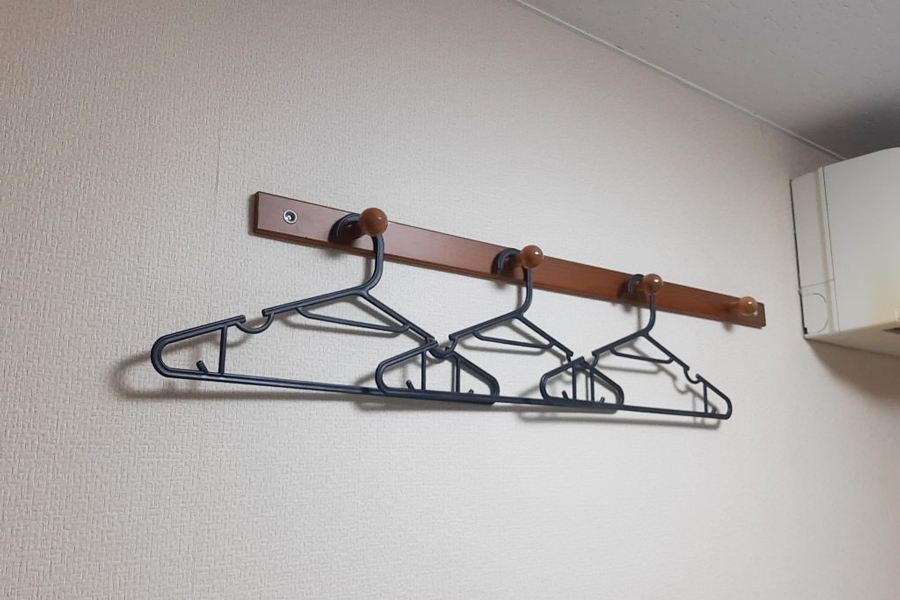
The hangers are simple, but there are three of them. The room is only 3 tatami mats in size, but I have no complaints at all. The only thing that might bother some people is that there is only one electrical outlet. However, if you unplug the TV, you effectively have two, and since I often stay in Nishinari, I always carry a power strip with me anyway, so it’s no problem for me.
By the way, Hotel Lucky does not provide toothbrushes, razors, or even towels (they are available for purchase at the front desk). It’s better to be aware of that in advance.
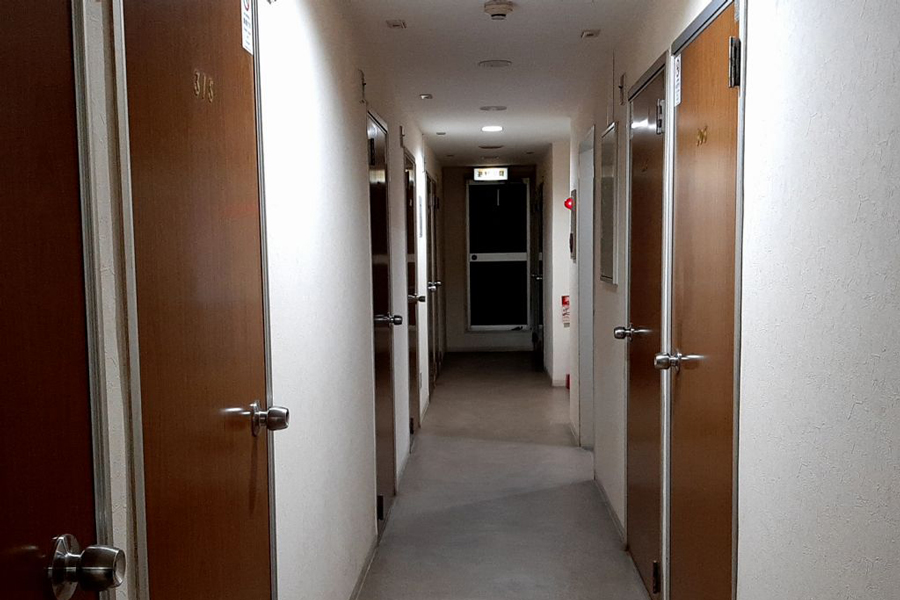
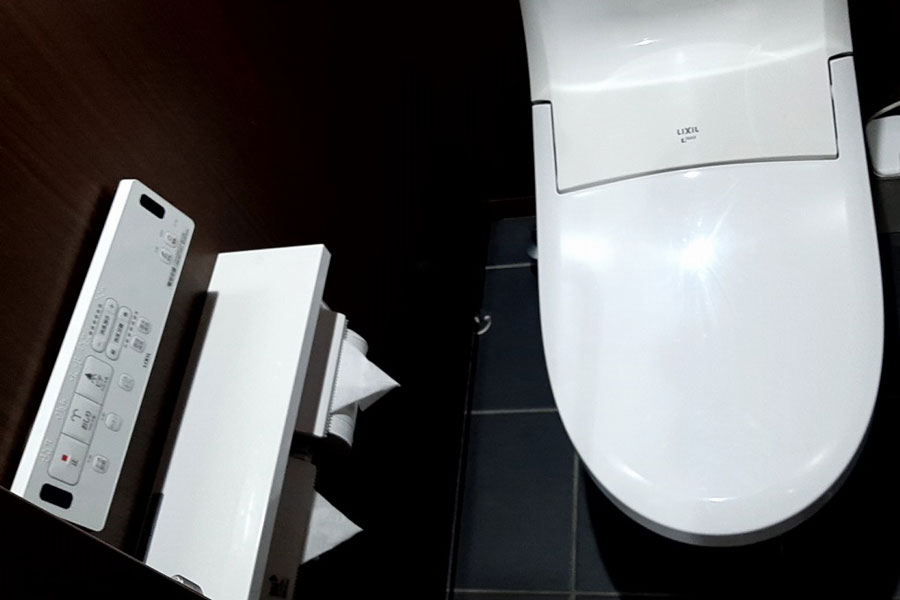
Now, let’s move on to the customary exploration of the facilities. That said, after dozens of stays, I know the place quite well. To be honest, the 4th-floor corridor and toilets are a little old-fashioned. There are even Showa-era style squat toilets. If you prefer more modern facilities, it’s better to go to the 3rd floor when you use the restroom. As you can see in the photo, there are clean Western-style toilets there.
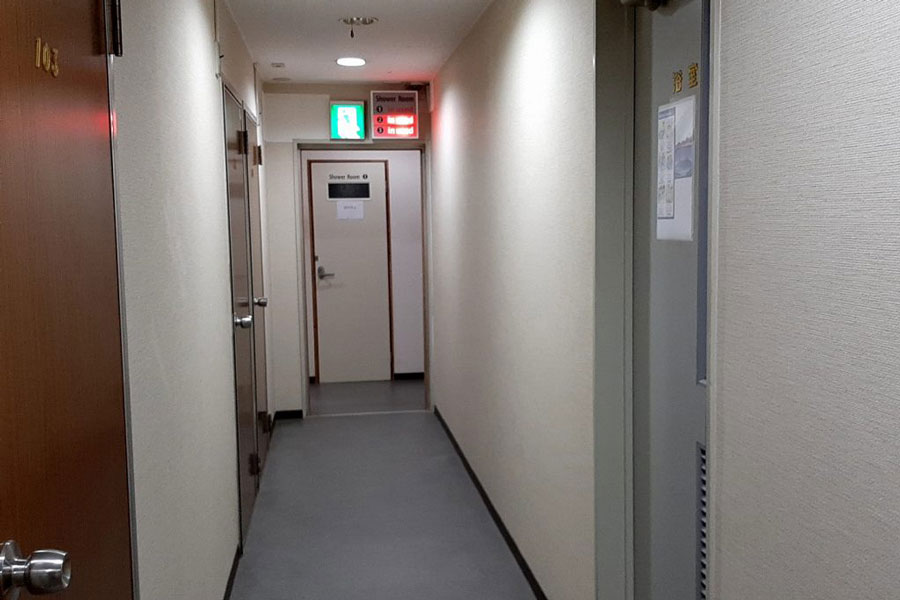
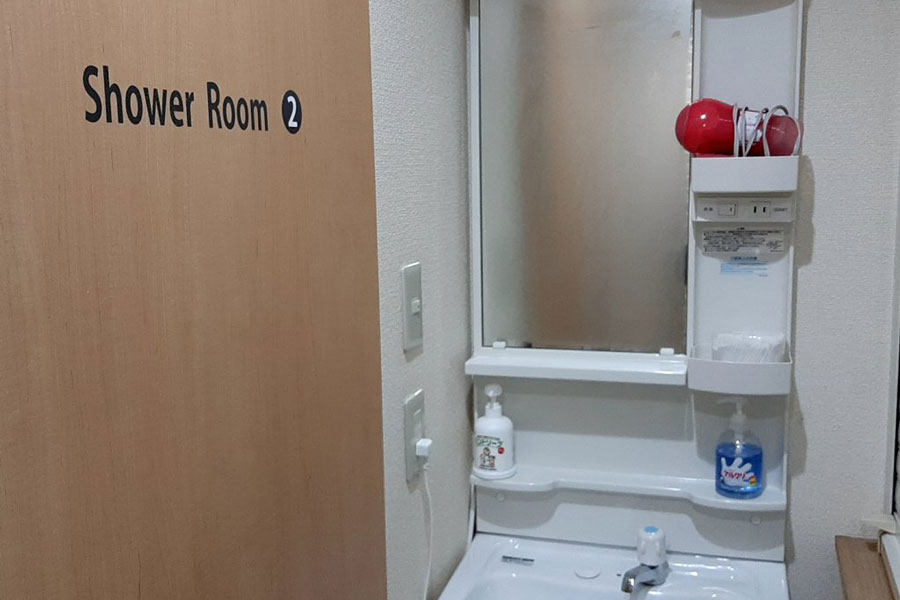
The real highlight is on the 1st floor. At the back there are three shower rooms, and an electronic display above them shows which ones are vacant and which are occupied.
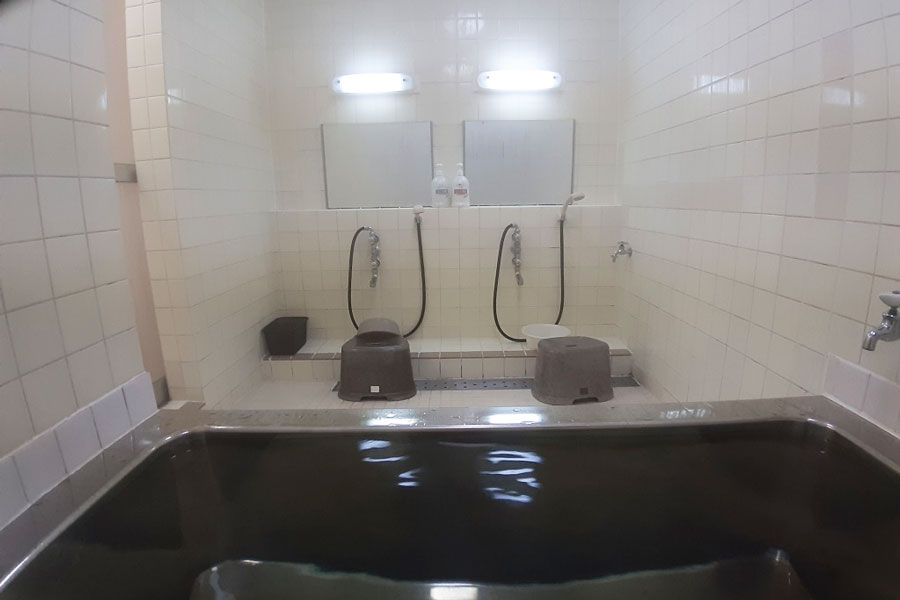
There is also a large public bath for men only. There are two washing stations and a bathtub, so in theory it could accommodate 3 to 4 people, but lately the posted capacity has been two people at a time. It is open every day from 4:30 p.m. to 9:00 p.m., so I decided to use the shower room in the morning and headed for the large bath in the evening.
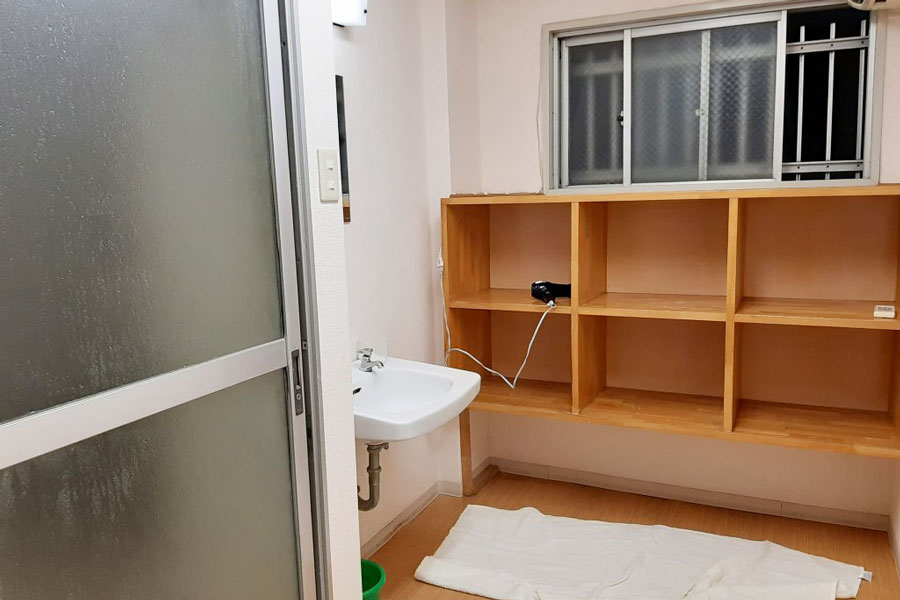
Fortunately, no one was there and no one came in, so I had the place to myself. Public baths in Nishinari sometimes don’t even have soap, but here they provide both shampoo and body soap, which is great. There is also a hair dryer in the changing room, which is another nice point.
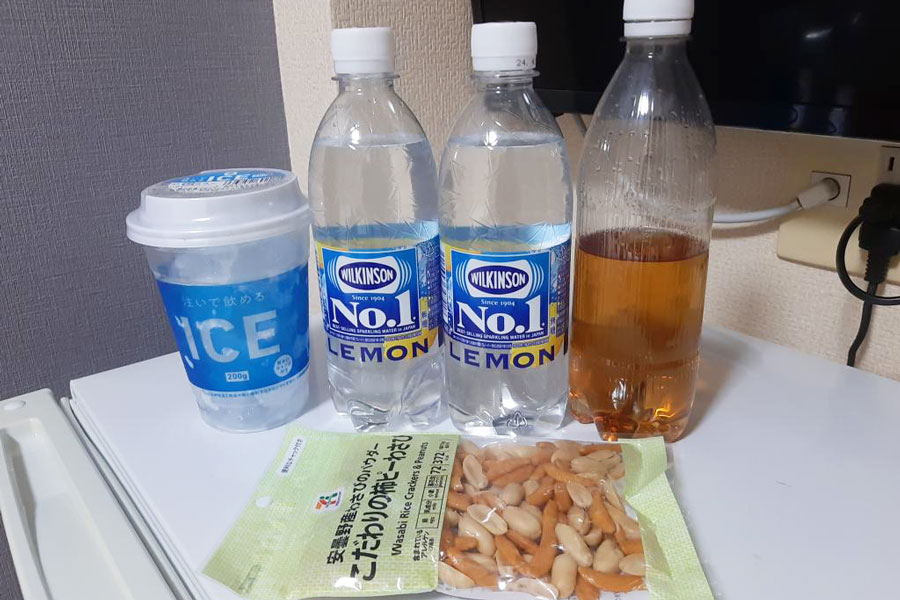
After that, I had some drinks in my room using soda and ice that I had bought on my way from the airport to the hotel. There is a microwave in the lobby on the 1st floor for guests to use. The front desk is open until 10:00 p.m., and the main entrance shutter is closed after that, but you can enter and leave 24 hours a day through the side door, so you can go out and enjoy the nightlife if you like. By the way, outside the side door there are vending machines, a standing-type ashtray, and umbrellas that guests may use.
I used the shower room the next morning. Based solely on my experience, it tends to be relatively crowded before 7:00 a.m., and often less crowded closer to 9:00 a.m. This time, around 8:30 a.m., no one was using it. Each shower room is equipped with shampoo and body soap, of course. A hair dryer is installed between Rooms 1 and 2.
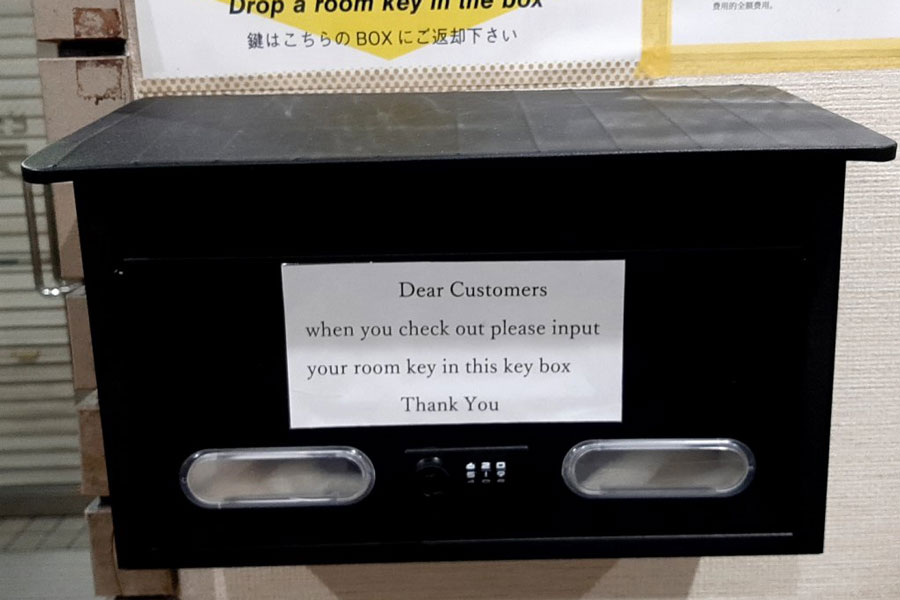
Check-out is by 10:00 a.m., so I left around 9:50 a.m. The front desk is not staffed at that time (the staff are in the back room), so all you do is return your key to a box like a mailbox.
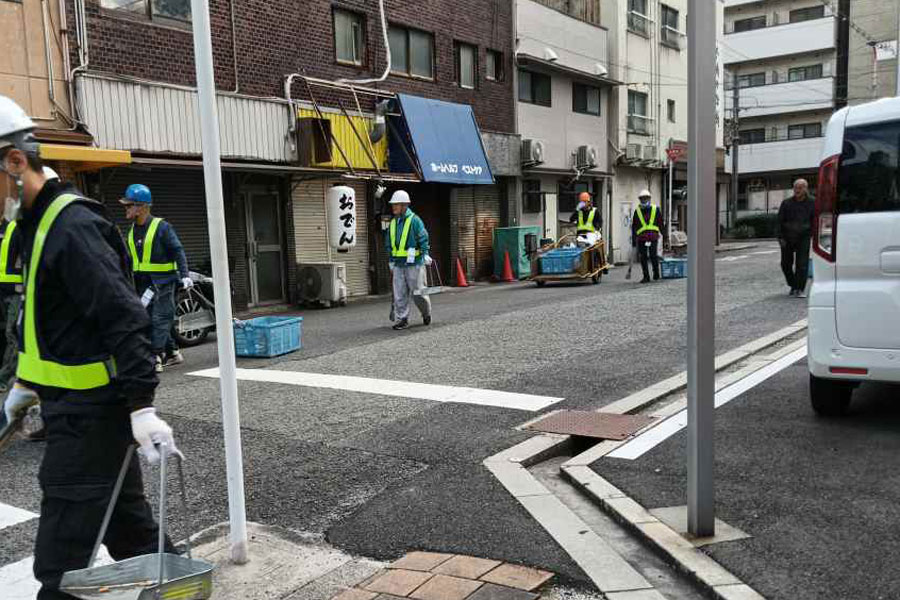
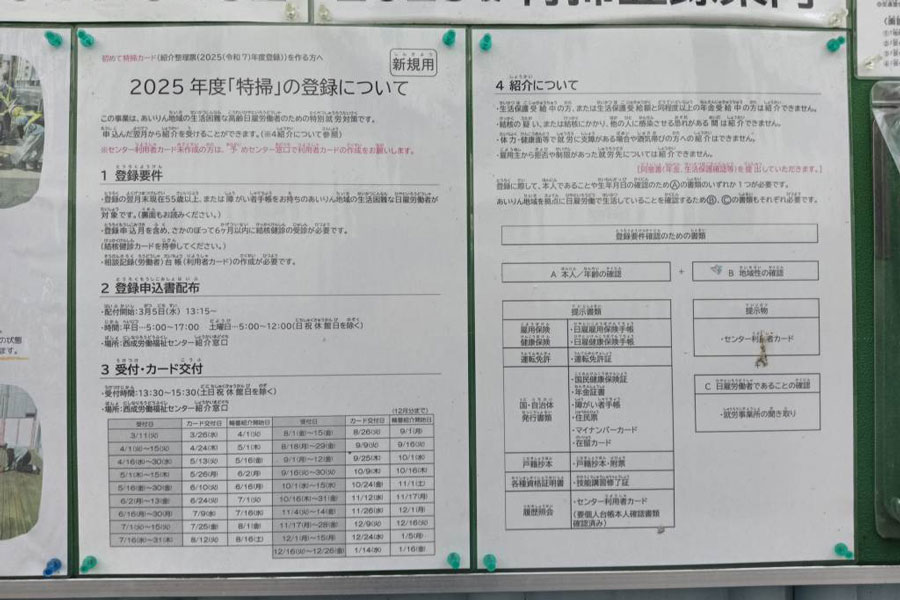
It was still early to head to my interview appointment, so after leaving the hotel I strolled around the Nishinari area for a while. Cleaning crews were out making the streets tidy. Previously, I had assumed they were volunteers working to clean up Nishinari, but I was wrong. They are called “Tokusou” (Special Cleaning Crew), a special employment scheme for elderly day laborers in this area who are struggling to make a living. Since I had some time, I stood in front of the bulletin board on the outer wall of the NPO Kamagasaki Support Organization, near the former Airin Day Laborers’ Center, and read over the recruitment information for “Tokusou.”
After a while, an older man on a bicycle approached me and asked, “Hey kid, are you looking for work?”
■ Profile Hantsu Endo Born in Tokyo in 1966. Graduate of Waseda University. After leaving a real estate company, he worked as a writer for an overseas travel magazine and then became a food journalist and budget-hotel critic. He has covered more than 10,000 restaurants. His main serial columns include those in the weekly magazine Shukan Taishu and on Toyokeizai Online. He has published 28 books, including Shutoken Gokuuma Udon (The Ultimate Delicious Udon in the Greater Tokyo Area, Futabasha).
Notice
This article was generated using automatic translation by GPT-4 API. The translation may not be accurate.