The following is a Q&A on ANA’s announced proposal to redesign the Super Flyers Card (SFC) program, covering the background to the changes, the JPY 3 million annual threshold, lounge access restrictions, and the relationship with Star Alliance rules.
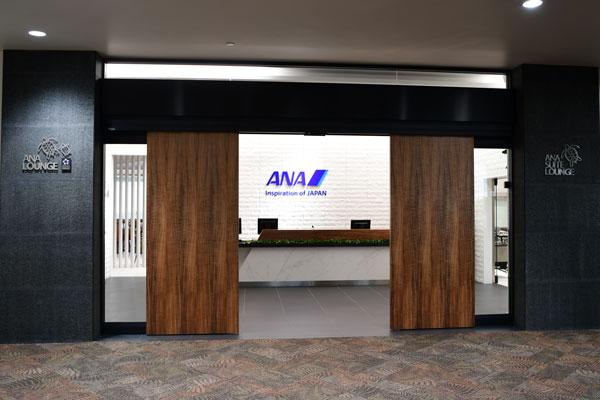
—What specifically will the expansion of the domestic lounge at Tokyo Haneda Airport during fiscal 2027 involve, including the number of seats and scale? Are expansions planned at other airports? Also, what is the schedule and system-development status for the domestic lounge access rules for SFC LITE members, which will move from STEP 1, where access is unavailable during busy periods, to STEP 2, an advance-reservation system?
Construction to expand the domestic lounge at Tokyo Haneda Airport will begin at the start of fiscal 2027, with facilities to be brought into service in stages during the fiscal year. While the specific number of additional seats has not been disclosed, the expansion will be substantial enough to effectively ease congestion. At regional airports in Japan, expansions were already carried out between 2017 and 2019. No additional expansions are currently planned, although ANA will continue to consider them.
The new program will begin on April 1, 2028, with the qualification period running from December 16, 2026, through December 15, 2027. However, the Haneda lounge expansion will be implemented ahead of this. Requirements for the advance-reservation system (STEP 2) are currently being defined, and ANA is working to introduce it alongside STEP 1, if possible, when the new program launches in April 2028.
—How does ANA view the feedback received following the announcements in April and June? In addition, while spending by general ANA Card members is high, why is spending by SFC members alone relatively low, and what measures will be taken?
Immediately after the April announcement, ANA received substantial criticism over the across-the-board restrictions. Following the announcement of a review in June, concerns were instead raised about whether congestion would be resolved, along with distrust over the policy change.
Regarding card spending, annual spending by SFC members—particularly those without elite status—was below the average for general credit cards, which exceeds JPY 1 million per year, and had been declining year by year. This was because conventional SFC benefits were heavily focused on air travel, such as lounge access, and lacked appeal and added value for everyday spending. The rise of cards linked to other companies’ economic ecosystems was another factor. Going forward, ANA will position credit card payments and the mileage program as two pillars, progressively enhancing rewards, including the ease of earning and using miles.
—Why was an annual spending threshold of JPY 3 million established, and what is the basis for it? Even after the revision, enrollment eligibility will be based on flight activity, measured in Premium Points, while the threshold for the higher tier will be based on card spending. Why was the enrollment criterion itself not reviewed?
The JPY 3 million threshold is the result of calculations intended to balance easing lounge congestion with providing access opportunities to as many members as possible. ANA conducted simulations under a variety of conditions, including lowering the threshold to JPY 2 million, combining it with flight activity, and changing the scope of application. It concluded that a uniform JPY 3 million threshold for all members was necessary to achieve both congestion relief and access opportunities.
ANA estimates that SFC PLUS members, who spend JPY 3 million or more, will account for around 40% of all members, while SFC LITE members, who spend less than JPY 3 million, will account for around 60%. About 35% of LITE members, or roughly 21% of all members, have no annual record of flying on ANA services. The proportion of LITE members expected to actually use airport lounges is limited to approximately 25% of all members. Estimates of members’ payment capacity, based on income surveys and data on award-ticket use, were also used as a basis.
ANA decided not to tighten enrollment eligibility based on flight activity because doing so would narrow future customers’ options for joining. Since new members will join with an understanding of the new program, congestion can be managed, while attracting new customers is essential to the program’s sustainability.
Notice
This article was generated using automatic translation by GPT-4 API. The translation may not be accurate.