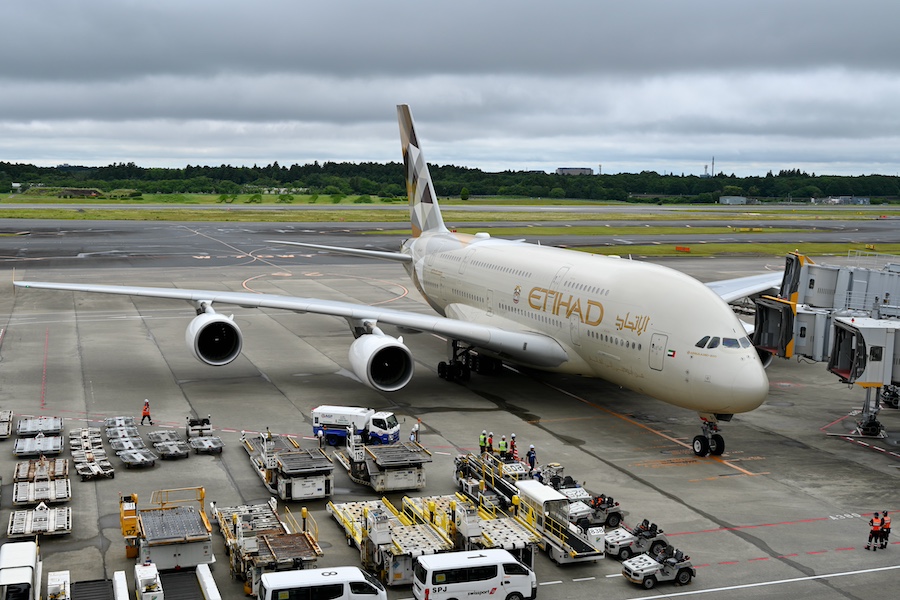
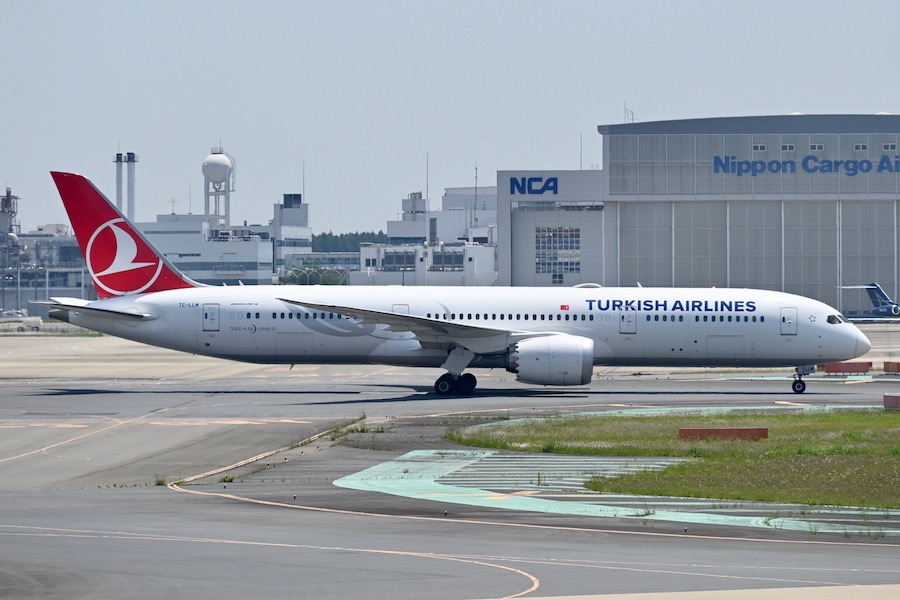
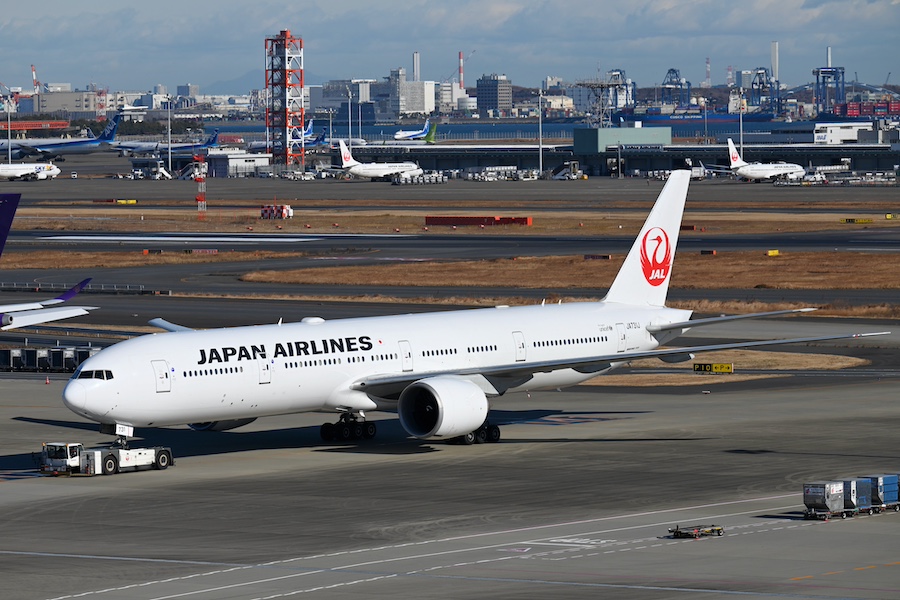
Etihad Airways has begun operating the Airbus A380 aircraft on its Tokyo/Narita–Abu Dhabi route. To mark the launch of the inaugural flight, Chief Revenue and Commercial Officer Arik De visited Japan and hosted a commemorative launch party in Tokyo on June 18.
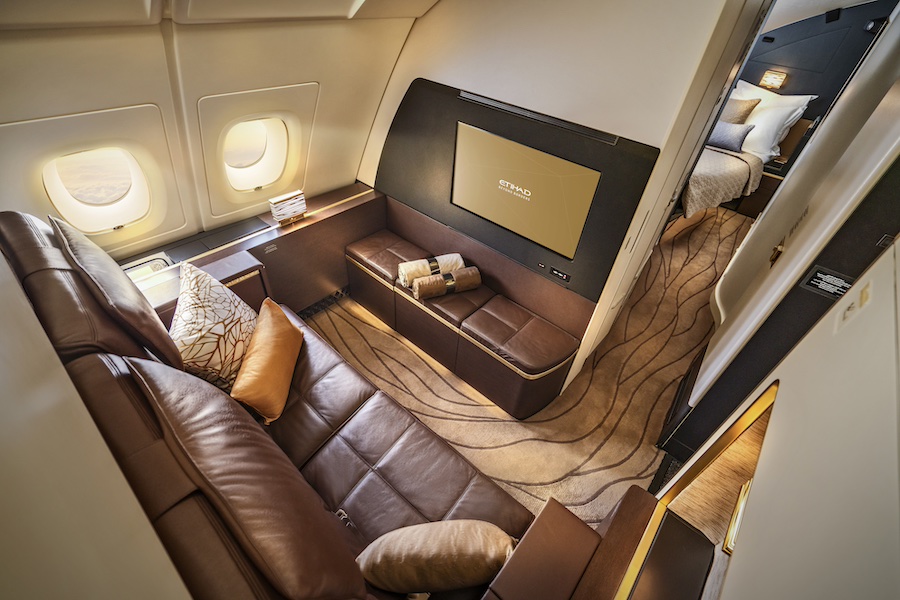
Etihad Airways’ Airbus A380 features 1 unit (2 seats) of “The Residence,” 9 independent, enclosed First Class “Apartments,” 70 Business Class seats, and 405 Economy Class seats. The Residence, positioned as the airline’s top-tier class, consists of three separate rooms—a living room, bedroom, and private bathroom—truly a “flying suite room.” The Airbus A350-1000 that had been deployed on the Tokyo/Narita route until now was configured with a total of 371 seats: 44 in Business Class and 327 in Economy Class. With the A380, total seat capacity increases by about 10%.
At present, besides Narita, the only cities served by Etihad’s A380 are London, Paris, Toronto, and Singapore. Why has Etihad Airways decided to deploy its flagship aircraft, which symbolizes the airline, on a route to Japan?
Explaining the reason in an interview with the media, De stated unequivocally, “Of course it is because there is demand,” and went on to add, “Even more importantly, the Japanese market is worthy of world-class service,” expressing a strong appreciation for the Japanese market itself.
De stressed that “Japanese customers are well suited to use The Residence, which is truly one of a kind in the world.” He added, “Japanese people have a high level of interest in luxury and outstanding products. I believe this product will be embraced 100%.” The introduction of the A380 is not simply about operating a larger aircraft; it reflects the airline’s firm belief that Japan is a market ready to embrace world-class service.
Behind the decision is solid overall demand on routes to and from Japan. De pointed out that business travel between Japan and the United Arab Emirates (UAE) in particular is expanding, and that the Comprehensive Economic Partnership Agreement (CEPA) signed between the two countries in March is also giving demand a further boost.
Based in Abu Dhabi, Etihad Airways operates a network to more than 120 destinations in Europe, the Middle East, Africa, and beyond, and many travelers departing from Japan use Abu Dhabi as a transfer point on their way to Europe or Africa.
De emphasized that “this is not limited to a particular segment; there is broad-based demand across all segments.” He also noted that usage among younger travelers is increasing, and expressed the view that a wide range of customer segments—from business to leisure—are underpinning demand.
Notice
This article was generated using automatic translation by GPT-4 API. The translation may not be accurate.