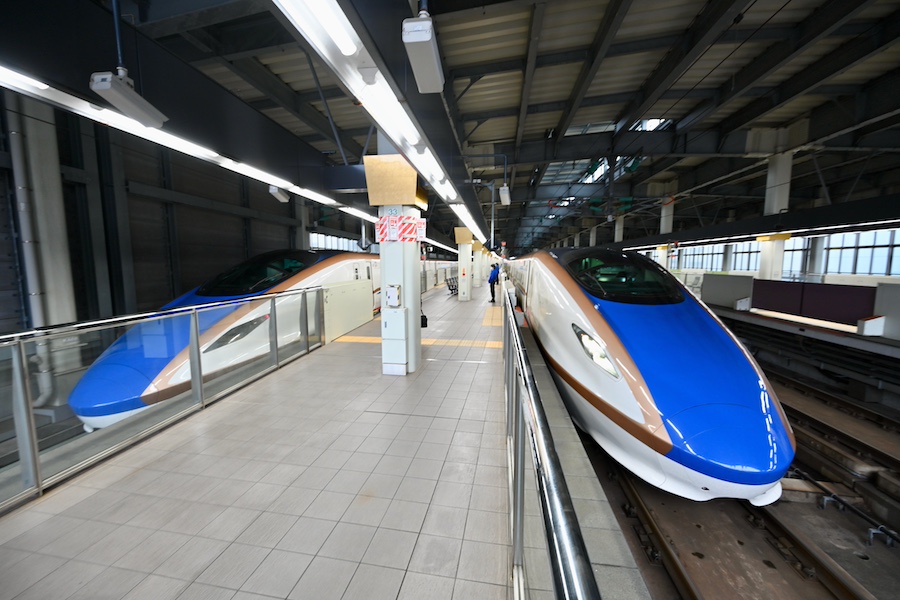
On October 1, a new top-tier class, “Supreme Class,” was introduced on N700S trains operating on Japan’s Tokaido and Sanyo Shinkansen lines. Positioned above Green Car class, it consists of fully enclosed private cabins with doors.
The Tokaido Shinkansen once offered private compartments in the Green Cars of its 100 Series trains, but those trains were retired in 2003. The return of private cabins comes 23 years later.
Service has begun with the fully enclosed “Supreme Class Cabin.” Car No. 7 has one cabin for up to two passengers, while Car No. 10 has one cabin for a single passenger. Initially, only a limited number of N700S trainsets will offer the service, with around 12 trains per day in both directions across Nozomi, Hikari, and Kodama services. The number of compatible trainsets will gradually increase, and a semi-private “Supreme Class Seat” is scheduled to be added during fiscal 2027.
With the cooperation of JR Central, we boarded a trial train and experienced the two-person cabin in Car No. 7 on the journey from Tokyo Station to Nagoya Station.
A Space All Your Own Aboard the Shinkansen
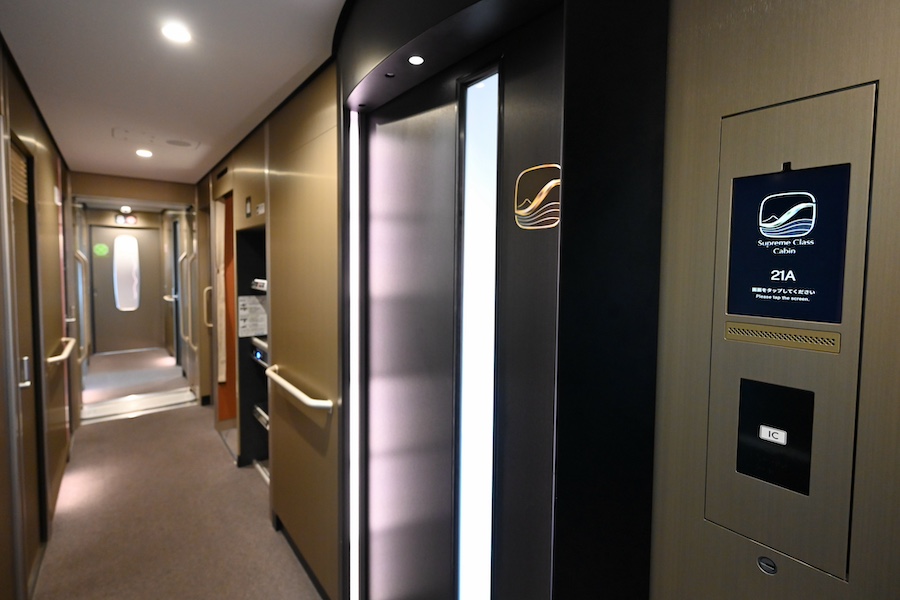
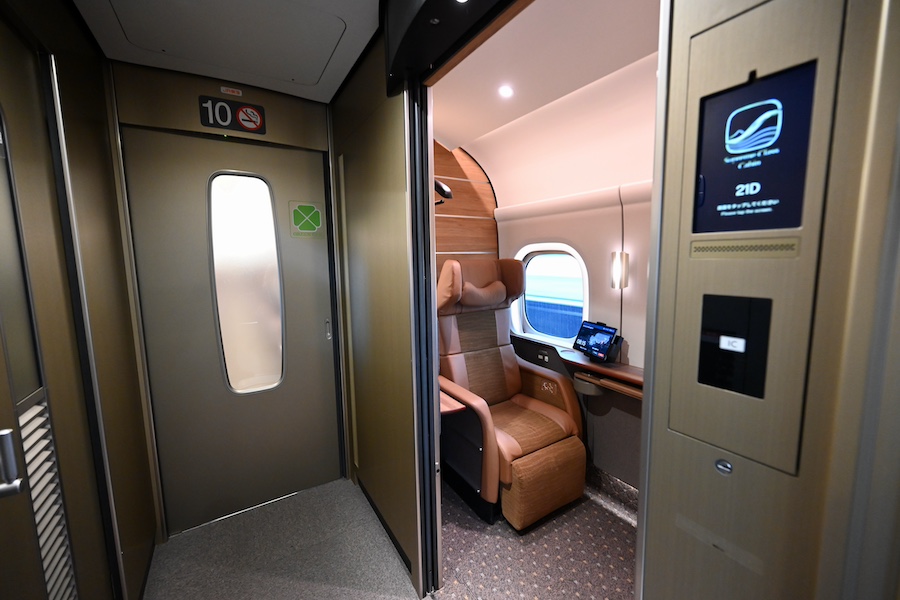
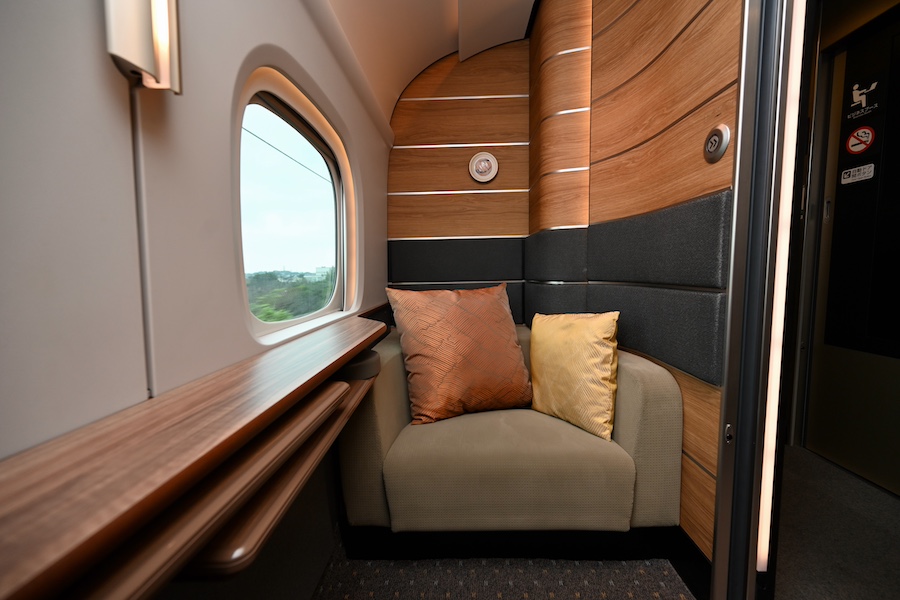
After boarding a Nozomi service at Tokyo Station and walking through the vestibule of Car No. 7, the door to Supreme Class appeared alongside the aisle.
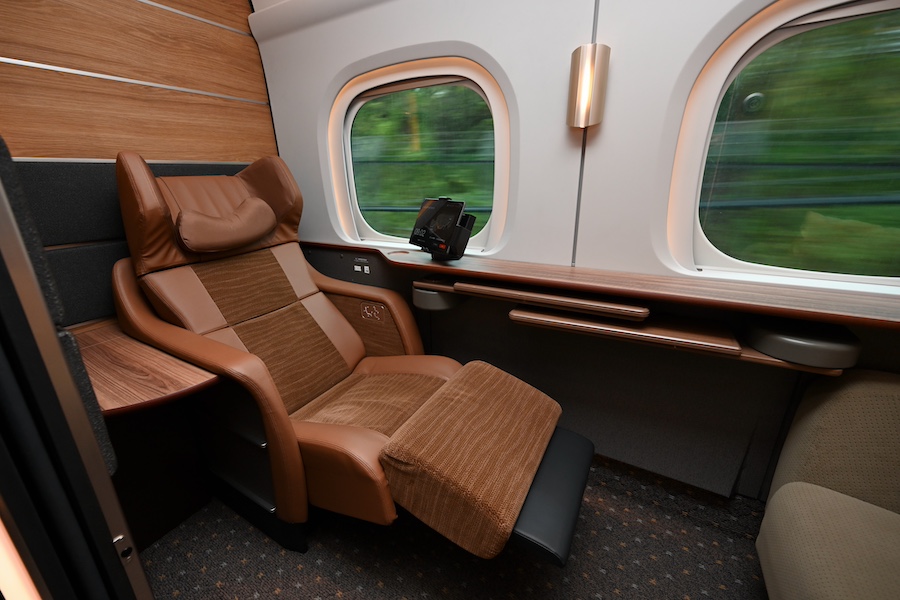
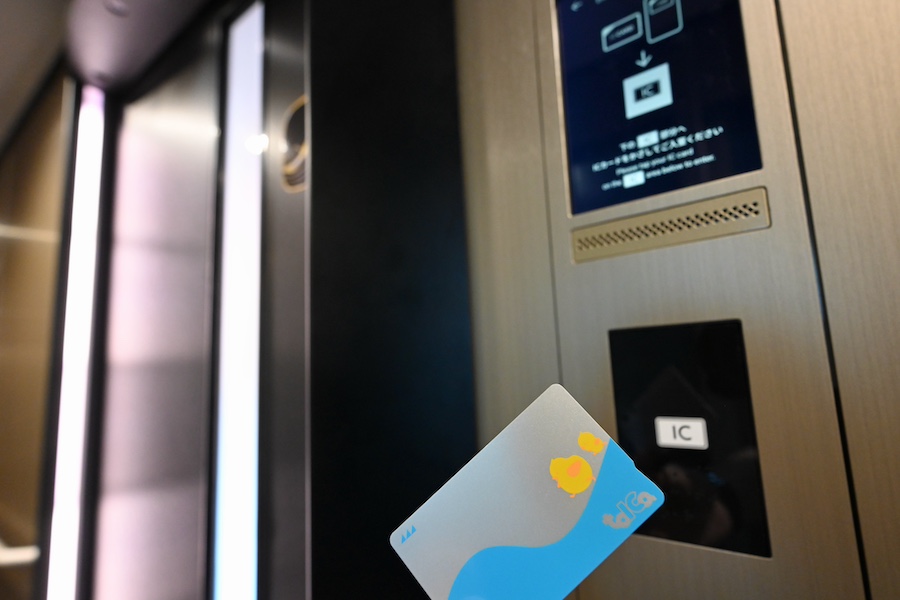
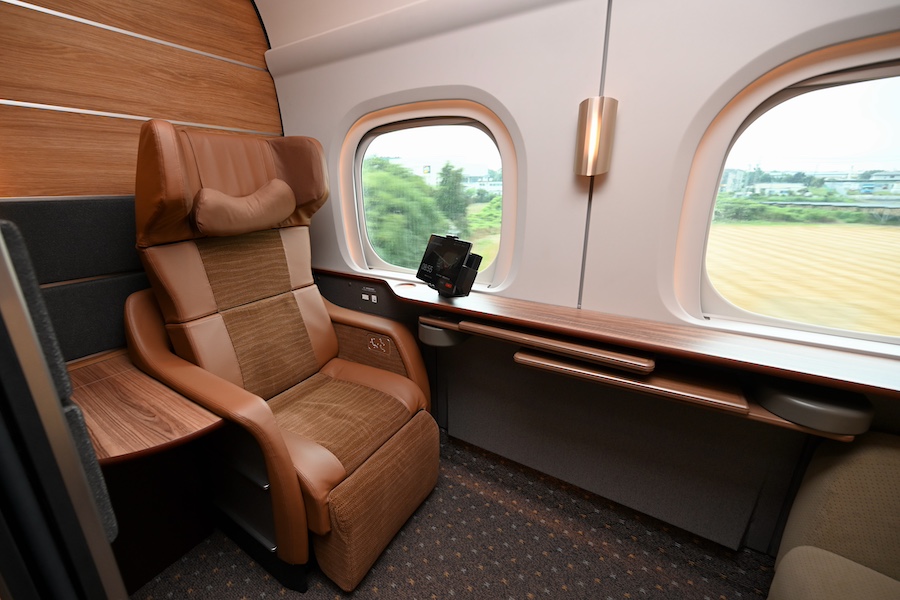
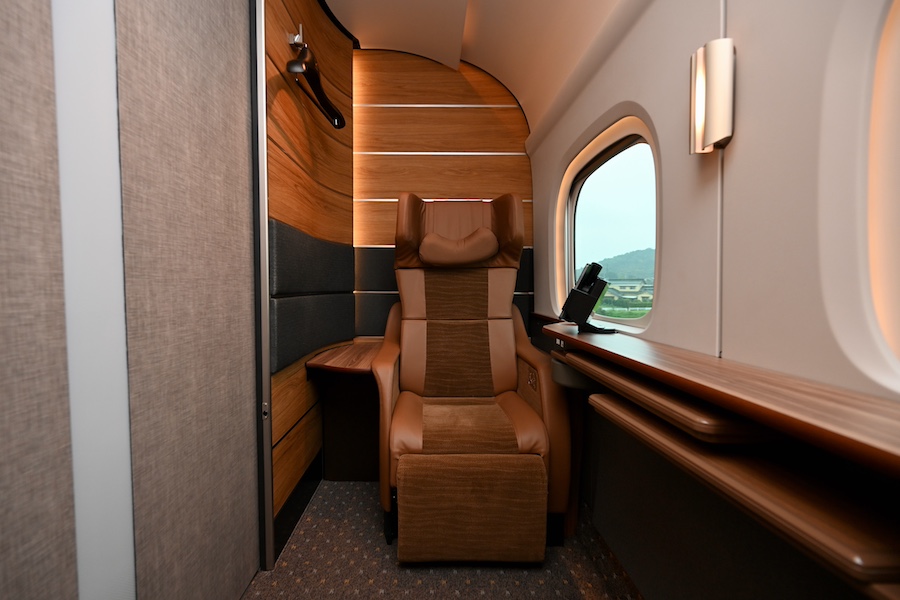
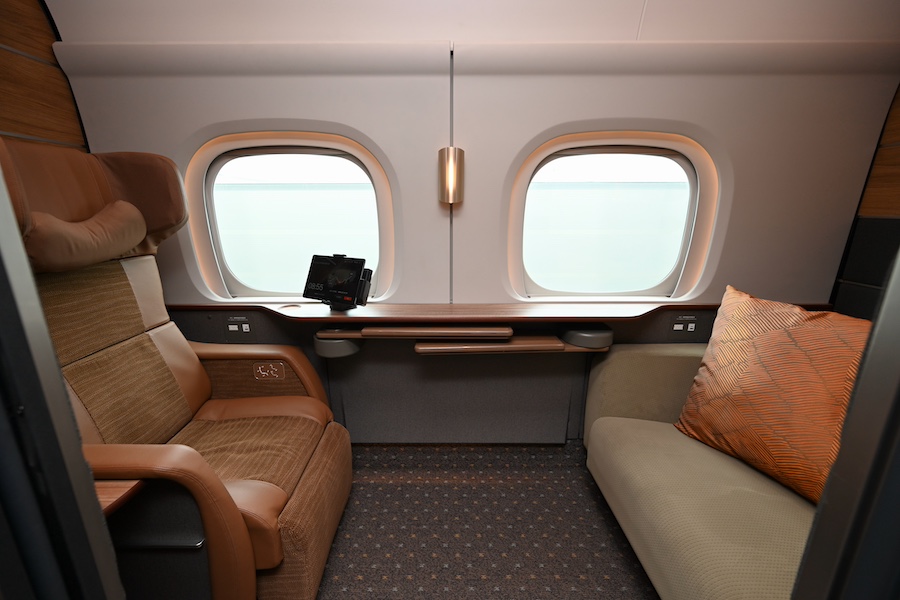
Tap an IC card to unlock the door and step inside. Wood-grain walls, soft indirect lighting, and large reclining seats create a markedly different impression from the familiar Shinkansen interior—more like a small study on the move.
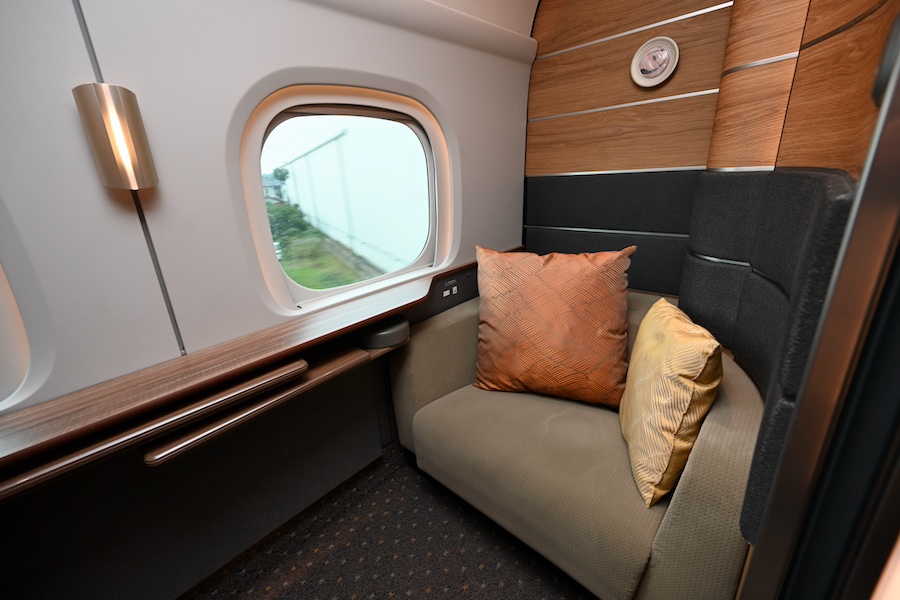
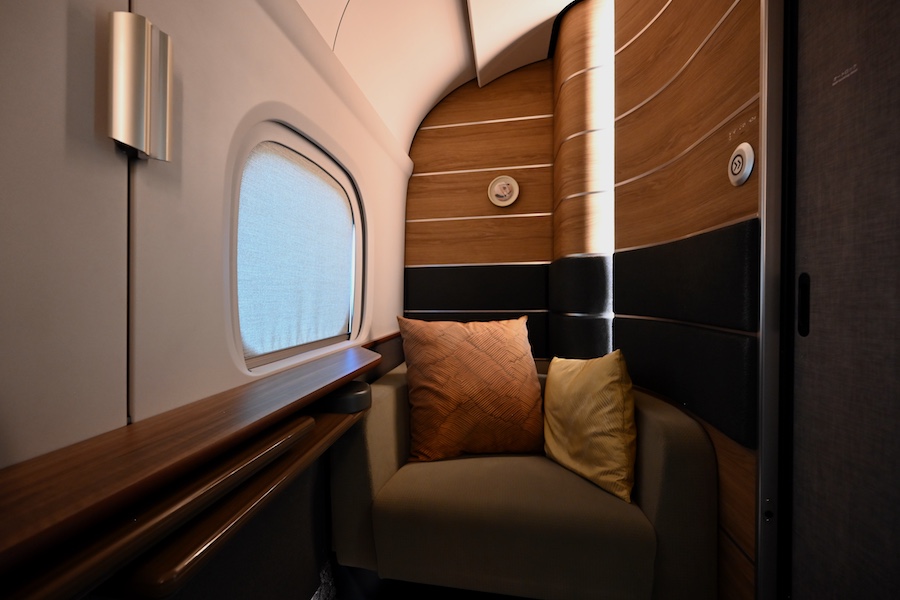
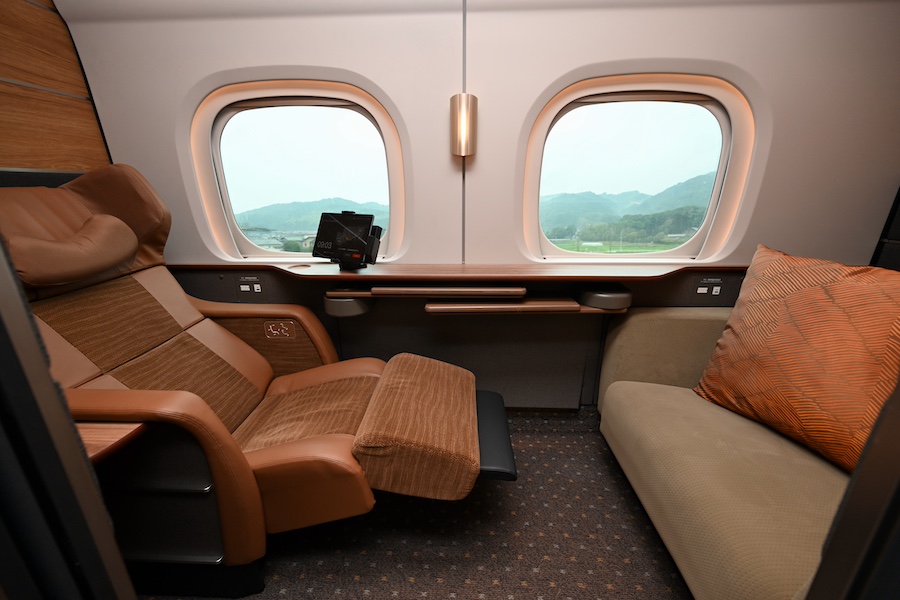
The private cabin in Car No. 7 is on the ocean-facing side, where the A seats are located. It measures approximately 1 meter wide and 2.7 meters deep, for an area of about 2.7 square meters. It has two windows, a large reclining seat with a leg rest, and a sofa facing the seat. The seat orientation is fixed; as the seats in Car No. 7 face toward Hakata, they faced forward on this westbound service.
Meanwhile, the one-person cabin in Car No. 10 is on the Mount Fuji-facing side, where the D and E seats are located. It measures approximately 1 meter wide and 1.9 meters deep, for an area of about 1.9 square meters. It also has two windows, but its seat faces toward Tokyo, meaning passengers face backward on westbound services. After trying it myself, I found it less disconcerting than expected, though opinions will likely vary depending on personal preference and susceptibility to motion sickness.
▲The two-person cabin in Car No. 7. It is approximately 1 meter wide and 2.7 meters deep, with an area of about 2.7 square meters and two windows.
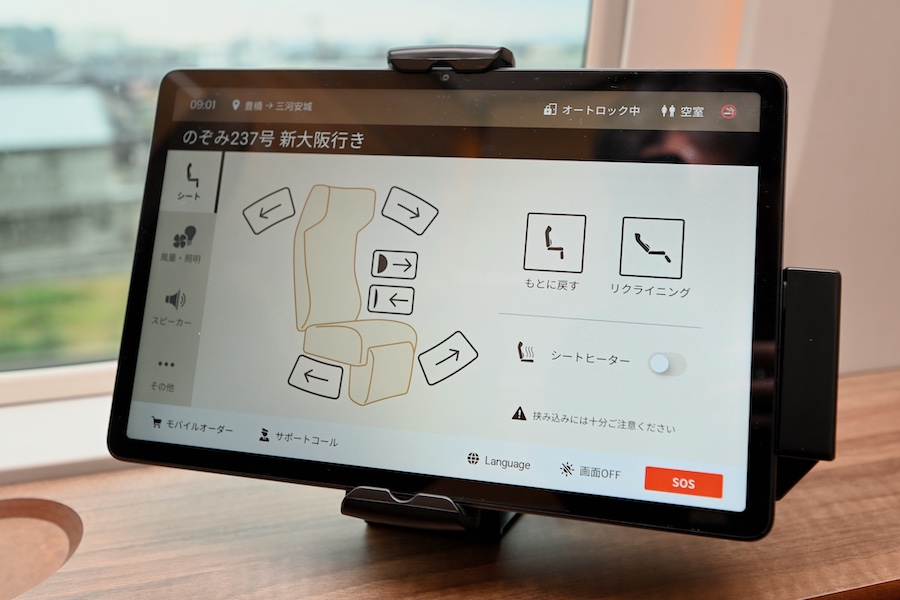
Various cabin functions are controlled through a dedicated tablet at the passenger’s side. Recline and leg-rest settings, air-conditioning airflow, onboard announcement volume, and lighting can all be adjusted to suit individual preferences. The tablet can also be used to place mobile orders for drinks and light meals.
▲Drinks and light meals can also be ordered via the tablet and delivered to the cabin by an onboard attendant. Supreme Class-exclusive items are also available.
In addition to brightness, the lighting can be switched between white and warm tones, with four modes available: “Normal,” “Business,” “Relax,” and “Sleep.” The white-toned “Business” mode is ideal for opening a laptop, while “Sleep” is suited to resting. The ability to change the atmosphere according to how you want to spend your time is a benefit unique to a private cabin.
When I selected “Sleep” and closed the shades on both windows, the cabin became a calming space reminiscent of a wellness sauna. Some indirect lighting remains on at all times, so it does not become completely dark, but it is more than sufficient for closing your eyes and taking a short rest. Those who need total darkness to sleep may want to bring an eye mask.
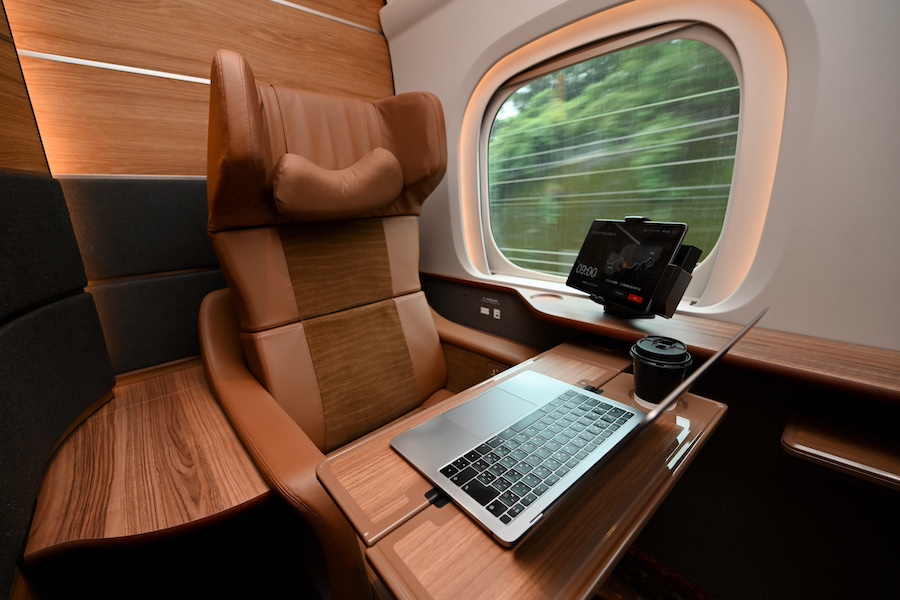
Of course, it is not only a place to relax; it is also well suited to working. The table is stored in the wall by the window and looks narrow at first glance, but becomes quite large when pulled out and unfolded. There is ample room for a laptop, documents, and drinks without feeling cramped. Above all, there is no concern about people around you looking at your screen.
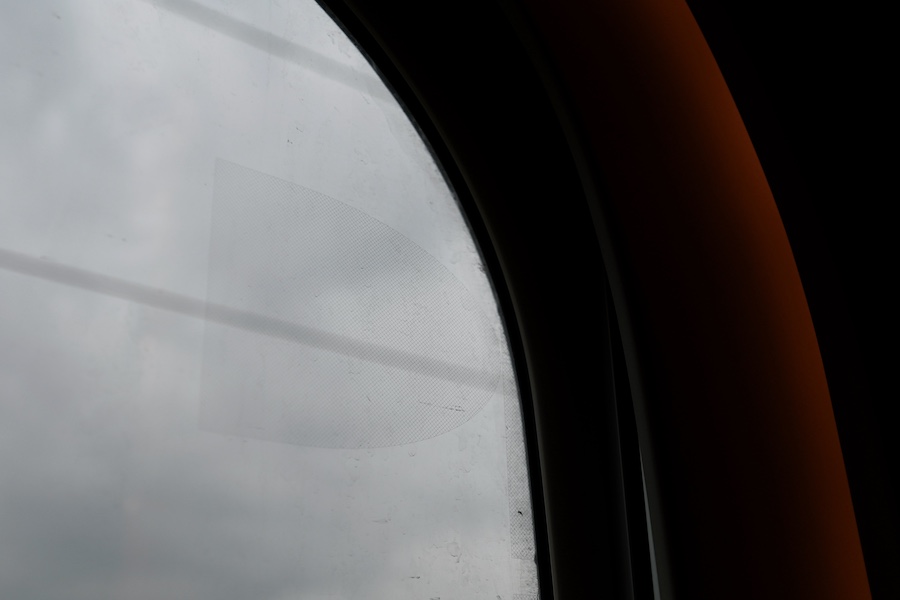
▲Look closely at the window and you can see the transparent glass antenna.
Dedicated Wi-Fi is also available for Supreme Class. The cabin windows incorporate AGC-developed “5G-compatible transparent glass antennas.” By giving the windows themselves antenna functionality, the system aims to improve communication quality. It is said to be the world’s first installation of 5G-compatible transparent glass antennas in railway rolling stock.
During the journey, a Google speed test recorded download speeds of 71.7 Mbps and upload speeds of 18.6 Mbps on above-ground sections. This should be more than adequate not only for web browsing and routine cloud work, but also for watching videos.
In tunnel sections, however, speeds fell to 5.95 Mbps for downloads and 0.02 Mbps for uploads. Performance varies greatly depending on the location and network conditions, so high-speed connectivity cannot be expected at all times. At least on above-ground sections, the connection was fast enough for everyday use.
The Greatest Value: Not Being Disturbed by Anyone
I tried out the various features, but in the end, the value that left the strongest personal impression was simply not being disturbed by anyone.
Once the door is closed, the sounds and presence of the cabin—other passengers’ conversations, noise, and people coming and going—largely fade from awareness. Green Cars are often relatively calm as well, but there is a completely different feeling between a quiet carriage and a private room occupied only by yourself.
It is ideal when you need to focus on work while traveling, and the two-person cabin lets parents and children, couples, or friends spend time together without worrying about those around them. The journey takes about 1 hour and 40 minutes from Tokyo to Nagoya, about 2 hours and 30 minutes to Shin-Osaka, and even longer when traveling through to Hakata, making this degree of privacy particularly welcome.
If I were to make one personal request, it would be for disposable slippers. Since such a fully private space has been created, being able to take off one’s shoes and relax as in an airline business-class cabin would make the experience even more comfortable.
Over ¥60,000 From Tokyo to Shin-Osaka, or About ¥37,000 Per Person for Two
The question, of course, is the fare. For travel on a Nozomi service between Tokyo and Shin-Osaka stations, the regular-season SmartEX fare is ¥60,790 for the two-person cabin in Car No. 7 and ¥42,390 for the one-person cabin in Car No. 10.
When two people use Car No. 7, they do not need to pay ¥60,790 twice. In addition to the passenger who books Supreme Class, the companion simply needs to purchase a separate base fare ticket and limited express ticket for the same section, including an unreserved-seat ticket if desired. An ordinary-car unreserved-seat fare from Tokyo to Shin-Osaka is ¥13,870, bringing the total for two passengers during the regular season to ¥74,660. That works out to ¥37,330 per person.
A natural comparison for Supreme Class is the premium cabins offered by airlines.
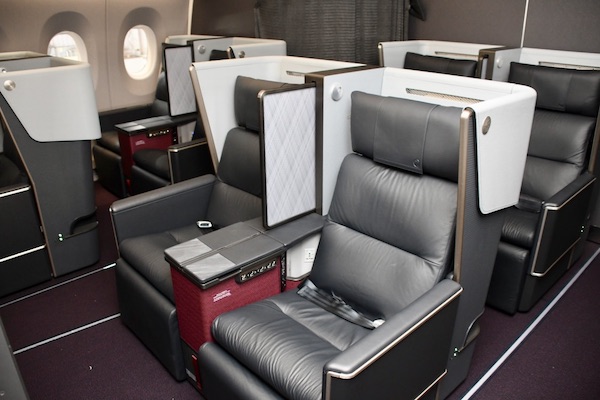
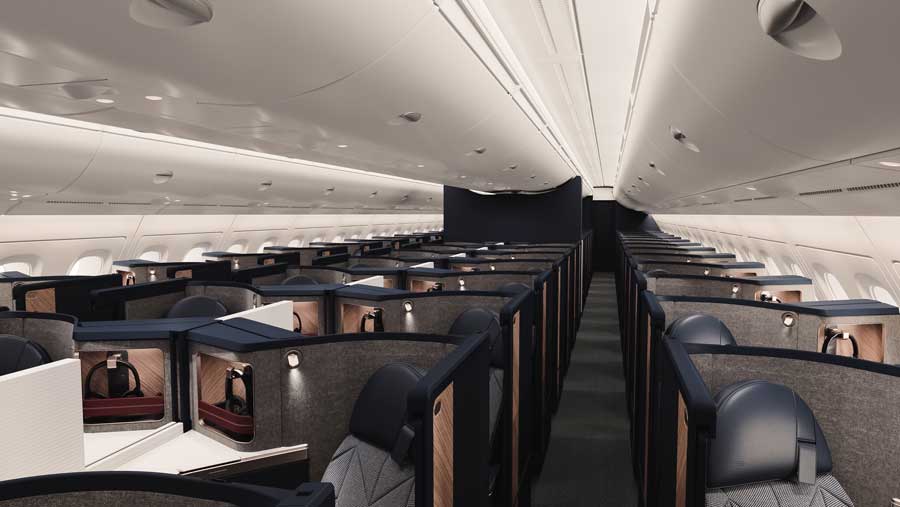
▲First Class on Japan Airlines’ Airbus A350-900 aircraft used for domestic flights.
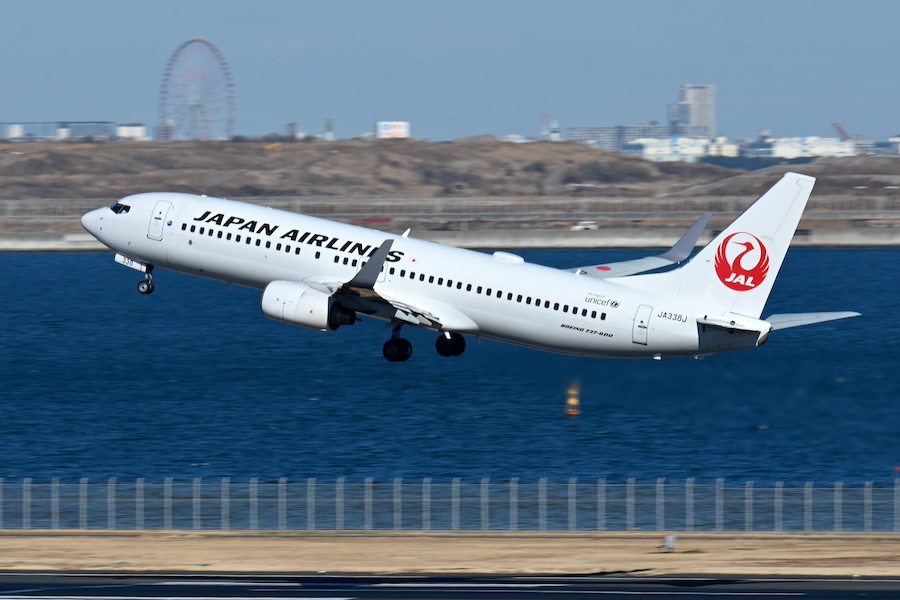
As the base airfare varies by booking date and fare type, it is not possible to make a simple comparison of total costs. However, Japan Airlines (JAL) charges ¥13,200 for same-day upgrades from Economy Class to First Class on its Tokyo/Haneda–Osaka/Itami route. All Nippon Airways (ANA) charges ¥11,000 to upgrade on the Tokyo–Osaka route to its First Class (Premium Class).
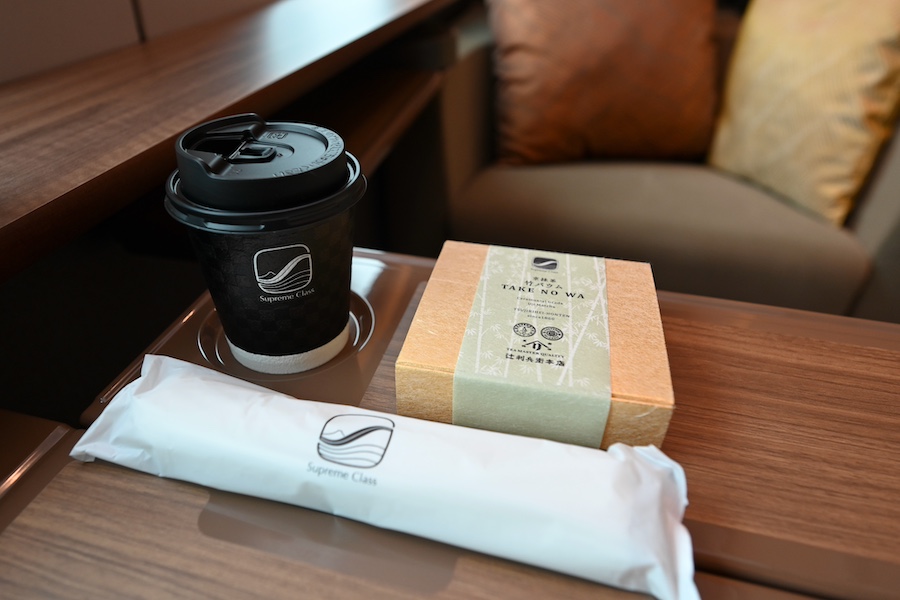
▲Nozomi and Hikari services also offer a welcome service of drinks and sweets. Two servings are provided when two people use the Car No. 7 cabin.
The domestic premium classes of both airlines are not private cabins like Supreme Class, but they offer meals and alcoholic beverages, and passengers can use airport lounges. Supreme Class, on the other hand, does not include a dedicated station lounge or meals; its central value is the fully private space while aboard the train. Once inside, passengers can spend their time without concern for those around them until they disembark.
The choice depends on what each traveler seeks from a premium class, but there is no doubt that a new service option has been added for travel between Tokyo and Osaka. The fare is certainly not inexpensive, but it is an experience worth trying at least once for this private space all your own.
Notice
This article was generated using automatic translation by GPT-4 API. The translation may not be accurate.