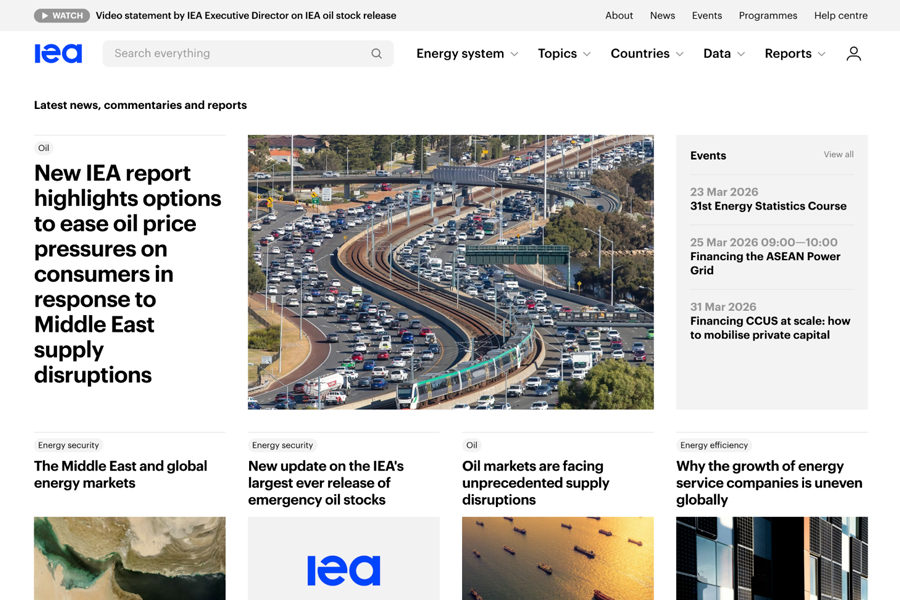
The International Energy Agency (IEA) has presented measures aimed at reducing crude oil demand, including cutting back on the use of aircraft and lowering speed limits on highways.
Due to the situation in the Middle East, the effective blockade of the Strait of Hormuz—through which around 20% of the world’s oil consumption passes—has caused a sharp surge in crude oil prices and refined oil product prices. IEA member countries, including Japan, have decided to release 400 million barrels from emergency reserves.
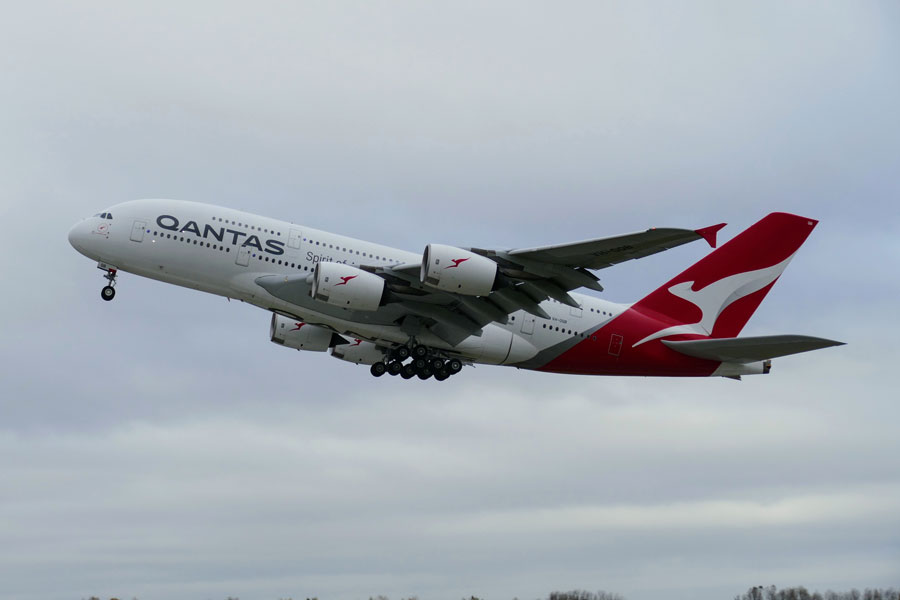
In the 10 measures proposed by the IEA, the main focus is on road transport, which accounts for about 45% of global oil demand. The measures include reducing highway speed limits by 10 kilometers per hour, introducing rotation systems based on license plate numbers in large cities, promoting car sharing, working from home as much as possible, encouraging a shift from private cars to public transportation, and improving the efficiency of freight and delivery operations. Furthermore, the IEA states that when alternative options are available, reducing air travel can significantly cut demand for jet fuel.
Notice
This article was generated using automatic translation by GPT-4 API. The translation may not be accurate.